
- Simple controls: one button and a few modes, no complicated menus
- A gentle starting mode for receding or sensitive gums
- Cordless and light, or a countertop model with a big reservoir if hands are weak
- Interchangeable nozzles for bridges, implants or braces
- Easy to fill and clean
General information about consumer products, not dental advice. Older adults with gum disease, implants, dentures or ongoing mouth pain should follow their dentist's advice on cleaning between teeth.
Cleaning between teeth matters more with age, not less. Gums recede, roots are exposed, crowns and bridges have edges that trap food, and dry mouth from medications raises the risk of cavities. Yet string floss gets harder every year: stiff fingers can't wrap it, shaky hands can't guide it and many people simply give up. A water flosser offers an easier way. This guide explains why water flossers help older adults, which features matter most, how to choose between cordless and countertop models, how to use one comfortably, tips for arthritis, tremor and memory problems, and how caregivers can help.
In this guide:
- why flossing gets harder with age
- how a water flosser helps
- features that matter for seniors
- cordless or countertop?
- how to use one step by step
- tips for arthritis, tremor and caregivers
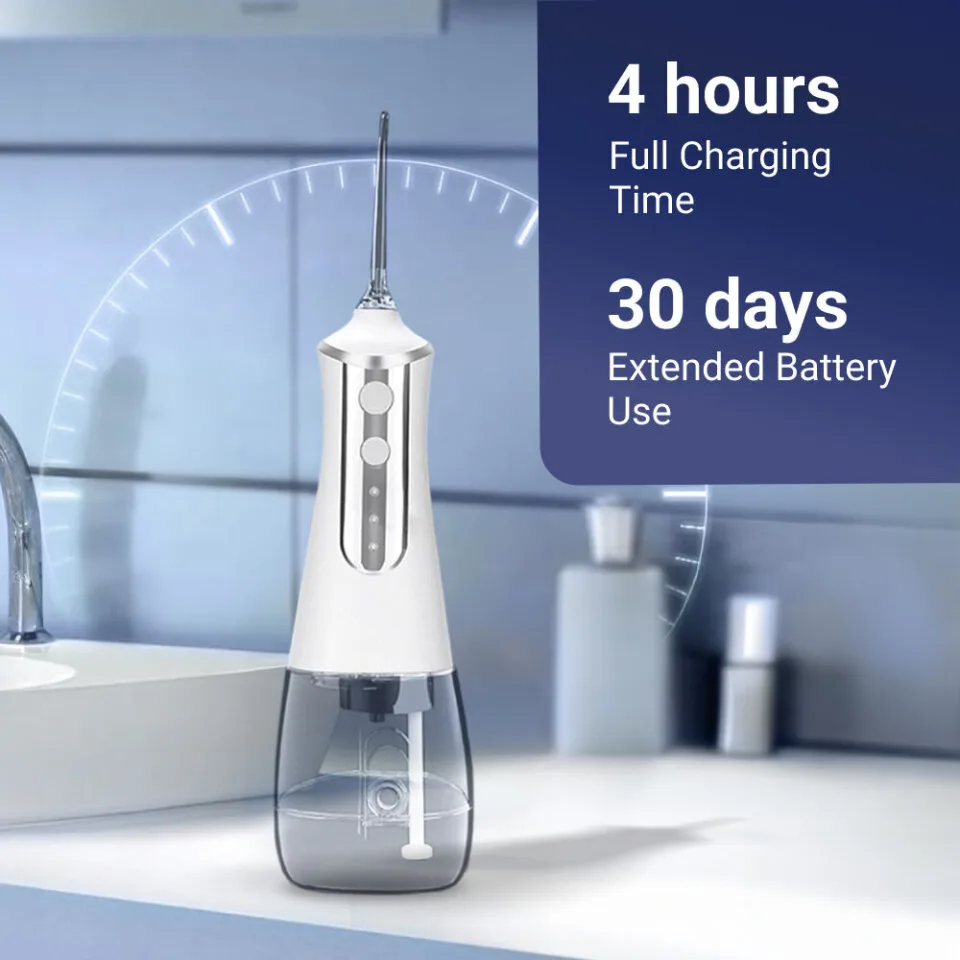
Our pick: the WellaWhite Water Flosser
Cordless, rechargeable water flosser with 3 cleaning modes and interchangeable nozzles. Braces-friendly.
Check today's price →Up to 75% off on the official site
Why does cleaning between teeth matter more with age?
- Receding gums expose root surfaces that decay more easily.
- Dental work like crowns, bridges and implants has edges where plaque collects.
- Dry mouth, often a medication side effect, reduces the saliva that protects teeth.
- Gum disease becomes more common with age.
- Bigger gaps between teeth trap more food.
The National Institute of Dental and Craniofacial Research explains how plaque between teeth and along the gumline leads to gum disease, and why daily cleaning helps prevent it. See also receding gums and signs of gum disease.
Why is string floss hard for older adults?
- Arthritis: wrapping floss around fingers and guiding it is painful.
- Tremor: shaky hands make it hard to slide floss gently between teeth.
- Limited reach: getting to the back teeth requires awkward hand positions.
- Eyesight: it's hard to see what you're doing.
- Dental work: threading floss under a bridge is fiddly even with good hands.
How does a water flosser help?
A water flosser sends a pulsing stream of water between teeth and along the gumline to flush out food and plaque. Instead of precise finger movements, your parent simply guides the nozzle tip along the gumline and pauses briefly between teeth. The American Dental Association's MouthHealthy guide notes that water flossers can be a good option for people who find string floss difficult and for people with dental work. Comparison: water flosser vs floss.
Which features matter most for seniors?
| Feature | Why it matters |
|---|---|
| One-button operation | Easy to learn and remember |
| Gentle mode | Comfortable for receding or sensitive gums |
| Light, cordless body | No cord to manage, easy to hold over the sink |
| Easy-fill tank | A wide opening that doesn't need fine finger work |
| Interchangeable nozzles | Options for bridges, implants and braces |
| Rechargeable battery | No batteries to replace |
| Simple cleaning | Fewer parts to take apart |
Why is the WellaWhite Water Flosser a good fit?
- Cordless and rechargeable: no plug at the sink and no cord to trip over or tangle.
- Three modes: start on the gentlest mode, then move up as gums adjust.
- Interchangeable nozzles: different tips for different needs, or for both parents.
- Built-in tank: fill with lukewarm water and floss without a base station.
- Compact: easy to store and to take on visits to family.
Read our WellaWhite Water Flosser review.
Easier flossing for Mom or Dad
WellaWhite Water Flosser: cordless and rechargeable, 3 modes, interchangeable nozzles and a compact design. Up to 75% off on the official site.
Check today's price →Up to 75% off on the official site
Cordless or countertop: which is better for seniors?
| Cordless (like WellaWhite) | Countertop | |
|---|---|---|
| Weight in hand | Holds the water tank | Only a light handle |
| Cord | None | Plug and hose |
| Tank | Smaller, may need a top-up | Large reservoir |
| Counter space | Minimal | Needs a spot near an outlet |
| Travel | Easy | Bulky |
For most older adults, a cordless model is simpler and tidier, especially in a small bathroom. If grip strength is very limited, sitting down and resting the elbow on the counter makes holding a cordless flosser much easier. See cordless vs countertop water flossers.
How should an older adult use a water flosser?
- Fill the tank with lukewarm water.
- Click in a nozzle and choose the gentlest mode.
- Sit or lean over the sink, elbow resting on the counter if helpful.
- Put the tip in the mouth before switching on, lips loosely closed.
- Aim at the gumline at 90 degrees and glide slowly, pausing briefly between teeth.
- Start with the back teeth, inside and outside, then move forward.
- Switch off before removing it from the mouth.
- Empty the tank and leave it open to dry.
Most people finish in about a minute or two. See how to use a water flosser and before or after brushing?
What helps with arthritis or weak grip?
- Sit down at the sink with the elbow supported.
- Hold the flosser with both hands if needed.
- Use a cup or a small jug with a spout to fill the tank.
- Keep the flosser and charger at counter height so there's no bending.
- Pair it with an electric toothbrush, which also does the hard work. See electric toothbrushes for seniors.
What helps with tremor?
Resting the elbow on the counter steadies the hand. The nozzle doesn't need to touch the teeth precisely; a steady stream along the gumline does the work. Good lighting and a mirror help your parent see where the tip is.
Is it good for bridges, implants and dentures?
Yes for bridges and implants: a water flosser reaches under bridges and around implants where string floss is hard to thread. See water flossers for bridges and water flossers for implants. Full dentures are cleaned outside the mouth with a denture brush and cleaner, but a water flosser can gently clean natural teeth around partial dentures once the partial is removed. Ask the dentist for the right routine.
How can caregivers help?
- Set it up together and practice the first few times side by side.
- Keep it simple: same time each day, same mode, same nozzle.
- Write the steps on a card by the sink in large print.
- Charge it on a set day each week.
- Clean the tank and nozzle during visits. See how to clean a water flosser.
- Watch for warning signs like bleeding that doesn't settle, bad breath or loose teeth, and book a dental checkup.
What if your parent has memory problems?
Keep the routine short and the same every day. Link it to something that already happens, like after brushing at night. A simple card with three pictures (fill, floss, empty) can help. Gentle praise and doing it together often work better than reminders.
Is a water flosser a good gift for a parent?
Yes. It's practical, used every day and makes a hard task easier. Pair it with an electric toothbrush for a complete set. See oral care gifts.
A practical gift they'll use every day
WellaWhite Water Flosser: cordless, three modes, interchangeable nozzles, easy to store and travel with. Up to 75% off on the official site.
Check today's price →Up to 75% off on the official site
What if your parent has sensitive teeth or gums?
Start on the gentlest mode with lukewarm water and keep sessions short at first. A little bleeding in the first days is common when someone starts cleaning between teeth again, and it usually settles within a week or two of daily use. If it doesn't, or if there's pain or swelling, book a dental visit. See water flossers for sensitive gums and water flossers for receding gums.
What does a simple daily routine look like?
- Evening: water floss for a minute or two.
- Brush for two minutes with fluoride toothpaste, ideally with an electric toothbrush.
- Spit, don't rinse hard, so some fluoride stays on the teeth.
- Empty the flosser tank and leave it open to dry.
- Morning: brush again.
Once a day is enough for water flossing. See how often to use a water flosser.
Does a water flosser help with dry mouth?
It doesn't cure dry mouth, but it helps keep the areas between teeth clean when saliva is low, which matters because dry mouth raises the risk of cavities. Encourage sips of water, sugar-free gum and fluoride toothpaste, and mention dry mouth to the doctor or dentist, who may review medications or suggest a saliva substitute.
What mistakes should seniors avoid?
- Starting on the strongest setting
- Standing up straight instead of leaning over the sink
- Switching on before the tip is in the mouth
- Leaving water in the tank overnight
- Skipping dental checkups because flossing feels easier now
The bottom line
The best water flosser for seniors is simple, gentle and easy to hold:
- it cleans between teeth without fiddly string floss
- a gentle mode protects receding and sensitive gums
- it reaches under bridges and around implants
- cordless models are tidy, light and easy to store
The WellaWhite Water Flosser is cordless and rechargeable, with three modes and interchangeable nozzles in a compact design. It's often up to 75% off on the official site.
Our pick: the WellaWhite Water Flosser
Cordless, rechargeable water flosser with 3 cleaning modes and interchangeable nozzles. Braces-friendly.
Check today's price →Up to 75% off on the official site
Frequently asked questions
Are water flossers good for seniors?
Yes. They clean between teeth without fiddly string floss, which helps older adults with arthritis, tremor or dental work.
Is a water flosser safe for receding gums?
Used on a gentle mode, yes. Start low and aim at the gumline without pressing.
Cordless or countertop water flosser for seniors?
Cordless is simpler and tidier for most; resting the elbow on the counter makes it easy to hold.
Can a water flosser clean under a bridge?
Yes. It reaches under bridges and around implants where string floss is hard to thread.
Can seniors with dentures use a water flosser?
Full dentures are cleaned outside the mouth. With partials, remove them and clean the natural teeth. Ask the dentist.
Is a water flosser a good gift for a parent?
Yes. It's practical, used every day and makes a hard task easier.

Michelle Hert
Michelle researches at-home oral care products, from whitening kits to water flossers, and reads the dental research and buyer feedback behind them so readers can make smarter choices. She is not a dentist, and her guides are not a substitute for professional dental care. Her guides are built on published research, manufacturer information and verified buyer feedback, and are updated when new information comes out. More about Michelle.