
- Start on a low setting and increase only if comfortable.
- Aim the tip at the gum line at about 90 degrees, tracing around each implant.
- Pause briefly at the spaces between teeth and around the implant crown.
- Use it once a day, together with brushing twice a day with a soft brush.
- Follow your dentist's advice on tools and settings for your specific implant.
General information about consumer products, not dental advice. Implant care depends on your specific restoration. Follow your dentist's or periodontist's instructions, and see them promptly if the gums around an implant bleed, swell, hurt or the implant feels loose.
Dental implants can last for many years, even decades, but they're not maintenance-free. The implant itself can't decay, yet the gums and bone around it can become inflamed if plaque builds up, a condition called peri-implant disease. That's why cleaning around implants every day matters just as much as it does for natural teeth.
Many people with implants find string floss awkward around the implant crown and the gum line. A water flosser offers a gentle, effective alternative. This guide explains why implant cleaning matters, how to use a water flosser around implants, bridges and crowns, which settings to choose, what other tools help, and the warning signs to watch for.
Why is cleaning around implants so important?
Plaque sticks to implant crowns and the abutment just like it sticks to natural teeth. If it isn't removed, the gums around the implant can become inflamed (peri-implant mucositis), and over time the inflammation can affect the bone that supports the implant (peri-implantitis). The National Institute of Dental and Craniofacial Research explains how plaque causes gum disease around natural teeth; the same principle applies around implants. Keeping the area clean helps protect your investment.
Why use a water flosser for implants?
- Gentle on gums: a pulsing stream cleans along the gum line without scraping.
- Reaches tricky shapes: implant crowns, bridges and connectors have curves and gaps floss doesn't follow easily.
- Cleans under bridges, where floss needs a threader.
- Easy for people with limited dexterity or arthritis.
- Quick: a full clean in about a minute or two.
The ADA's MouthHealthy notes that water flossers can be a good choice for people with braces, bridges or other dental work, and for those who find string floss difficult.
How do you use a water flosser around implants?
- Fill the tank with lukewarm water.
- Choose a low setting to start, especially if the implant is new.
- Lean over the sink, place the tip in your mouth and close your lips partly to avoid splashing.
- Turn it on and aim the tip at the gum line at about a 90-degree angle.
- Trace slowly along the gum line of each tooth, pausing for a couple of seconds between teeth.
- Circle the implant: guide the stream all the way around the implant crown, front, back and sides.
- For bridges, aim the stream under the false tooth from both sides.
- Finish by emptying the tank and letting it dry.
See how to use a water flosser for general tips.
Which setting should you use?
Start low. New implants and healing gums are sensitive, and you don't need high pressure to remove soft plaque. Once you're comfortable, you can move up a level if your dentist agrees. A flosser with several modes lets you match the pressure to how your gums feel.
| Situation | Suggested approach |
|---|---|
| New implant or healing gums | Lowest setting, only after your dentist says it's okay to start |
| Everyday cleaning | Low to medium, whatever feels comfortable |
| Under a bridge | Low to medium, aimed from both sides |
| Sensitive or bleeding gums | Low, and mention it to your dentist |
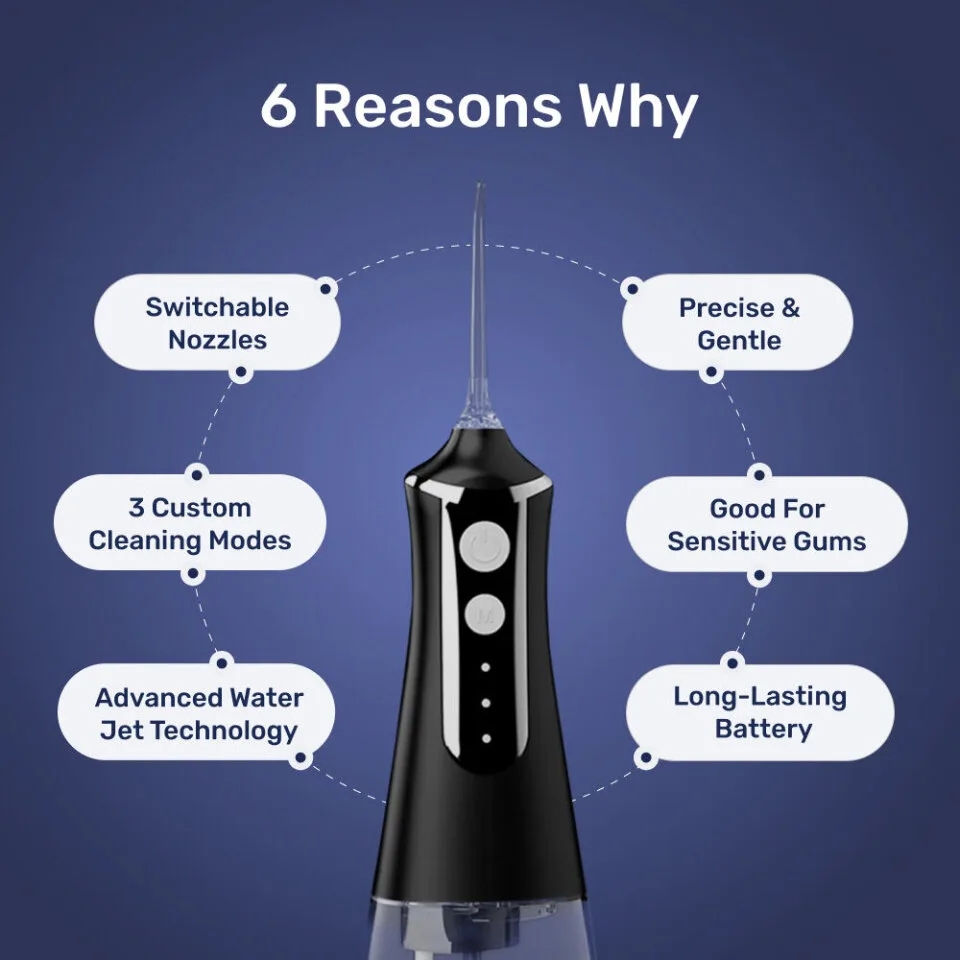
Which water flosser is easy to use for implant care?
The WellaWhite Water Flosser is a cordless, rechargeable water flosser with a built-in tank, three cleaning modes and interchangeable nozzles. The modes let you start gently around implants and new dental work and adjust as your gums get used to it. Being cordless, it's easy to use at the sink without a cable, and it's compact enough to take on trips, so your routine doesn't stop when you travel. It's braces-friendly too, which shows it's designed for cleaning around dental hardware. It's sold at up to 75% off on the official site. Read our WellaWhite Water Flosser review.
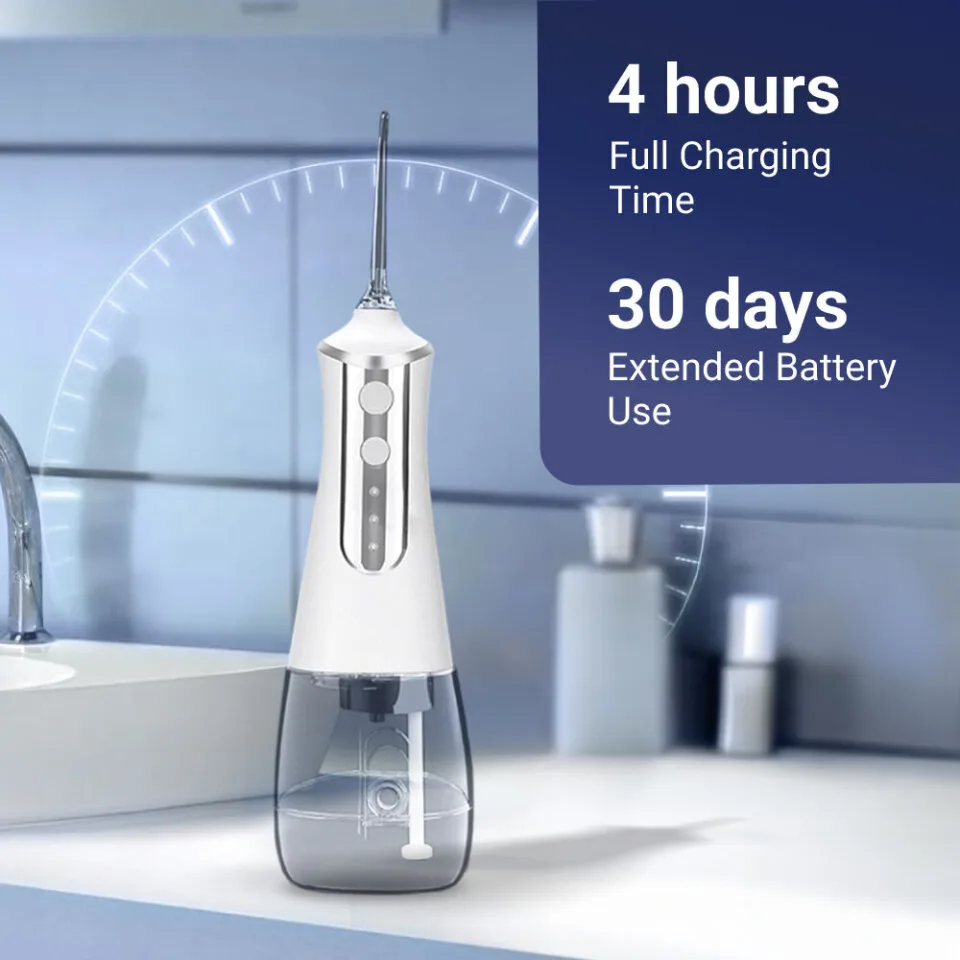
Gentle daily cleaning around implants and bridges
WellaWhite cordless water flosser: three modes, interchangeable nozzles, rechargeable, travel-friendly. Up to 75% off on the official site.
Check today's price →Up to 75% off on the official site
How should you brush around implants?
- Use a soft-bristled brush or a sonic toothbrush on a gentle mode.
- Angle the bristles toward the gum line and use small circles.
- Brush the implant crown just like a natural tooth: outside, inside and top.
- Choose a low-abrasion toothpaste; very gritty or whitening pastes can scratch some crown materials.
- Brush twice a day for two minutes.
See how to brush your teeth properly and sonic vs oscillating toothbrushes.
Which other tools help with implant care?
- Soft interdental brushes (often with coated wire) for spaces between implants and teeth.
- Implant floss or spongy floss designed for implants and bridges.
- Floss threaders to get under bridges and connected crowns.
- Single-tuft brushes for hard-to-reach spots around the back of implants.
Your dentist or hygienist can show you which tools fit your implant. See water flosser vs interdental brush.
Is a water flosser better than floss for implants?
Both remove plaque between teeth, and the best choice is the one you'll use every day. For many implant patients, a water flosser is easier and more comfortable, especially around crowns, bridges and the gum line. Some dentists suggest combining a water flosser with implant floss or interdental brushes for the most thorough clean. The American Dental Association recommends cleaning between your teeth once a day with floss or another interdental cleaner. See water flosser vs floss.
When can you start water flossing after getting an implant?
Right after implant surgery, the area needs time to heal, and your surgeon will give specific instructions on rinsing, brushing and when to start other cleaning tools. Don't use a water flosser on a fresh surgical site until your dentist says it's okay. When you start, use the lowest setting and avoid aiming the stream directly into the healing area at first.
What warning signs should you watch for?
- Bleeding or swelling around the implant.
- Red, tender gums or pus.
- Bad taste or bad breath that doesn't go away.
- The implant crown feeling loose or moving.
- Gum pulling back to show metal.
- Pain when chewing.
See your dentist promptly if you notice any of these. Early treatment of peri-implant inflammation is simpler and more successful. See signs of gum disease.
How often should implants be checked?
Most dentists recommend regular checkups and professional cleanings, often every three to six months for implant patients, depending on your history. Hygienists use special instruments that won't scratch the implant surface. Tell your dentist if you smoke or have diabetes, since both raise the risk of implant problems.
What about implant-supported dentures?
If you have an implant-supported denture or a fixed full-arch bridge, cleaning underneath it is especially important. A water flosser is very helpful for flushing food and plaque from under the bridge and around the implant posts. If your denture is removable, clean the denture and the implant attachments separately as your dentist instructs.
What does a simple daily implant routine look like?
- Morning: brush gently for two minutes.
- Evening: water floss around every tooth and implant, then brush.
- As recommended: interdental brush or implant floss in tight spots.
- Every few months: professional checkup and cleaning.
Which habits protect implants long term?
- Don't smoke; smoking is linked to more implant problems.
- Manage diabetes and other health conditions.
- Wear a night guard if you grind your teeth.
- Avoid chewing ice or very hard objects with implant crowns.
- Keep up daily cleaning even when everything feels fine.
How do you keep your routine while traveling?
Implant care doesn't take a vacation. A cordless, rechargeable water flosser fits in a toiletry bag, and you can fill the tank from a bottle of water if the tap water is questionable. Bring a travel toothbrush, a few interdental brushes and your usual toothpaste. Keeping the same routine for a week away prevents the plaque buildup that can lead to sore, swollen gums around implants when you get home.
Which water flossing mistakes should implant patients avoid?
- Starting at a high setting on new or tender gums.
- Aiming the stream straight down into the gum instead of at the gum line.
- Rushing: skipping the back of the implant crown and the inside surfaces.
- Using it instead of brushing: a water flosser cleans between teeth, but you still need to brush.
- Using mouthwash in the tank without checking the manual; some can damage the device.
- Forgetting to clean the flosser: empty the tank after each use and replace tips as recommended.
The bottom line
A water flosser is a gentle, effective way to clean around dental implants, bridges and crowns. Start on a low setting, aim at the gum line and trace around each implant once a day, brush twice a day with a soft brush and follow your dentist's advice on extra tools. Watch for bleeding, swelling or looseness and keep up regular checkups.
For easy daily implant care, our pick is the WellaWhite Water Flosser. Check today's WellaWhite Water Flosser price.
Sources
- ADA MouthHealthy. Water Flossers.
- American Dental Association. Floss.
- National Institute of Dental and Craniofacial Research. Gum Disease.
- Official WellaWhite product page, checked October 2026.
Frequently asked questions
Are water flossers good for dental implants?
Yes. A water flosser cleans gently along the gum line and around implant crowns and bridges, where string floss can be awkward.
What setting should I use on a water flosser for implants?
Start on a low setting, especially with a new implant or sensitive gums, and increase only if it's comfortable and your dentist agrees.
How do you water floss around an implant?
Aim the tip at the gum line at about 90 degrees, trace slowly along each tooth and guide the stream all the way around the implant crown.
When can I use a water flosser after implant surgery?
Only when your dentist or surgeon says the area has healed enough. Start on the lowest setting and avoid aiming directly at the healing site at first.
Is a water flosser better than floss for implants?
Both work; the best is the one you use daily. Many implant patients find a water flosser easier, and some dentists suggest combining it with implant floss or interdental brushes.
What are signs of a problem with a dental implant?
Bleeding, swelling, pus, bad taste, pain when chewing, gum pulling back or a crown that feels loose. See your dentist promptly.

Michelle Hert
Michelle researches at-home oral care products, from whitening kits to water flossers, and reads the dental research and buyer feedback behind them so readers can make smarter choices. She is not a dentist, and her guides are not a substitute for professional dental care. Her guides are built on published research, manufacturer information and verified buyer feedback, and are updated when new information comes out. More about Michelle.