
"Yellow teeth" is one of the most searched smile questions in America, with around 18,000 searches every month. If you've ever avoided a photo or covered your mouth when you laugh, you're far from alone.
The good news is that most yellowing is not permanent, and you don't need to spend hundreds of dollars at the dentist to see a difference. In this guide we explain why teeth turn yellow, which at-home options actually work, what's safe for sensitive teeth, and the simple routine we recommend.
This guide is general information about consumer products, not dental advice. If your teeth are suddenly discolored, painful or sensitive, see a dentist.
Why are my teeth yellow?
According to the Cleveland Clinic, tooth discoloration comes in two main types:
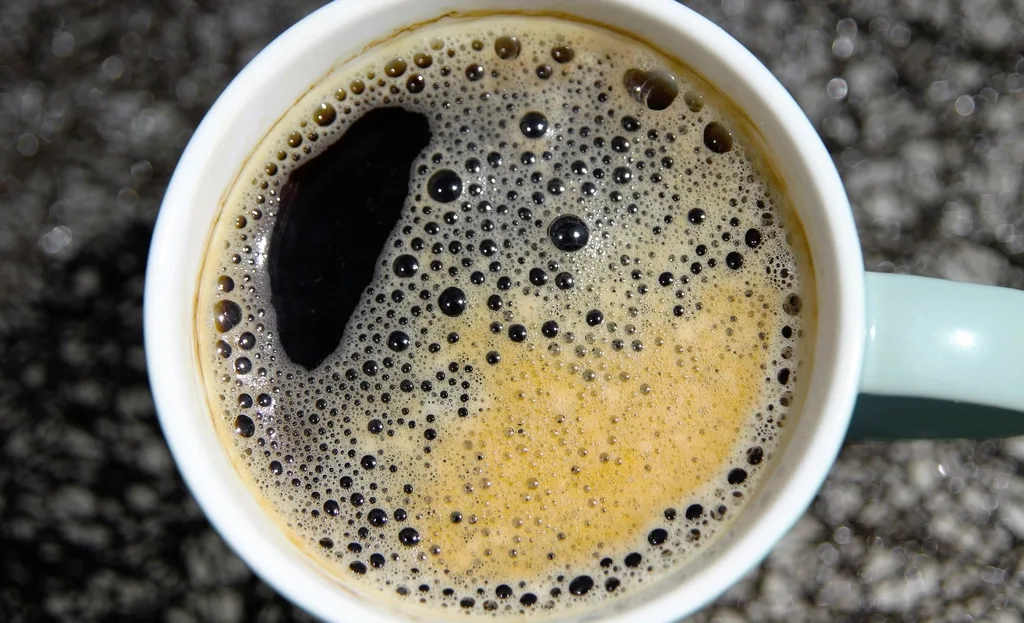
- Extrinsic (surface) stains sit on the outer layer of the tooth, the enamel. They usually come from dark foods and drinks such as coffee, tea, berries, red wine and soy sauce, and from smoking. Stains also cling to plaque.
- Intrinsic (internal) stains start inside the tooth, in the dentin under the enamel. They can come from dental trauma or certain medications.
There's also a natural factor: as we get older, enamel gradually wears thinner, which lets more of the naturally yellow dentin show through.
The key takeaway is encouraging. Surface stains respond best to whitening, and they're also the most common reason teeth look yellow. That's exactly the kind of yellowing at-home products are designed for.
Can you get rid of yellow teeth at home?
For most people, yes. Surface stains can be lifted or neutralized with at-home products, and new stains can be kept away with better daily habits.
What at-home products can't do is change the color of crowns, veneers or fillings, or fully remove deep internal stains. If only one tooth is discolored, or the color changed suddenly, that's a reason to see a dentist first.
What are the best ways to whiten yellow teeth at home?
Here's how the main at-home options compare.
| Option | How it works | Speed | Best for |
|---|---|---|---|
| LED whitening kit | Whitening gel in a tray, with an LED light | Visible change in days | Lifting years of coffee and tea stains |
| Whitening strips | Peroxide gel on thin strips | Days to weeks | Mild staining, budget option |
| Purple color-correcting foam | Purple pigment cancels yellow tones | Instant (temporary) | Quick brightening, sensitive teeth |
| Whitening toothpaste | Mild abrasives polish surface stains | Weeks | Maintenance |
| Sonic electric toothbrush | Removes plaque that stains cling to | Ongoing | Preventing new yellowing |
1. LED whitening kits: the most complete at-home option
An LED whitening kit combines a whitening gel, a mouth tray that holds the gel against your teeth, and a small LED light. The gel does the whitening work, and the light is used to help speed up the process. Research published in The Journal of the American Dental Association found that light can augment tooth whitening with peroxide.
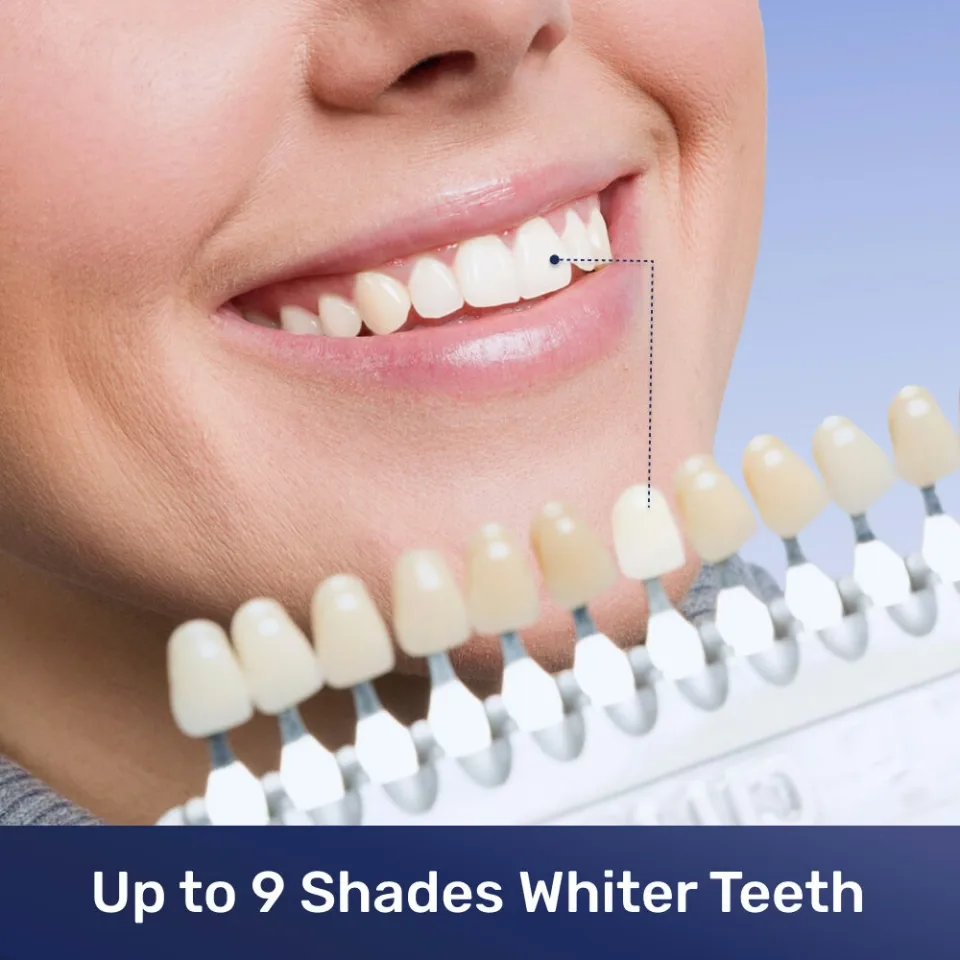
The kit we recommend is the WellaWhite At-Home LED System. It includes the whitening gel, the LED device, moldable trays you shape to your own teeth, and a shade guide to track your progress. Sessions take 15 to 30 minutes, and the brand reports visible results after the first session and up to 9 shades whiter teeth. We break it all down in our full WellaWhite LED System review.
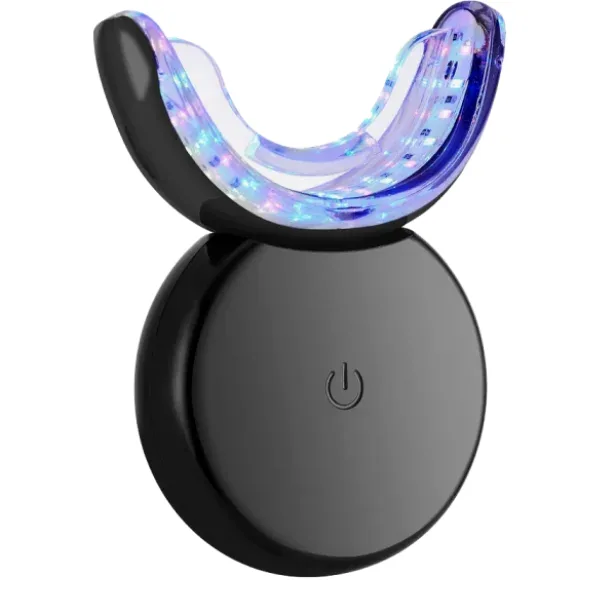
The kit we recommend: WellaWhite At-Home LED System
Whitening gel, LED light, moldable trays and a shade guide in one kit. 15 to 30 minutes a session, $79 for one kit and as low as $59 per kit in bundles.
Check today's price →From $59 per kit · PayPal accepted
2. Purple color-correcting foam: instant brightening
Purple toothpastes and foams have gone viral, and for good reason. Purple sits opposite yellow on the color wheel, so a purple pigment visually cancels yellow tones, the same idea as purple shampoo for blonde hair. The result is an instantly brighter-looking smile.
Dentists point out that this effect is cosmetic and temporary, more like makeup for your teeth than bleaching. That's exactly what makes it useful: it's gentle, it works in two minutes, and it's a great boost before a date, a meeting or a photo, or between whitening sessions. The WellaWhite Purple Whitening Foam is peroxide-free, which makes it a popular pick for sensitive teeth. Learn more in our guide to purple toothpaste.
3. Whitening strips
Strips are an affordable classic. They can work well on mild staining, but some people find they slip, irritate the gums or leave a taste. Kits with custom-fit trays keep the gel more evenly in place.
4. Whitening toothpaste
Whitening toothpastes use mild abrasives or polishing agents to remove surface stains over time. They're good for maintenance but too slow on their own for years of coffee stains.
5. A sonic electric toothbrush
Stains cling to plaque, so removing plaque more thoroughly helps teeth stay brighter. A large Cochrane review found that powered toothbrushes reduced plaque by 11% after one to three months and by 21% after more than three months compared with manual brushing (Yaacob et al., 2014). The WellaWhite Sonic Electric Toothbrush adds a dedicated whitening mode and a sensitive mode. See electric vs manual toothbrush.
Do home remedies like baking soda or charcoal work?
Popular DIY hacks are tempting because they're cheap, but they come with trade-offs:
- Baking soda is mildly abrasive and can polish some surface stains, but scrubbing too hard or too often can wear on enamel.
- Activated charcoal is abrasive, and overuse may wear down enamel. Thinner enamel can actually make teeth look more yellow over time.
- Lemon juice or vinegar are acidic and can soften enamel. Not a good idea.
- Oil pulling may freshen breath, but there's little evidence it whitens teeth.
Purpose-made whitening products are designed to be used on teeth safely when you follow the directions, which is why they're the better choice.
What if I have sensitive teeth?
Sensitivity is the most common complaint with whitening. The American Dental Association notes that temporary tooth sensitivity and gum irritation are the most common side effects of whitening, and that overusing whitening products can harm enamel and gums.
If your teeth are sensitive, these habits help:
- Start with shorter sessions and space them out.
- Choose gentle formulas. WellaWhite describes its LED kit gel as gentle and sensitive-teeth friendly, and its purple foam is peroxide-free.
- Use a toothpaste for sensitive teeth in the weeks you whiten.
- Avoid very hot or cold drinks right after a session.
- Never exceed the recommended use time.
We go deeper in teeth whitening for sensitive teeth.
How long do whitening results last?
Results depend on your habits. Coffee, tea, red wine and smoking bring stains back faster. WellaWhite says results from its LED kit can last up to 6 months with its guided routine. A quick touch-up session every few weeks, plus purple foam for in-between boosts, keeps your smile bright.
How do you keep teeth from turning yellow again?
- Rinse with water after coffee, tea or wine.
- Use a straw for iced coffee and tea.
- Brush twice a day for two minutes, ideally with a sonic toothbrush.
- Clean between your teeth daily, which the ADA recommends with floss or another interdental cleaner such as a water flosser (ADA). See water flosser vs floss.
- Keep up with dental cleanings, which remove hardened tartar that brushing can't.
Coffee lover? We have a whole guide on coffee stains on teeth.
What's the best at-home routine for whiter teeth?
- Lift stains: use an LED whitening kit like the WellaWhite LED System for 15 to 30 minutes a session, following the directions.
- Instant boost: brush with purple color-correcting foam before special occasions or between sessions.
- Prevent new stains: brush twice daily with a sonic toothbrush and clean between teeth once a day.
- Maintain: do touch-up sessions every few weeks and rinse after dark drinks.
Is at-home whitening cheaper than the dentist?
Usually, yes. Professional in-office whitening often costs several hundred dollars per visit. The WellaWhite At-Home LED System costs $79 for one kit on the official site, and as little as $59 per kit when you buy several, so you can share with a partner or keep one for touch-ups. Professional whitening is still the right choice if you have deep internal stains or lots of dental work.
When should you see a dentist about yellow teeth?
- Only one tooth is discolored or darkening.
- The color changed suddenly.
- You have pain, sensitivity that doesn't go away, or bleeding gums.
- You have crowns, veneers or large fillings in the front (they won't whiten).
- You haven't had a cleaning in over a year.
The bottom line
Most yellow teeth are caused by surface stains, and those can be brightened at home. An LED whitening kit is the most complete at-home option, purple foam gives an instant and gentle boost, and a sonic toothbrush helps keep new stains away.
Our top pick is the WellaWhite At-Home LED System. Read our full review or check today's price on the official site.
Sources
- Cleveland Clinic. Tooth Discoloration: Causes & Treatment.
- American Dental Association. Whitening and Dental Floss/Interdental Cleaners.
- The Journal of the American Dental Association. Light augments tooth whitening with peroxide.
- Yaacob M. et al. (2014). Powered versus manual toothbrushing for oral health. Cochrane Database of Systematic Reviews.
- Official WellaWhite product pages and checkout, checked October 2026.
Frequently asked questions
What is the fastest way to get rid of yellow teeth?
For surface stains, an at-home LED whitening kit is one of the fastest options, with many people noticing a difference after the first session. For an instant but temporary boost, purple color-correcting foam makes teeth look brighter right after brushing.
Can yellow teeth become white again?
Yellowing from surface stains like coffee, tea, wine and tobacco usually responds well to whitening. Deep internal stains and yellowing from thin enamel are harder to change at home, and crowns or veneers won't whiten.
Does baking soda whiten yellow teeth?
Baking soda is mildly abrasive and can polish some surface stains, but scrubbing hard or often can wear enamel. Purpose-made whitening products are a safer choice when used as directed.
Why are my teeth yellow even though I brush?
Brushing removes plaque but not stains that have bonded to enamel from coffee, tea, wine or tobacco. Thinning enamel with age can also let yellow dentin show through.
Is at-home teeth whitening safe?
When used as directed, at-home whitening is generally safe. The ADA notes that temporary sensitivity and gum irritation are the most common side effects and that overuse can harm enamel and gums.
How long does teeth whitening last?
Results depend on your habits. Coffee, tea, wine and smoking bring stains back faster. WellaWhite says its LED kit results can last up to 6 months with its guided routine and touch-ups.
What is the best at-home teeth whitening kit?
Our pick is the WellaWhite At-Home LED System: whitening gel, LED light, moldable trays and a shade guide, designed to be gentle on sensitive teeth, from $59 per kit in bundles.

Michelle Hert
Michelle researches at-home oral care products, from whitening kits to water flossers, and reads the dental research and buyer feedback behind them so readers can make smarter choices. She is not a dentist, and her guides are not a substitute for professional dental care. Her guides are built on published research, manufacturer information and verified buyer feedback, and are updated when new information comes out. More about Michelle.