
- Start on the lowest pressure and increase slowly only if it's comfortable.
- Aim along the gumline at about 90 degrees, not straight into the gum pocket.
- Use lukewarm water if exposed roots are sensitive.
- Keep brushing gently with a soft brush and see your dentist about the cause of the recession.
General information about consumer products, not dental advice. Gum recession can have several causes, including gum disease. See your dentist or periodontist for a diagnosis and treatment plan.
Receding gums make teeth look longer, can expose sensitive roots and often leave people worried about doing more damage while cleaning. Some avoid flossing altogether because string floss feels sharp against tender gums, which lets plaque build up and can make the problem worse. A water flosser offers a gentler way to clean along the gumline and between teeth. This guide explains how receding gums happen, why gentle cleaning matters, how to use a water flosser safely on receding gums, the right settings and the daily habits that protect your gums.
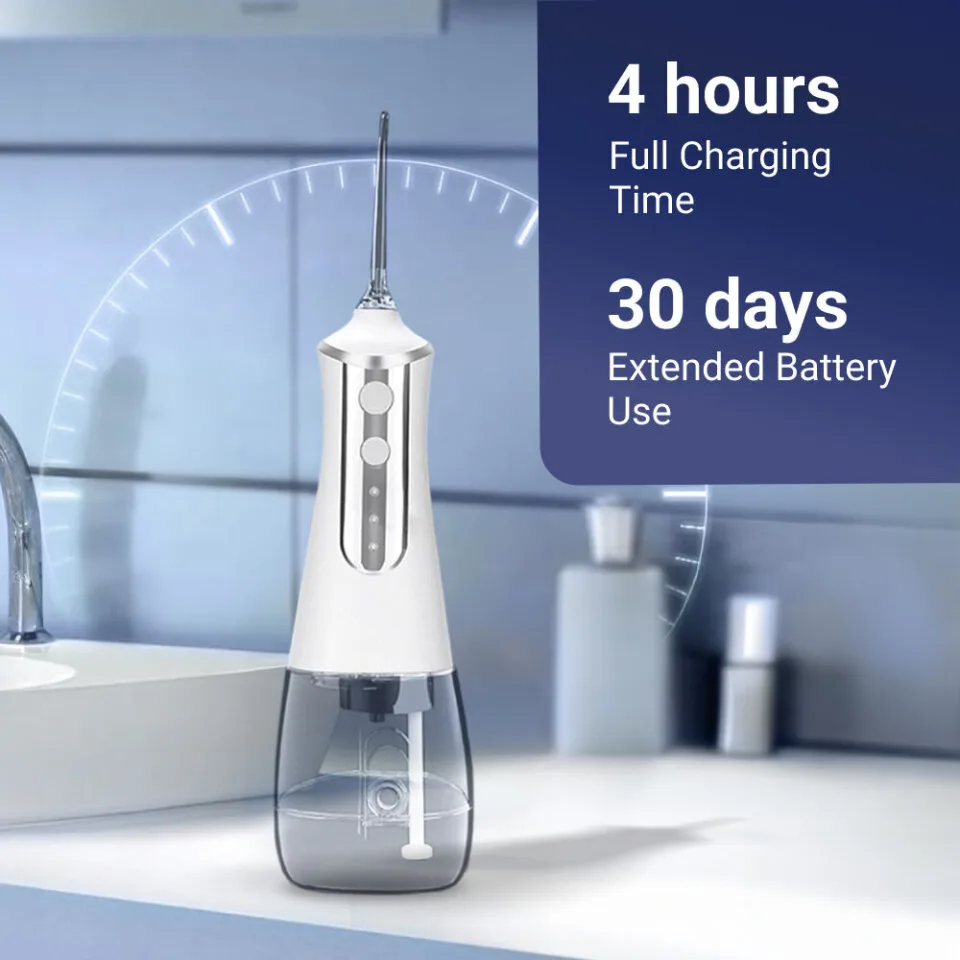
Our pick: the WellaWhite Water Flosser
Cordless, rechargeable water flosser with 3 cleaning modes and interchangeable nozzles. Braces-friendly.
Check today's price →Up to 75% off on the official site
What are receding gums?
Gum recession happens when the gum tissue around a tooth pulls back, exposing more of the tooth or its root. It often develops slowly, so many people don't notice until teeth look longer, feel sensitive to cold or show a notch near the gumline. Common causes include:
- Gum disease (periodontitis), which destroys the tissue and bone supporting teeth
- Brushing too hard or with a hard-bristled brush
- Genetics and naturally thin gum tissue
- Teeth grinding or clenching
- Tobacco use
- Crooked teeth or past orthodontic movement
- Aging
The National Institute of Dental and Craniofacial Research explains that plaque buildup along the gumline is the main driver of gum disease, which is one reason consistent, gentle cleaning matters so much.
Why can a water flosser help with receding gums?
- It cleans along the exposed root and gumline without a sharp edge.
- It reaches the wider gaps that open up between teeth as gums recede.
- It's gentle on low settings, so tender gums aren't cut or snapped like they can be with string floss.
- It flushes food out of spaces where it tends to pack in.
- It's easier to use consistently, which matters more than any single cleaning.
The ADA's MouthHealthy site notes that water flossers can help remove plaque between teeth and are a good option for people who find traditional floss difficult.
What can't a water flosser do?
A water flosser keeps the area clean, but it can't make gum tissue grow back. Once gums recede, they don't return on their own. Treatment depends on the cause and may include deep cleaning, changes in brushing technique, a night guard for grinding or, in some cases, gum grafting by a periodontist. Think of the flosser as a daily tool that helps prevent further damage while your dentist addresses the cause.
How do you use a water flosser on receding gums?
- Fill the reservoir with lukewarm water; cold water can sting exposed roots.
- Choose the lowest pressure setting.
- Lean over the sink and place the tip in your mouth before switching on.
- Aim at the gumline at about 90 degrees, letting the stream run along the edge of the gum rather than blasting into it.
- Move slowly along each tooth, pausing briefly between teeth.
- Cover inside and outside surfaces of every tooth.
- Switch off before removing the tip, empty the reservoir and let it dry.
For step-by-step basics, see how to use a water flosser.
What pressure setting is safe for receding gums?
Start with the gentlest mode and stay there for at least a week or two. If it feels comfortable and your gums don't bleed more than usual, you can step up one level. You're aiming for a stream that feels like a firm rinse, not a sting. Our guide to water flosser pressure settings explains the levels, and water flosser for sensitive gums has extra tips if your gums are tender.
Which water flosser do we recommend?
The WellaWhite Water Flosser is cordless and rechargeable, with adjustable pressure modes including gentle settings that suit sensitive gums and exposed roots. Being cordless makes it easy to angle around back teeth, and it's regularly available at up to 75% off on the official site. Read our WellaWhite Water Flosser review.
Gentle cleaning for tender gums
WellaWhite Water Flosser: cordless, rechargeable, with gentle pressure modes for sensitive gums. Up to 75% off on the official site.
Check today's price →Up to 75% off on the official site
How should you brush with receding gums?
- Use a soft-bristled brush, never medium or hard.
- Hold the brush at a 45-degree angle to the gumline and use small, gentle circles.
- Don't scrub side to side with force.
- Consider an electric toothbrush with a pressure sensor that warns you when you press too hard.
- Use a fluoride toothpaste, or one for sensitive teeth if roots are sensitive.
See can an electric toothbrush damage gums? for more on gentle brushing.
What helps with sensitivity from exposed roots?
Exposed root surfaces don't have enamel protecting them, so cold, hot and sweet foods can sting. A desensitizing toothpaste used daily for a few weeks often helps. Your dentist can also apply fluoride varnish or bonding to sensitive areas. Using lukewarm water in your flosser and avoiding very acidic drinks reduces discomfort.
Is a little bleeding normal when you start?
Mild bleeding in the first week or two of a new cleaning routine is common, especially if gums are inflamed, and often improves as the gums get healthier. Bleeding that's heavy, doesn't improve after two weeks, or comes with swelling, pain or loose teeth should be checked by your dentist. Read how to stop bleeding gums.
What does a gum-friendly daily routine look like?
- Water floss once a day on a gentle setting.
- Brush twice a day with a soft brush and light pressure.
- Use floss or soft interdental brushes as your dentist recommends.
- Avoid tobacco.
- Wear a night guard if you grind your teeth.
- See your dentist for regular cleanings and gum checks.
When should you see a dentist about receding gums?
- Teeth look longer or gaps are opening between them
- Gums bleed easily or look red and swollen
- You notice bad breath that doesn't go away
- Teeth feel loose or your bite has changed
- Sensitivity is getting worse
Early treatment can stop recession from progressing. Learn more in how to improve gum health.
What should you expect in the first week?
The first few days with a water flosser can feel unusual: a tickling sensation along the gums, some splashing and maybe a little bleeding if gums are inflamed. That usually settles quickly. Keep the pressure low, lean over the sink with your lips partly closed to reduce splashing, and stick with it daily. Most people find that within a week it feels natural and takes only a minute or two. Many also notice that their gums look less puffy and bleed less after a couple of weeks of consistent, gentle cleaning.
How do you clean the bigger gaps between teeth?
As gums recede, small triangular gaps can open between teeth, often called "black triangles". Food packs into them easily. A water flosser is good at flushing them out: pause the tip at each gap for a second or two and let the stream run through. Soft interdental brushes sized by your dentist or hygienist are also very effective for these spaces. Avoid toothpicks, which can injure gum tissue.
Can diet help your gums?
A balanced diet supports gum health. Vitamin C helps maintain healthy gum tissue, and crunchy vegetables stimulate saliva, which naturally rinses the mouth. Limit sugary snacks and sticky foods between meals, since they feed the bacteria in plaque. Drinking water throughout the day helps too. Diet doesn't replace cleaning, but it gives your gums a better starting point.
How does smoking affect receding gums?
Tobacco reduces blood flow to the gums, hides the warning sign of bleeding and makes gum disease more likely to progress. Smokers often have more recession and slower healing after treatment. Quitting is one of the most powerful steps you can take for your gums. If you smoke, tell your dentist so they can monitor your gums closely.
How do you keep the flosser itself clean?
Empty the reservoir after each use and let it air-dry with the lid open, so water doesn't sit and grow bacteria. Once a week, rinse the reservoir and tip with warm water, and descale occasionally if you have hard water. Replace the tip every few months. A clean flosser is especially important when gums are already inflamed. Full steps in how to clean a water flosser.
Store the flosser upright and away from the toilet, and keep the charging base dry.
These small habits keep every cleaning as hygienic as possible for tender gums.
The bottom line
A water flosser is a gentle, effective way to clean along receding gums and the wider gaps between teeth, as long as you use the lowest comfortable pressure, aim along the gumline and use lukewarm water. It won't regrow gum tissue, so see your dentist to find and treat the cause. Paired with soft, gentle brushing and regular checkups, a cordless flosser like the WellaWhite Water Flosser helps protect the gums you have.
Our pick: the WellaWhite Water Flosser
Cordless, rechargeable water flosser with 3 cleaning modes and interchangeable nozzles. Braces-friendly.
Check today's price →Up to 75% off on the official site
Frequently asked questions
Is a water flosser good for receding gums?
Yes, on a gentle setting. It cleans the gumline and wider gaps without a sharp floss edge.
Can a water flosser make receding gums worse?
Not when used on low pressure aimed along the gumline; very high pressure can irritate tender gums.
Can a water flosser reverse gum recession?
No. It helps keep the area clean, but gum tissue doesn't grow back on its own.
What pressure should I use for receding gums?
Start on the lowest setting and only increase slowly if it's comfortable.
Should I use warm water in my water flosser?
Lukewarm water is more comfortable for sensitive, exposed roots.
When should I see a dentist about receding gums?
If teeth look longer, gums bleed or swell, teeth feel loose or sensitivity is getting worse.

Michelle Hert
Michelle researches at-home oral care products, from whitening kits to water flossers, and reads the dental research and buyer feedback behind them so readers can make smarter choices. She is not a dentist, and her guides are not a substitute for professional dental care. Her guides are built on published research, manufacturer information and verified buyer feedback, and are updated when new information comes out. More about Michelle.