- After every use: empty the reservoir, run a few seconds of air or water through it, and let all parts air-dry with the lid open.
- Weekly: wash the reservoir with warm soapy water and wipe the handle.
- Monthly: run a vinegar-and-water solution through it to remove mineral buildup, then rinse with clean water.
- Every 3 to 6 months: replace the nozzle tip.
General information about consumer products, not dental advice. If your gums bleed often, are swollen or painful, see a dentist.
A water flosser cleans your mouth, but it also needs cleaning itself. Water sitting in the reservoir, warm bathrooms and tiny food particles flushed from between your teeth create the perfect conditions for buildup, odors and even mold if the device isn't cared for. The good news is that a few simple habits keep a water flosser fresh, hygienic and working at full pressure for years.
This guide explains why cleaning matters, what to do after each use, how to deep clean weekly and monthly, how to descale mineral buildup, when to replace nozzles, how to care for cordless and countertop models, and how to fix common problems like weak pressure or bad smells.
Why do you need to clean a water flosser?
- Moisture: water left in the reservoir or tubing can lead to biofilm and odors.
- Minerals: hard water leaves scale that can clog the pump and reduce pressure.
- Hygiene: the tip goes in your mouth daily, so it should stay clean.
- Lifespan: clean devices work better and last longer.
The ADA's MouthHealthy site describes water flossers as a helpful option for cleaning between teeth; keeping the device clean helps it do that job well.
What should you do after each use?
- Empty any water left in the reservoir.
- Run the flosser for a few seconds with no water, or with a little clean water, to clear the tubing and tip.
- Remove the tip and rinse it under warm running water.
- Leave the reservoir open or detached so it can air-dry.
- Wipe drips off the handle and base with a dry cloth.
This takes less than a minute and prevents most problems.
How do you clean it weekly?
- Remove the reservoir and wash it with warm water and a little mild dish soap.
- Use a soft bottle brush or cloth for corners.
- Rinse thoroughly so no soap remains.
- Wipe the handle and tip holder with a damp cloth.
- Soak the tip in warm water with a little vinegar or mouthwash for a few minutes, then rinse.
- Air-dry everything before reassembling.
Check your manual before putting any part in the dishwasher; many reservoirs are top-rack safe, but handles and electronics are not.
How do you descale it monthly?
If you have hard water, mineral scale can build up inside the pump and tubing, reducing pressure. Many manufacturers suggest descaling with diluted white vinegar:
- Mix about one part white vinegar with two to three parts warm water, or follow your manual's ratio.
- Fill the reservoir about halfway with the solution.
- Run the flosser over the sink until about half the solution has passed through.
- Turn it off and let the rest sit for a few minutes.
- Run the remaining solution through.
- Rinse by running a full reservoir of clean warm water through the device.
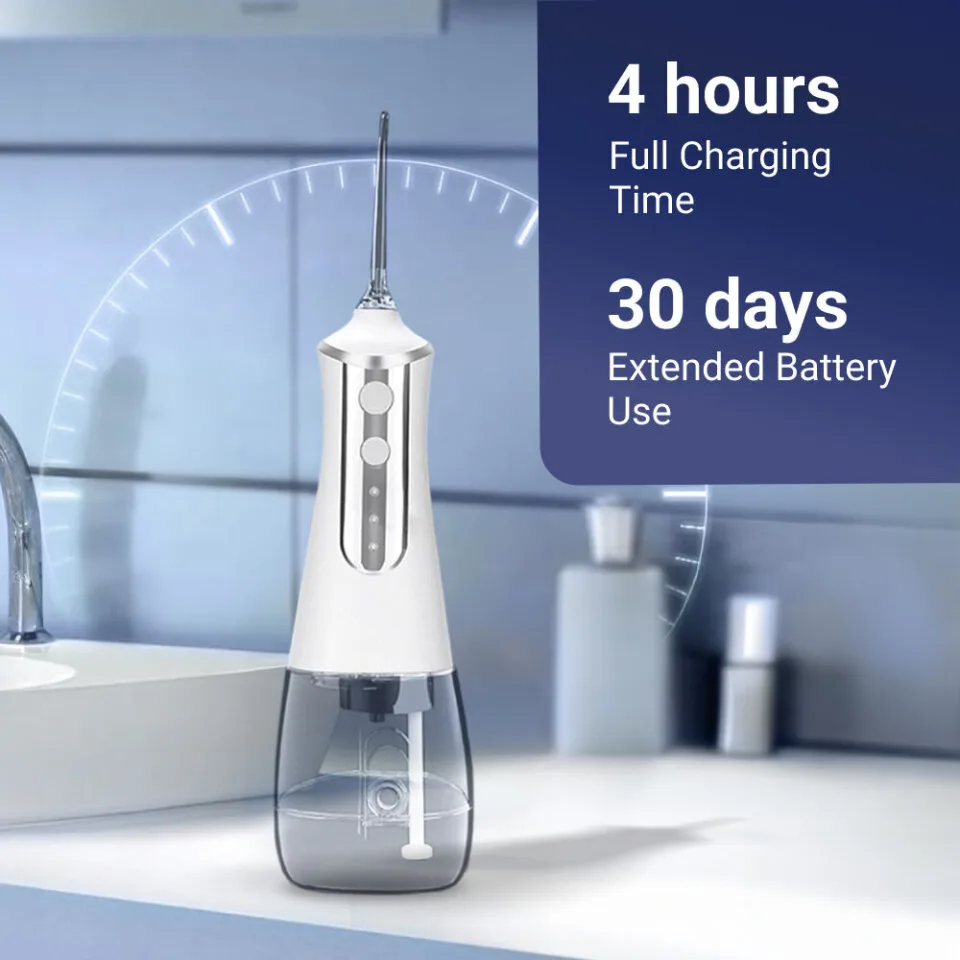
An easy-to-clean cordless flosser
WellaWhite Water Flosser: cordless and rechargeable, with 3 cleaning modes and interchangeable nozzles. Braces-friendly. Up to 75% off on the official site.
Check today's price →Up to 75% off on the official site
When should you replace the tip?
Replace the nozzle tip every three to six months, or sooner if it looks worn, discolored or cracked, or if the stream sprays unevenly. Specialty tips for braces or implants may need replacing more often. If several people use the same flosser, give each person their own tip and label them. Interchangeable nozzles, like those on the WellaWhite Water Flosser, make this easy.
What if you see mold or black spots?
Black or pink spots in the reservoir or tubing are usually a sign that water was left sitting. Clean the reservoir with warm soapy water, soak removable parts in a vinegar solution, and run vinegar solution through the device as described above. Replace the tip. If you see buildup inside parts you can't reach or clean, contact the manufacturer. To prevent it, always empty and dry the reservoir after use.
Why does my water flosser smell?
- Water left in the reservoir.
- Food particles trapped in the tip.
- Storing it closed while still wet.
- Using mouthwash without rinsing afterward.
Empty and dry after each use, clean weekly and descale monthly, and the smell usually disappears.
Why has the pressure dropped?
| Cause | Fix |
|---|---|
| Mineral buildup | Descale with vinegar solution |
| Worn or clogged tip | Clean or replace the tip |
| Reservoir not seated properly | Reattach firmly |
| Low battery (cordless) | Fully recharge |
| Low setting selected | Check the mode |
How do you care for a cordless model?
Cordless flossers are compact and water-resistant, but the charging port and electronics still need care. Keep the charging area dry, wipe it before charging and follow the manual about how much of the device can get wet. Don't submerge the handle unless the manual says it's waterproof. Charge fully before travel. Compare models in cordless vs countertop water flossers.
What about countertop models?
Countertop flossers have a larger reservoir and a hose. Clean the reservoir the same way, wipe the hose and handle, and run vinegar solution through during monthly descaling. Unplug before cleaning the base.
Can you put mouthwash in the reservoir?
Some people add a small amount of mouthwash to the water. Check the manual, since some ingredients can affect seals or leave residue. If you use it, run a reservoir of plain water through afterward to rinse the system.
How should you store it when traveling?
Empty and dry the flosser completely before packing. Store the tip in a clean case or bag, separate from other toiletries. Don't pack it wet, which can lead to odors.
What does a simple care routine look like?
- Daily: empty, run dry, rinse tip, air-dry.
- Weekly: wash reservoir and tip, wipe handle.
- Monthly: descale with vinegar solution.
- Every 3 to 6 months: replace tips.
Use it daily as part of your routine; see how often to use a water flosser and how to use a water flosser.
Should you clean your toothbrush too?
Yes. Rinse your toothbrush well, store it upright to dry and replace the head every three to four months. Electric toothbrush handles need wiping too. See how to clean an electric toothbrush.
Is the WellaWhite Water Flosser easy to clean?
The WellaWhite Water Flosser is cordless and rechargeable, with three cleaning modes and interchangeable nozzles. Its compact cordless design makes daily emptying and drying quick. It's often discounted by up to 75% on the official site. Read our WellaWhite Water Flosser review.
What are common myths?
- "Water flossers clean themselves." They need regular emptying and cleaning.
- "Bleach is the best cleaner." It can damage parts; mild soap and vinegar are usually enough.
- "Tips last forever." Replace them every few months.
- "Low pressure means the motor is broken." Often it's just scale or a worn tip.
Which water should you use?
Lukewarm tap water works for most people and is more comfortable than cold water on sensitive teeth. If you have very hard water, using filtered water can reduce mineral buildup and the need for frequent descaling. Avoid very hot water, which can damage parts and feel uncomfortable on gums. Never leave water sitting in the reservoir between uses.
How do you share a flosser in a family?
A family can share one flosser body if each person has their own tip. Color-coded tips help everyone grab the right one. Rinse the tip holder after each person and store tips so they don't touch. For kids, supervise use and choose the gentlest setting; see water flossers for kids.
Do you need extra cleaning with braces?
With braces, more food gets trapped, so tips can collect debris faster. Rinse the tip well after each use and replace orthodontic tips as recommended. See water flossers for braces.
When should you replace the whole flosser?
Most water flossers last a few years with good care. Consider replacing yours if pressure stays weak after descaling and a new tip, the battery no longer holds a charge, it leaks from the handle or seals, or there's buildup inside that you can't clean. A new device is also worth it if you've had mold you can't fully remove.
What habits make cleaning easier?
Keep the flosser near the sink with a small towel next to it, set a weekly reminder on your phone for washing the reservoir, and add descaling to your monthly bathroom cleaning. Buying spare tips in advance means you'll never put off replacing a worn one. These small steps turn maintenance into a habit you barely notice.
A clean flosser is a better flosser.
The bottom line
Cleaning a water flosser is easy: empty and dry it after every use, wash the reservoir and tip weekly, descale with diluted vinegar monthly and replace the tip every three to six months. These habits prevent odors, mold and pressure loss, so your flosser keeps your gums clean for years.
Our pick is the WellaWhite Water Flosser. Check today's WellaWhite Water Flosser deal.
Sources
- MouthHealthy (ADA). Water Flossers.
- American Dental Association. Floss.
- Official WellaWhite product page, checked October 2026.
Frequently asked questions
How often should I clean my water flosser?
Empty and dry it after every use, wash weekly and descale monthly.
How do I descale a water flosser?
Run a diluted white vinegar solution through it, then rinse with clean water; follow your manual.
How often should I replace the tip?
Every three to six months, or sooner if it looks worn.
Why does my water flosser smell?
Usually water left in the reservoir or trapped debris; empty and dry it after use.
Why is the pressure low?
Often mineral buildup, a worn tip or low battery.
Can I put mouthwash in it?
Check the manual first, and rinse with plain water afterward.

Michelle Hert
Michelle researches at-home oral care products, from whitening kits to water flossers, and reads the dental research and buyer feedback behind them so readers can make smarter choices. She is not a dentist, and her guides are not a substitute for professional dental care. Her guides are built on published research, manufacturer information and verified buyer feedback, and are updated when new information comes out. More about Michelle.