- Fill the reservoir with lukewarm water.
- Start on the lowest pressure setting.
- Lean over the sink, place the tip in your mouth and close your lips partly to avoid splashing.
- Aim the tip at the gumline at a 90-degree angle.
- Glide slowly along the gumline, pausing briefly between each tooth, on the outside and inside of every tooth.
General information, not dental advice. If your gums bleed a lot, hurt, or you have gum disease, braces, implants or recent dental work, ask your dentist how to use a water flosser for your situation.
Water flossers have become one of the most popular oral care tools, and for good reason: many people find them easier and more pleasant than string floss, especially with braces, bridges, implants or sensitive gums. But the first time you use one, it's easy to spray water all over the bathroom mirror, use too much pressure or miss the areas that matter most.
This step-by-step guide explains how to use a water flosser correctly, which settings to choose, common mistakes, how to care for the device, and how a water flosser fits into your daily routine.
What is a water flosser and how does it work?
A water flosser (also called an oral irrigator) shoots a thin, pulsing stream of water between teeth and along the gumline to flush out food particles and plaque. The American Dental Association recommends cleaning between your teeth once a day with floss or another interdental cleaner, and water flossers are one of those options. According to the ADA's consumer site MouthHealthy, water flossers with the ADA Seal of Acceptance have been shown to remove plaque and help reduce gingivitis.
How do you use a water flosser step by step?
- Fill the reservoir with lukewarm water. Cold water can feel uncomfortable on sensitive teeth.
- Choose a tip: the standard jet tip for most people, or special tips for braces or implants if your model has them.
- Set the lowest pressure at first. You can increase it as your gums get used to it.
- Lean over the sink and put the tip in your mouth before turning it on.
- Close your lips partly around the tip to prevent splashing, letting water drain from your mouth into the sink.
- Turn it on and aim the tip at the gumline at a 90-degree angle.
- Start with the back teeth and work forward, gliding along the gumline and pausing a second or two between each tooth.
- Do the outside and inside of the top teeth, then the bottom teeth.
- Turn it off before removing the tip from your mouth.
- Empty the reservoir and let it dry.
What pressure setting should you use?
Start low, especially if your gums bleed easily or you're new to water flossing. Many people's gums bleed a little in the first week or two of any new interdental cleaning, which often decreases as gums get healthier with regular cleaning. Increase the pressure gradually to a comfortable level. Higher pressure isn't always better: the goal is to flush debris without discomfort. If your gums keep bleeding after a couple of weeks, see your dentist; see our guide on how to stop bleeding gums.
When should you use a water flosser: before or after brushing?
Either works, and there's no need to overthink it. Many dentists suggest flossing first, so brushing and fluoride toothpaste can reach the surfaces you've just cleared. The most important thing is to do it once a day, every day. Many people find it easiest to make water flossing part of the evening routine, so food from the day's meals is cleared before bed.
Which water flosser is easy for beginners?
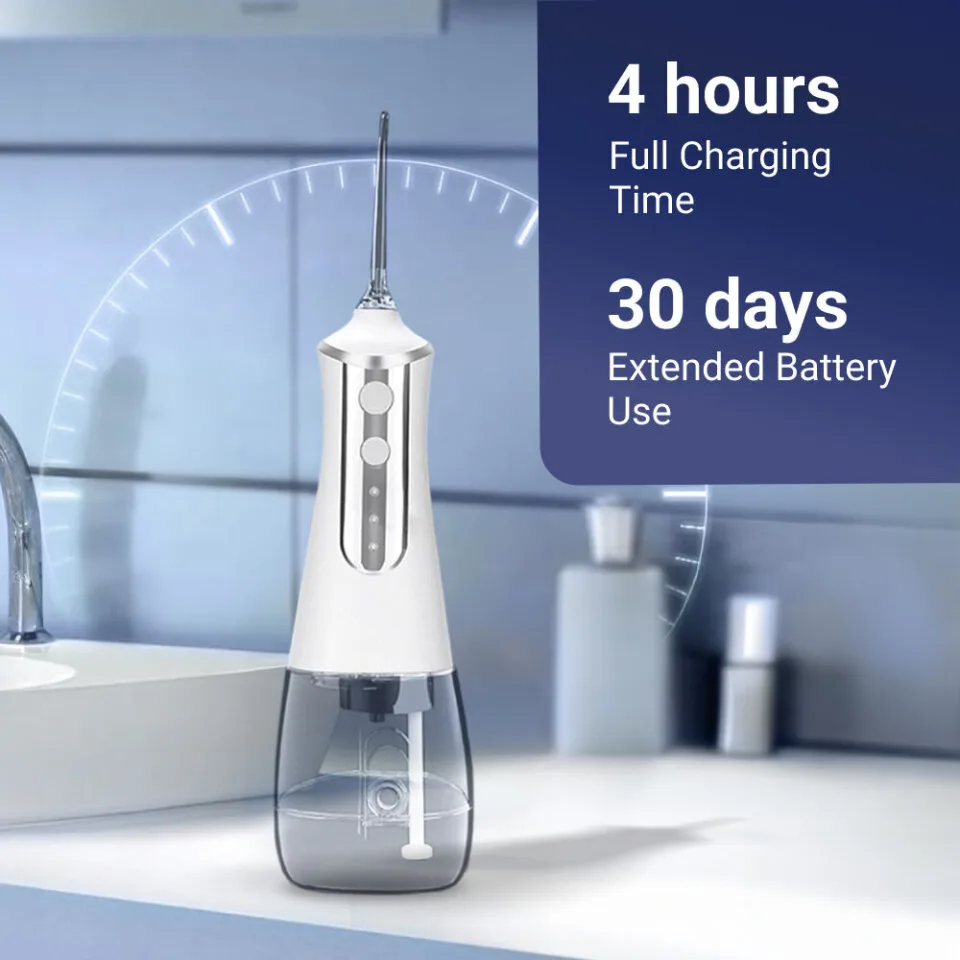
A cordless flosser is easier to use and store than a countertop model, especially in a small bathroom. The WellaWhite Water Flosser is a cordless, rechargeable flosser with 3 cleaning modes and interchangeable nozzles, and it's designed to be braces-friendly. The modes let you start gentle and move up as your gums get used to it, and the nozzles mean several people can share the base with their own tips. It's sold on the official site with discounts of up to 75%. Read our guide to water flosser vs floss.
An easy, cordless way to clean between teeth
WellaWhite Water Flosser: cordless and rechargeable, 3 cleaning modes, interchangeable nozzles, braces-friendly. Up to 75% off on the official site.
Check today's price →Up to 75% off on the official site
What are the most common water flosser mistakes?
- Turning it on outside your mouth: instant mess on the mirror.
- Starting on high pressure: uncomfortable and can discourage you.
- Moving too fast: pause briefly between each tooth so the water can flush the space.
- Aiming at the tooth surface instead of the gumline: the gumline and spaces between teeth are what matter.
- Skipping the inside surfaces of teeth, behind the front teeth especially, where tartar often builds.
- Using it instead of brushing: it's an interdental cleaner, not a toothbrush replacement.
- Leaving water in the reservoir: it can grow bacteria and mineral buildup.
How do you use a water flosser with braces, implants or bridges?
Water flossers are especially helpful when string floss is hard to use. With braces, aim the stream around each bracket and along the wires, then along the gumline. With bridges, aim under the false tooth and along the gumline on both sides. With implants, follow your dentist's advice on tips and pressure. See our guide on water flossers for braces.
Can you put mouthwash in a water flosser?
Some manufacturers allow diluted mouthwash; others recommend water only, as additives can damage the device or void the warranty. Check your flosser's instructions. Plain lukewarm water does the cleaning job well.
How do you clean and care for a water flosser?
- Empty the reservoir after each use and leave it open to dry.
- Rinse the tip and replace it as the manufacturer recommends, often every few months.
- Clean the reservoir weekly with warm, soapy water and a small brush.
- If you have hard water, descale occasionally with diluted white vinegar, if the manual allows, then rinse well.
- Charge cordless models fully and avoid storing them wet or in a closed, damp cabinet.
How does water flossing compare with string floss?
String floss scrapes plaque off the sides of teeth with a C-shaped motion, and it's cheap, portable and precise. Water flossing flushes debris and plaque from between teeth and along the gumline with a pulsing stream, and many people find it faster, gentler and easier to do consistently. The best choice is the one you'll actually use every day. Some people combine them: water flossing daily for convenience and string floss a few times a week for tight contacts. If you've struggled to keep up a string flossing habit, a water flosser is often the change that finally makes daily interdental cleaning stick. Our detailed comparison is water flosser vs floss.
Can kids and the whole family use one?
Many families share one base with a different colored tip for each person. Children can usually use a water flosser once they can follow the technique and keep their lips closed, often around school age, with a parent supervising and the pressure on the lowest setting. Kids with braces especially benefit. Ask your child's dentist for advice, and make sure everyone uses their own tip and replaces it regularly. A cordless flosser is easy to pass around and charge on the counter.
Can you travel with a water flosser?
Cordless models are travel-friendly: empty the reservoir completely before packing to avoid leaks, bring the charger or charge fully before leaving, and pack the tip in a clean case. In a hotel bathroom, the same technique applies: lean over the sink, tip in before turning on, lips partly closed. Keeping up the habit while traveling, when meals are irregular and snacks are frequent, is especially helpful for gums.
How does a water flosser fit into a full routine?
- Water floss once a day.
- Brush twice a day for two minutes with fluoride toothpaste; an electric brush helps. See electric vs manual toothbrush.
- See your dentist for regular checkups and cleanings.
Healthy gums and less plaque between teeth also help whitening results last longer; see how long teeth whitening lasts.
What should you expect in the first week?
The first few sessions feel strange: the pulsing stream tickles, water seems to go everywhere, and finding the right angle takes practice. Most people get the hang of it within three or four days. Some gum bleeding at first is common, especially if you haven't been cleaning between your teeth regularly, and it usually improves as you keep going. By the end of the first week, the routine typically takes a minute or two, and many people say their mouth feels noticeably cleaner, especially between the back teeth where food tends to get stuck. Keep the pressure low until bleeding stops, then increase it gradually.
Tip: practice in the shower the first few times if splashing bothers you. It's a no-mess way to learn the technique.
Who benefits most from a water flosser?
- People with braces or other orthodontic appliances.
- People with implants, bridges or crowns.
- People with sensitive or bleeding gums who find string floss uncomfortable.
- People with arthritis or limited dexterity who find it hard to wrap floss around their fingers.
- Anyone who doesn't floss consistently with string because it's tedious.
The bottom line
Using a water flosser is simple once you know the technique: lukewarm water, lowest pressure to start, tip in the mouth before turning on, lips partly closed, aim at the gumline and glide slowly with short pauses between teeth, inside and out. Do it once a day alongside brushing twice a day and regular dental visits.
For an easy, cordless option, our pick is the WellaWhite Water Flosser. Check today's WellaWhite Water Flosser price.
Sources
- American Dental Association. Floss / Interdental Cleaners.
- MouthHealthy (ADA). Water Flossers.
- Official WellaWhite Water Flosser product page, checked October 2026.
Frequently asked questions
How do you use a water flosser without making a mess?
Lean over the sink, put the tip in your mouth before turning it on, partly close your lips and let water drain into the sink.
Should I water floss before or after brushing?
Either works. Many dentists suggest flossing first so brushing and fluoride toothpaste reach the cleared surfaces. Do it once a day.
What pressure should I use on a water flosser?
Start on the lowest setting and increase gradually to a comfortable level, especially if your gums are sensitive or bleed.
Is a water flosser as good as string floss?
The ADA recommends cleaning between teeth daily with floss or another interdental cleaner, and water flossers with the ADA Seal have been shown to remove plaque and help reduce gingivitis.
Is it normal for gums to bleed when water flossing?
Some bleeding in the first week or two is common and often decreases. If it continues, see your dentist.
How often should I replace the water flosser tip?
Follow the manufacturer's recommendation; many suggest replacing tips every few months.

Michelle Hert
Michelle researches at-home oral care products, from whitening kits to water flossers, and reads the dental research and buyer feedback behind them so readers can make smarter choices. She is not a dentist, and her guides are not a substitute for professional dental care. Her guides are built on published research, manufacturer information and verified buyer feedback, and are updated when new information comes out. More about Michelle.