
- It can be abrasive. Charcoal particles polish surface stains, but rough formulas can wear enamel and irritate gums over time.
- Many charcoal pastes have no fluoride, which helps prevent cavities.
- Evidence for whitening is limited. It may lift some surface stains, but it doesn't change the natural color of your teeth.
- Black particles can collect in cracks, around fillings and along the gumline.
- If you use it, choose a low-abrasion formula with fluoride, use it a few times a week at most and brush gently.
General information about consumer products, not dental advice. If you have sensitive teeth, gum recession, crowns or veneers, ask your dentist before trying charcoal products.
Black toothpaste looks dramatic: you brush with something the color of ink, rinse and your teeth seem brighter. Activated charcoal became a wellness trend because it's used in medicine and water filters to absorb substances, so many people assumed it would also "pull" stains and toxins from teeth. Social media did the rest. But dentists have raised concerns about abrasion, missing fluoride and a lack of evidence. This guide explains what charcoal toothpaste is, what research and dental organizations say about safety and whitening, the possible risks, how to use it more safely if you like it and which options actually make teeth look whiter.
In this guide:
- what charcoal toothpaste is
- does it whiten teeth?
- abrasion and enamel
- fluoride and cavities
- how to use it more safely
- gentler whitening options
Our pick: the WellaWhite Purple Whitening Foam
A peroxide-free purple color-correcting foam you brush with for 2 minutes. Gentle option for sensitive teeth.
Check today's price →Up to 70% off on the official site
What is charcoal toothpaste?
Charcoal toothpaste contains activated charcoal, a fine black powder made by heating materials like wood, coconut shells or bamboo at high temperatures. The process creates tiny pores that can bind certain substances, which is why activated charcoal is used in water filters and some medical treatments. In toothpaste, the charcoal particles act as a mild polish that can lift surface stains.
Formulas vary a lot. Some are mostly charcoal powder with few other ingredients. Others are regular toothpastes with a small amount of charcoal added, sometimes with fluoride.
Does charcoal toothpaste whiten teeth?
It can make teeth look a little brighter by polishing away some surface stains from coffee, tea, wine and tobacco. But it doesn't contain a bleaching agent, so it can't lighten the natural color of the tooth or deeper stains. Research reviews have found limited evidence that charcoal toothpastes whiten more than regular toothpaste, and some have raised questions about safety claims made by manufacturers.
The American Dental Association explains how different whitening options work in its overview of tooth whitening. To understand where stains come from, see why are my teeth yellow?
Is charcoal toothpaste too abrasive?
This is the main concern. Abrasivity is how much a toothpaste wears down tooth surfaces while cleaning. All toothpastes are slightly abrasive, which is how they remove stains, but some charcoal pastes are rougher than standard ones.
- Enamel doesn't grow back. Wearing it down over time can make teeth look more yellow, because the darker dentin underneath shows through.
- Exposed roots are softer than enamel and wear faster, which matters if you have receding gums.
- Brushing hard with an abrasive paste multiplies the effect.
If you have sensitivity or recession, avoid gritty pastes altogether. See are you brushing too hard? and receding gums.
Does charcoal toothpaste have fluoride?
Many don't. Fluoride strengthens enamel and helps prevent cavities, and it's one of the most important ingredients in toothpaste. Using a fluoride-free charcoal paste as your only toothpaste means losing that protection. The ADA's MouthHealthy site explains what to look for in a toothpaste, including fluoride. If you like charcoal, use a version with fluoride, or alternate with a regular fluoride toothpaste.
Our pick: the WellaWhite Purple Whitening Foam
A peroxide-free purple color-correcting foam you brush with for 2 minutes. Gentle option for sensitive teeth.
Check today's price →Up to 70% off on the official site
What other downsides does charcoal toothpaste have?
- Black particles can settle in cracks, chips, around fillings, crowns and along the gumline, sometimes leaving gray spots.
- It can stain some dental work and the edges of veneers.
- It's messy: black splashes on the sink and counter.
- Claims can be overstated: "detox" and "pulls toxins from teeth" aren't backed by evidence.
Who should avoid charcoal toothpaste?
- people with sensitive teeth or thin enamel
- anyone with gum recession or exposed roots
- people with veneers, bonding or many tooth-colored fillings
- children, who need fluoride and gentle pastes
- anyone at higher risk of cavities
How can you use charcoal toothpaste more safely?
- Choose a formula with fluoride and a low abrasivity rating if the brand lists one.
- Use it only a few times a week, not as your only toothpaste.
- Brush gently with a soft brush or an electric brush on a gentle mode.
- Rinse well and check that no black particles remain around the gums.
- Stop if your teeth become sensitive or your gums get sore.
How does charcoal compare with other whitening options?
| Option | How it works | Gentle on teeth? | Typical result |
|---|---|---|---|
| Charcoal toothpaste | Abrasive polishing | Varies; some are rough | Slight surface stain removal |
| Whitening toothpaste | Mild abrasives and stain removers | Usually | Light surface stain removal |
| Purple foam | Purple pigment cancels yellow | Yes, peroxide-free and non-gritty | Instant, temporary brightening |
| LED whitening kit | Peroxide gel in trays with a light | Yes, when used as directed | Visible shade change over 1 to 2 weeks |
| Professional whitening | Higher-strength gel at the dentist | Supervised | Fastest and strongest |
More comparisons: whitening toothpaste vs purple toothpaste and the best at-home teeth whitening.
Why is purple foam a gentler alternative?
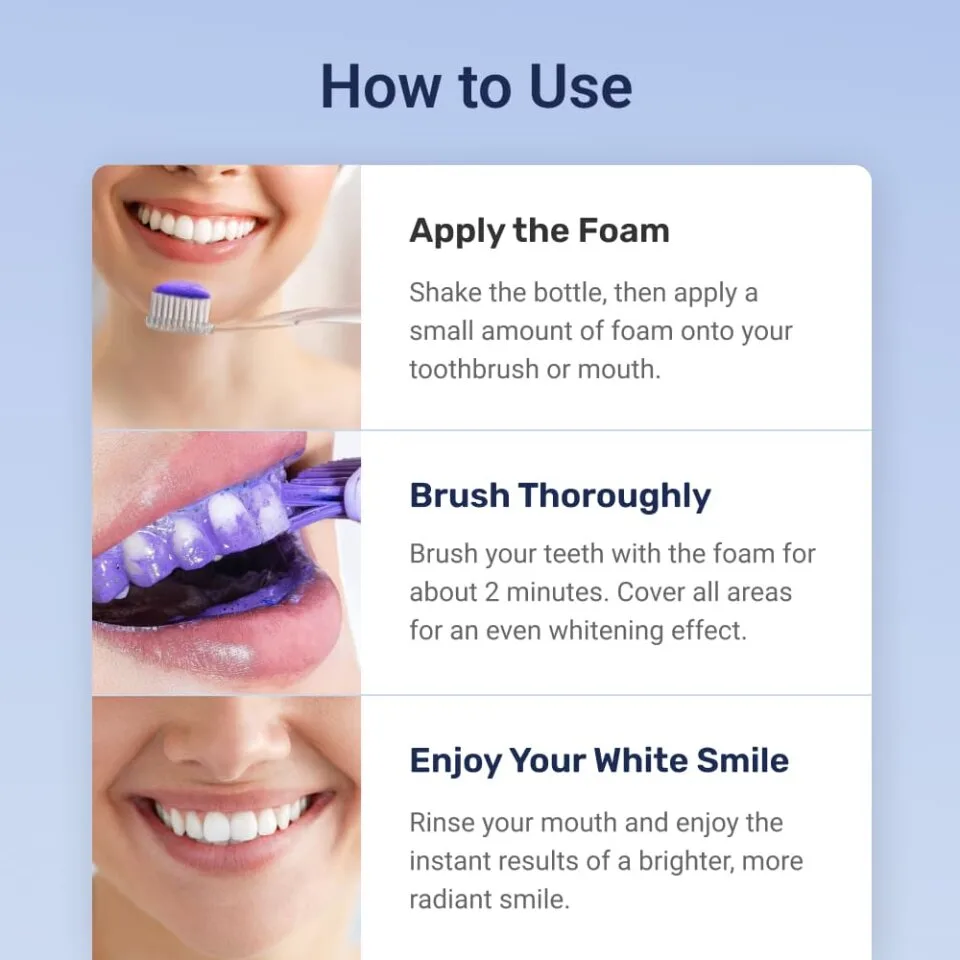
If you were drawn to charcoal for a quick, natural-looking brightening, a purple color-correcting foam gives a similar "brighter right now" effect without grit. You brush with it for two minutes, and the purple pigment cancels yellow tones on the surface. It's peroxide-free, so it's comfortable for sensitive teeth, and great before photos and events. The effect is temporary, so many people combine it with real whitening. Read our WellaWhite Purple Foam review.
What if you want a real shade change?
For a visible, longer-lasting change, whitening gel needs time on the teeth. The WellaWhite At-Home LED System uses moldable trays to hold the gel against your teeth for 15 to 30 minutes per session, with a blue LED light and a shade guide to track progress. See how to use an LED whitening kit.
Are there other "natural" whitening trends to be careful with?
- Lemon juice and vinegar: acids that can erode enamel.
- Baking soda straight: mildly abrasive; occasional use is generally fine. See does baking soda whiten teeth?
- Strawberries: contain acid and sugar; little whitening effect.
- Oil pulling: no reliable whitening evidence. See does oil pulling whiten teeth?
What does a whitening-friendly routine look like?
- brush twice a day with a fluoride toothpaste and a soft brush
- clean between teeth every day
- rinse with water after coffee, tea and wine
- whiten with a proven method when you want a shade change
- use purple foam for instant brightening before events
- get regular dental cleanings to remove stains and tartar
What should you check on a charcoal toothpaste label?
- Fluoride: look for sodium fluoride, stannous fluoride or sodium monofluorophosphate in the active ingredients.
- Abrasivity: some brands list an RDA (relative dentin abrasivity) value. Lower numbers are gentler; many dentists suggest staying well below the upper limits used for toothpaste.
- Charcoal amount: pastes with a small amount of charcoal in a regular base tend to be gentler than pure powders.
- Claims: be cautious with words like "detox", "pulls toxins" or "safe for daily use" without explanation.
- Company details: a clear address, contact information and ingredient list.
Is charcoal powder worse than charcoal toothpaste?
Often, yes. Loose charcoal powders are usually more abrasive than pastes, rarely contain fluoride and are harder to control on the brush. They also make more mess and are more likely to leave black particles around the gums and in cracks. If you want to try charcoal, a paste with fluoride is the more sensible choice, and only now and then.
Can kids use charcoal toothpaste?
It's best avoided. Children need fluoride toothpaste in the right amount for their age to protect developing teeth, and their enamel is more vulnerable to abrasion. Stick to a children's fluoride toothpaste recommended by your dentist, and supervise brushing until they can spit reliably.
What do dentists usually recommend instead?
Most dentists recommend a fluoride toothpaste for daily brushing, a soft brush, gentle technique and a proven whitening method if you want a whiter shade. A professional cleaning every six months removes surface stains and tartar that home products can't, and is often the quickest way to brighter teeth.
Pair that with rinsing after coffee and tea, and most people get brighter teeth without risking their enamel.
Your smile will thank you for it in the long run.
The bottom line
Is charcoal toothpaste safe?
- occasional use is unlikely to cause harm, but it's not ideal as a daily paste
- some formulas are abrasive and can wear enamel over time
- many contain no fluoride, so you lose cavity protection
- whitening evidence is limited to surface stains
- for gentle brightening, choose purple foam; for a shade change, peroxide whitening
The WellaWhite Purple Whitening Foam is peroxide-free and non-gritty, often up to 70% off on the official site. For a visible shade change, the WellaWhite At-Home LED System starts at $59 per kit in bundles.
Our pick: the WellaWhite Purple Whitening Foam
A peroxide-free purple color-correcting foam you brush with for 2 minutes. Gentle option for sensitive teeth.
Check today's price →Up to 70% off on the official site
Frequently asked questions
Is it safe to use charcoal toothpaste every day?
It's not ideal as a daily toothpaste. Some formulas are abrasive, and many contain no fluoride. Occasional use with a low-abrasion, fluoride formula is a safer approach.
Does charcoal toothpaste really whiten teeth?
It may polish some surface stains, but it doesn't bleach teeth or change their natural color. Evidence for whitening is limited.
Can charcoal toothpaste damage enamel?
Rough, abrasive formulas used often or with hard brushing can wear enamel over time, which doesn't grow back.
Does charcoal toothpaste have fluoride?
Many don't. If you use it, choose one with fluoride or alternate with a regular fluoride toothpaste.
Who should not use charcoal toothpaste?
People with sensitive teeth, gum recession, veneers or many tooth-colored fillings, children and anyone at higher risk of cavities.
What is a gentler way to make teeth look whiter?
A purple color-correcting foam gives instant, temporary brightening without grit. For a real shade change, peroxide-based whitening works better.

Michelle Hert
Michelle researches at-home oral care products, from whitening kits to water flossers, and reads the dental research and buyer feedback behind them so readers can make smarter choices. She is not a dentist, and her guides are not a substitute for professional dental care. Her guides are built on published research, manufacturer information and verified buyer feedback, and are updated when new information comes out. More about Michelle.