"Should I use a water flosser or regular floss?" is one of the most common questions in at-home oral care. In the US, people search for water flossers more than 90,000 times a month, and "water flosser vs floss" thousands of times.
The honest answer: the best method is the one you'll actually use every day. In this guide we compare both, explain who each is best for, and help you decide whether a water flosser is worth it.
General information about consumer products, not dental advice.
Why is cleaning between your teeth so important?
Your toothbrush can't fully reach the tight spaces between teeth. According to the American Dental Association, dental floss and other interdental cleaners, such as small brushes, picks or water flossers, remove food trapped between teeth and the film of bacteria (plaque) that forms along the gumline. That helps reduce the likelihood of gum disease and tooth decay.
The ADA recommends brushing twice a day for two minutes and cleaning between your teeth once a day.
Water flosser vs string floss: how do they compare?
| Water flosser | String floss | |
|---|---|---|
| Ease of use | Very easy, point and spray | Takes technique and dexterity |
| Comfort on tender gums | Gentle modes available | Can be uncomfortable |
| Braces, implants, bridges | Excellent, cleans around wires and brackets | Difficult, needs threaders |
| Plaque removal | ADA-Sealed models shown effective | Effective with good technique |
| Tight contacts | Good | Very precise |
| Cost | One-time device purchase | Very low, ongoing |
| Time | About 1 to 2 minutes | About 2 to 5 minutes |
| Portability | Cordless models travel well | Very portable |
Is a water flosser as effective as flossing?
For many people, yes. The ADA's consumer site explains that water flossers that have earned the ADA Seal of Acceptance have been tested to be safe and effective at removing plaque, and can also help reduce gingivitis, the early form of gum disease (MouthHealthy, ADA).
The biggest factor in practice is consistency. Many people skip string floss because it's fiddly or makes their gums bleed. A water flosser takes a minute, feels gentler and is easier to stick with, and a method you use every day beats a "perfect" method you skip.
Who should use a water flosser?
- People with braces or aligner attachments. Water reaches around wires and brackets where floss struggles. "Water flosser for braces" alone gets thousands of searches a month.
- People with implants, bridges or crowns. Water cleans around restorations gently.
- People with tender or bleeding gums. Gentle modes are more comfortable than string. See how to stop bleeding gums.
- Anyone who hates flossing. If you've never stuck with floss, a water flosser is the easiest upgrade.
- People with limited dexterity or arthritis in their hands.
Who might prefer string floss?
- People with very tight contacts who like the precision.
- Anyone on a tight budget.
- People who already floss daily and are happy with it.
Many dentists suggest using both: a water flosser daily for convenience and gum comfort, plus string floss for tight spots a few times a week.
What should you look for in a water flosser?
- Multiple pressure modes, including a gentle setting for sensitive gums.
- Interchangeable nozzles for different areas and for sharing.
- A decent water tank so you don't refill mid-session.
- Cordless and rechargeable for easy use and travel.
- Long battery life so it's always ready.
- Waterproof design for safe use in the bathroom.
Which water flosser do we recommend?
Our pick is the WellaWhite Water Flosser. According to WellaWhite, it offers:
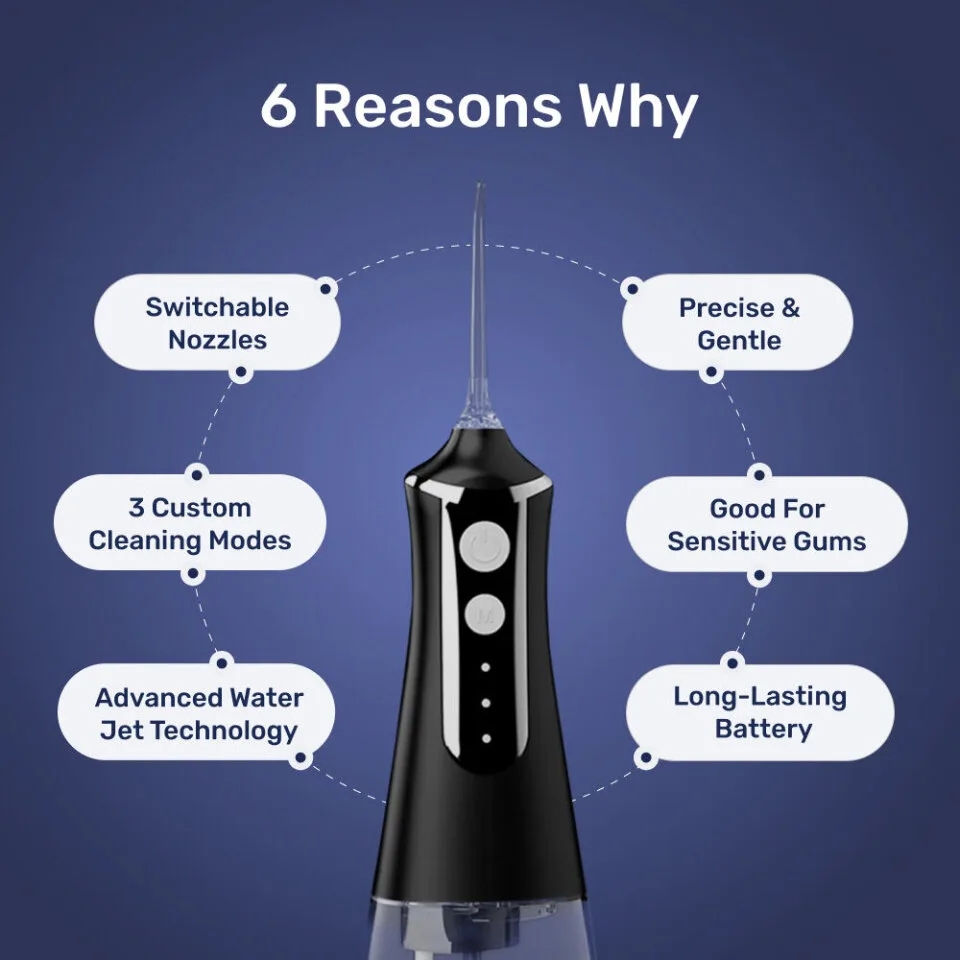
- Advanced water jet technology for cleaning between teeth and along the gumline.
- 3 custom cleaning modes, from gentle for sensitive gums to stronger for tough plaque.
- Interchangeable nozzles to target specific areas.
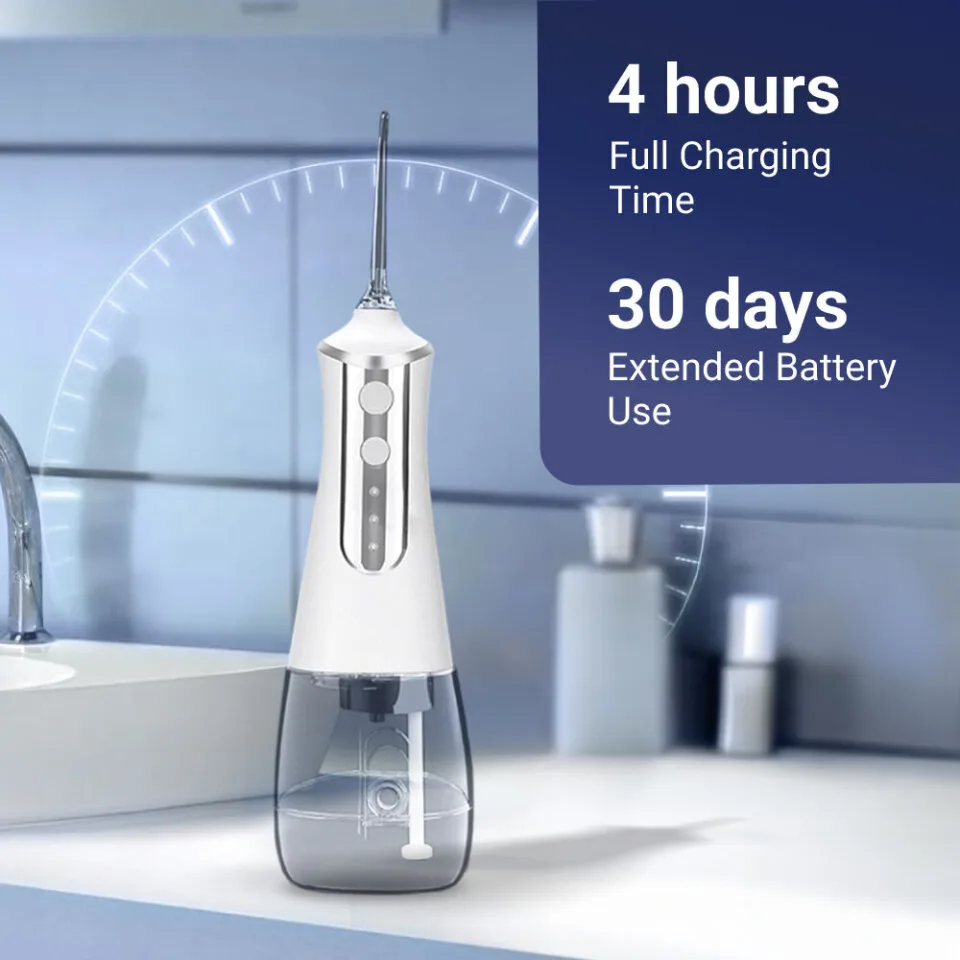
- A rechargeable battery that lasts 30 to 40 days on a full charge.
- A cordless, portable design that's easy to travel with.
- Braces-friendly cleaning around wires and brackets.
Our pick: the WellaWhite Water Flosser
Cordless, rechargeable water flosser with 3 cleaning modes and interchangeable nozzles. Braces-friendly.
Check today's price →Up to 75% off on the official site
How do you use a water flosser correctly?
- Fill the tank with lukewarm water.
- Choose the gentle mode if you're new or your gums are sensitive.
- Lean over the sink and place the tip in your mouth before turning it on.
- Aim at the gumline at about a 90-degree angle.
- Move tooth by tooth, pausing briefly between each tooth.
- Do the inside and outside of both upper and lower teeth.
- Empty and rinse the tank after use, and replace nozzles every 3 to 6 months, as WellaWhite recommends.
Where does a water flosser fit in your routine?
Many people like to water floss before brushing, so the brush can then clean surfaces that are already free of trapped food. Either order works, as long as you do both every day.
- Water floss (about 1 to 2 minutes).
- Brush for two minutes, ideally with a sonic toothbrush. See electric vs manual toothbrush.
- Optional: a red light session for gum comfort. See red light therapy for gums.
Can a water flosser help keep teeth whiter?
Indirectly, yes. Stains cling to plaque, and plaque builds up between teeth and along the gumline. Removing it daily helps keep new stains from settling in, which helps your whitening results last longer. Read more in how to get rid of yellow teeth.
Is a water flosser worth it?
If you struggle to floss consistently, have braces or dental work, or have tender gums, a water flosser is one of the most worthwhile upgrades you can make. It turns a chore many people skip into a quick, comfortable habit. For people who already floss perfectly every day, it's a nice-to-have rather than a must-have.
What are common water flosser mistakes?
- Starting on the highest setting. Begin gentle and increase gradually as your gums get used to it.
- Moving too fast. Pause briefly at each tooth so the water can flush the space.
- Aiming at the tooth face instead of the gumline. The gumline and the spaces between teeth are where plaque hides.
- Leaving water in the tank. Empty and rinse it after each use to keep it hygienic.
- Never replacing the nozzle. Worn nozzles work less well and can collect bacteria.
Can kids and teens use a water flosser?
Many older children and teens can, especially if they have braces, but they should start on the lowest setting with supervision. Ask your dentist what's right for your child's age and dental needs.
Can a water flosser help with bad breath?
Trapped food and plaque between teeth are common causes of bad breath. Cleaning those spaces daily, along with brushing and cleaning your tongue, helps keep breath fresher. If bad breath doesn't go away, it can be a sign of gum disease, so mention it to your dentist. For extra fresh-breath support, some people add a light device. See red light therapy for gums.
Are cordless water flossers good for travel?
Yes. A cordless, rechargeable model with a long battery life is easy to pack, and you don't need to find an outlet in a hotel bathroom. WellaWhite says its water flosser lasts 30 to 40 days on a charge, which covers most trips without bringing the charger.
What about interdental brushes and floss picks?
The ADA lists several kinds of interdental cleaners, including floss, small interdental brushes, picks and water flossers. Floss picks are handy and easier to hold than string floss. Interdental brushes are great for larger gaps between teeth. Water flossers are the easiest and most comfortable for many people. Any of them is far better than skipping the space between your teeth altogether, so pick the one you'll stick with.
How do you turn water flossing into a daily habit?
- Keep it visible on the bathroom counter next to your toothbrush.
- Pair it with brushing so it becomes one routine instead of two.
- Start with just a minute; a short session every day beats a long one once a week.
- Notice the difference in how clean your teeth feel. That feeling is what keeps most people going.
Within a couple of weeks, many people say their teeth feel cleaner and their gums bleed less when they brush. If you're dealing with bleeding now, our guide on how to stop bleeding gums explains why it happens and what helps.
Does water flossing work well with whitening?
Yes. Clean teeth whiten more evenly, because whitening gel works best on surfaces that are free of plaque. Flossing before an LED session helps the gel reach more of each tooth. See do LED whitening kits work? and our WellaWhite LED review.
How much does a water flosser cost compared with floss?
String floss costs very little per month, while a water flosser is a one-time purchase plus a new nozzle every few months. Over a year or two, the difference is small, and for many people a water flosser is the first interdental cleaner they actually use every day. That consistency is what protects your gums, so the value comes from the habit it creates, not just the device.
A cordless, rechargeable model also saves you from buying batteries, and multiple nozzles let you replace only the part that wears out.
The bottom line
Water flossers and string floss both clean between your teeth, which the ADA recommends once a day. A water flosser is easier, gentler and great for braces, dental work and sensitive gums, and ADA-Sealed models have been shown to remove plaque and help reduce gingivitis.
Our pick is the WellaWhite Water Flosser: cordless, three modes, interchangeable nozzles and up to 40 days of battery. Check today's price on the official site.
Sources
- American Dental Association. Dental Floss/Interdental Cleaners.
- American Dental Association, MouthHealthy. Water Flossers and Water Flossing.
- Official WellaWhite Water Flosser product page, checked October 2026.
Frequently asked questions
Is a water flosser better than regular floss?
Both clean between teeth, which the ADA recommends once a day. A water flosser is easier and gentler for many people, especially with braces, implants or tender gums, while string floss is cheap and precise.
Can a water flosser replace flossing?
For many people, yes. Water flossers with the ADA Seal have been shown to remove plaque and help reduce gingivitis. Some dentists suggest also using string floss for very tight contacts.
Is a water flosser good for braces?
Yes. Water reaches around wires and brackets where string floss struggles, which is why water flossers are popular with people who have braces.
How often should you use a water flosser?
Once or twice a day. The ADA recommends cleaning between your teeth at least once a day.
Should I water floss before or after brushing?
Either works. Many people water floss first so the toothbrush can then clean surfaces free of trapped food.
How long does a cordless water flosser battery last?
It varies by model. WellaWhite says its water flosser lasts 30 to 40 days on a full charge.

Michelle Hert
Michelle researches at-home oral care products, from whitening kits to water flossers, and reads the dental research and buyer feedback behind them so readers can make smarter choices. She is not a dentist, and her guides are not a substitute for professional dental care. Her guides are built on published research, manufacturer information and verified buyer feedback, and are updated when new information comes out. More about Michelle.