- Before brushing: flushes debris first; toothpaste reaches cleaner surfaces.
- After brushing: also fine; some people prefer it to rinse away leftover toothpaste and food.
- Best time: once a day, often at night before bed.
- Don't rinse away fluoride: if you water floss after brushing, spit rather than rinse with lots of water.
General information about consumer products, not dental advice. Ask your dentist or hygienist about the best routine for your teeth, especially if you have gum disease, implants, bridges or braces.
Once you buy a water flosser, a simple question comes up right away: should you use it before or after brushing? You'll find strong opinions both ways online. The truth is that both orders work, and the real win is cleaning between your teeth every day. That said, there are good reasons many dental professionals suggest flossing first. This guide explains the reasoning, how to fit water flossing into your routine, the best time of day and how to get the most from each step.
Why does cleaning between teeth matter?
A toothbrush cleans the front, back and chewing surfaces of teeth, but it can't fully reach between them or just below the gumline. Plaque left there can lead to gum inflammation and cavities. The American Dental Association recommends cleaning between your teeth once a day with an interdental cleaner. Water flossers are one option, and the ADA's MouthHealthy notes they can be especially helpful for people who find string floss hard to use. See water flosser vs floss.
Why floss before brushing?
- Loosens debris first: food and plaque flushed out from between teeth can then be brushed away.
- Fluoride reaches more surfaces: toothpaste can get into spaces that were just cleared.
- You're less likely to skip it: doing it first means you don't stop after brushing.
Is it wrong to water floss after brushing?
No. Some people prefer flossing after brushing because it rinses away loosened food and toothpaste residue and leaves the mouth feeling fresh. If you do it this way, keep in mind that a big rinse can wash away some fluoride from your toothpaste. Spitting out excess water without extra rinsing helps fluoride stay on your teeth longer.
How do the two orders compare?
| Floss first | Brush first | |
|---|---|---|
| Debris | Loosened, then brushed away | Rinsed away at the end |
| Fluoride contact | Toothpaste reaches cleared spaces | May rinse some fluoride away |
| Feel | Clean, minty finish | Fresh, rinsed finish |
| Habit | Harder to skip | Easier to skip when tired |
What's a simple nightly routine?
- Fill the flosser with lukewarm water.
- Lean over the sink, close your lips around the tip and turn it on.
- Trace the gumline, pausing briefly between each tooth, inside and outside.
- Brush for two minutes with fluoride toothpaste.
- Spit, but don't rinse heavily with water.
See how to use a water flosser and how to brush teeth properly.
What's the best time of day?
Once a day is the usual recommendation, and many people choose bedtime so their mouth is clean before the long overnight period. If evenings are rushed, any consistent time works. Some people with braces or implants use their flosser after every meal. See how often should you use a water flosser?
Make the nightly habit easy
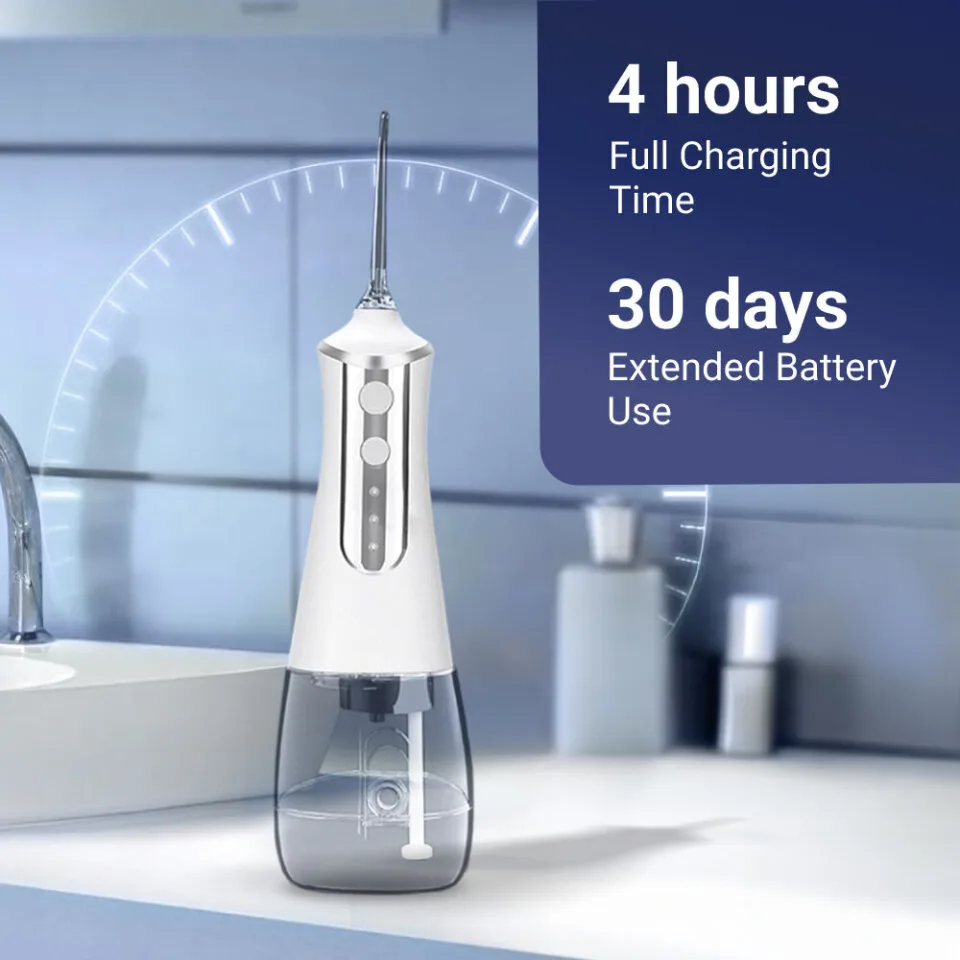
WellaWhite Water Flosser: cordless and rechargeable, 3 modes, interchangeable nozzles, braces-friendly and compact for travel. Up to 75% off on the official site.
Check today's price →Up to 75% off on the official site
Why choose a cordless flosser?
A cordless flosser lives right by the sink with no outlet needed, so it's easy to grab before you brush. The WellaWhite Water Flosser is cordless and rechargeable, with three modes so you can start gentle and work up, interchangeable nozzles and a braces-friendly design. It's compact enough to pack for travel. Read our WellaWhite Water Flosser review.
Where does mouthwash fit?
If you use mouthwash, many people use it at a different time from brushing, such as after lunch, so it doesn't rinse away fluoride right after brushing. Some add a capful of mouthwash to the flosser tank, but check your flosser's manual first, since some ingredients can affect parts. Plain water works well.
Is the order different with braces?
With braces, food gets trapped around brackets and wires, so many orthodontists suggest water flossing first to flush debris, then brushing carefully around each bracket. Use an orthodontic tip if your flosser has one. See water flosser for braces and electric toothbrush for braces.
What if your gums bleed?
Some bleeding is common when you start cleaning between teeth regularly, and it often improves within a week or two as gums get healthier. Start on the gentlest setting. If bleeding continues or your gums are swollen or painful, see your dentist. The NIDCR explains the signs of gum disease. See how to stop bleeding gums.
What mistakes should you avoid?
- Starting on the highest pressure.
- Rushing: aim for about one minute for the whole mouth.
- Skipping the back teeth and inner surfaces.
- Rinsing heavily after brushing.
- Using very cold water if your teeth are sensitive.
Does the same rule apply to string floss?
Yes. The same reasoning applies: floss first to loosen plaque and food, then brush. Many people combine both tools, using string floss for tight contacts and a water flosser for the gumline, braces or bridges. Whichever you use, consistency matters more than the order.
Should you water floss in the morning too?
Once a day is enough for most people, but some like a quick morning session for a fresh start, or use it after meals to clear food. If you have braces, implants or bridges, your dentist may suggest more frequent use. Brushing twice a day is still the foundation.
What water temperature should you use?
Lukewarm water is the most comfortable, especially for sensitive teeth. Very cold water can cause zings in sensitive areas, and hot water isn't needed. Fill the tank fresh each time and empty leftover water after use so it doesn't sit in the tank.
How long does it take?
About one minute to water floss your whole mouth, plus two minutes of brushing. Three minutes at night is a small habit with a big payoff for your gums.
What order should kids use?
Kids can follow the same routine: water floss, then brush with a pea-sized amount of fluoride toothpaste. Start on the lowest setting and supervise younger children. See water flosser for kids.
How do you keep your flosser clean?
Empty the tank after each use, let it air-dry with the lid open, and rinse or replace tips regularly. Run a diluted vinegar solution through it occasionally to remove mineral buildup, following your manual. See how to clean a water flosser.
How do you make it a habit?
- Keep the flosser charged and next to your toothbrush.
- Pair it with brushing so they become one routine.
- Start on the gentlest mode so it feels comfortable.
- Track it for two weeks; most people notice fresher-feeling gums.
Can a water flosser replace mouthwash?
No, they do different jobs. A water flosser physically flushes debris and plaque from between teeth and along the gumline. Mouthwash can freshen breath and, depending on the formula, add fluoride or antibacterial ingredients. Many people use both, at different times of day. Neither replaces brushing.
What about implants and bridges?
Water flossers are popular for implants and bridges because the stream reaches around and under them. Many people floss first, then brush, so they can see and clean everything well. Ask your dentist about the right tip and pressure. See water flosser for implants and water flosser for bridges.
When will you notice a difference?
Many people notice fresher-feeling teeth right away and less gum bleeding within a couple of weeks of daily use. Your hygienist may notice less plaque and healthier gums at your next cleaning.
Is water flossing enough if I have gum disease?
Water flossing can be part of your home care, but gum disease needs professional treatment. Follow your dentist's plan and use your flosser as directed. See water flosser for gum disease.
How much water do you need?
A cordless flosser's tank usually covers a full session for most people. If it runs out partway, refill and finish the remaining teeth. Starting with the back teeth and working forward helps make sure the hardest areas get cleaned while the tank is full.
What's the takeaway?
Floss, then brush, then spit without a big rinse, once a day, every day.
Which pressure setting should you start on?
Start on the lowest setting for the first week, then move up as your gums adjust. Higher isn't always better; choose the setting that cleans well and feels comfortable. See water flosser pressure settings.
The bottom line
You can water floss before or after brushing, but flossing first lets you loosen debris and then brush it away with fluoride toothpaste. Whatever order you choose, the key is cleaning between your teeth once a day, every day.
For an easy daily routine, our pick is the WellaWhite Water Flosser. Check today's WellaWhite Water Flosser price.
Sources
- American Dental Association. Floss / Interdental Cleaners.
- ADA MouthHealthy. Water Flossers.
- National Institute of Dental and Craniofacial Research. Gum Disease.
Frequently asked questions
Should I water floss before or after brushing?
Many dental pros suggest before, so you loosen debris and then brush it away with fluoride toothpaste.
Is it bad to water floss after brushing?
No, but avoid rinsing away fluoride with lots of extra water.
How often should I use a water flosser?
Once a day for most people, often at night.
How long should water flossing take?
About one minute for the whole mouth.
Can a water flosser replace brushing?
No, use both every day.
What water temperature should I use?
Lukewarm water is most comfortable, especially for sensitive teeth.

Michelle Hert
Michelle researches at-home oral care products, from whitening kits to water flossers, and reads the dental research and buyer feedback behind them so readers can make smarter choices. She is not a dentist, and her guides are not a substitute for professional dental care. Her guides are built on published research, manufacturer information and verified buyer feedback, and are updated when new information comes out. More about Michelle.