- Choose cordless if you want convenience, travel often, have a small bathroom or just want a simple daily habit.
- Choose countertop if you want the longest session without refilling and lots of pressure options, and have counter space near an outlet.
General information about consumer products, not dental advice. If you have gum disease, implants or other dental work, ask your dentist which type and settings suit you.
Water flossers come in two main designs: cordless handheld models with a built-in tank, and countertop models with a separate base, a bigger reservoir and a hose to the handle. Both clean between teeth and along the gum line with a pulsing stream of water, and both can replace or complement string floss. So which one should you buy?
This guide compares cordless and countertop water flossers on cleaning, convenience, tank size, pressure, space, travel and maintenance, and helps you decide which suits your bathroom, your routine and your teeth.
How do water flossers work?
A water flosser pumps water in rapid pulses through a narrow tip. Aimed at the gum line and between teeth, the stream flushes out food and plaque. The ADA's MouthHealthy notes that water flossers can be a good option for people who have trouble flossing by hand, including those with braces or dental work. The American Dental Association recommends cleaning between teeth once a day with floss or another interdental cleaner. See water flosser vs floss.
How do cordless and countertop water flossers compare?
| Factor | Cordless | Countertop |
|---|---|---|
| Portability | Excellent; fits in a toiletry bag | Stays at home |
| Space | Small footprint | Needs counter space and an outlet |
| Tank size | Smaller; may need a refill for a full session | Large; usually enough for a full session |
| Pressure settings | A few modes | Often many settings |
| Use in the shower | Often possible if water-resistant | No |
| Power | Rechargeable battery | Plugs into the wall |
| Setup | Fill and go | Fill reservoir, hose to handle |
| Family use | Easy with separate tips | Easy with separate tips |
What are the advantages of a cordless water flosser?
- Convenience: grab it, fill it, floss. No hose, no cord.
- Small bathrooms: it doesn't take over the counter.
- Travel: easy to pack for trips, so your routine doesn't stop.
- Shower use: many people use a water-resistant cordless flosser in the shower to avoid splashing at the sink.
- No outlet needed near the sink.
- Easier habit: a simple tool is more likely to be used every day.
What are the advantages of a countertop water flosser?
- Bigger reservoir, so you rarely refill mid-session.
- More pressure settings for fine-tuning.
- Always plugged in, so no charging.
- Lighter handle, since the motor and water are in the base.
The trade-offs are space, an outlet near the sink, a hose to manage and no travel use.
Do they clean equally well?
Both types clean between teeth and along the gum line when used correctly. What matters most is technique and consistency: aiming at the gum line, pausing between teeth and using it every day. A cordless flosser with a few well-chosen modes and a pulsing stream does the job for most people. Countertop models can offer more fine-tuning, which some people with specific dental needs appreciate.
Which cordless water flosser covers everyday needs?
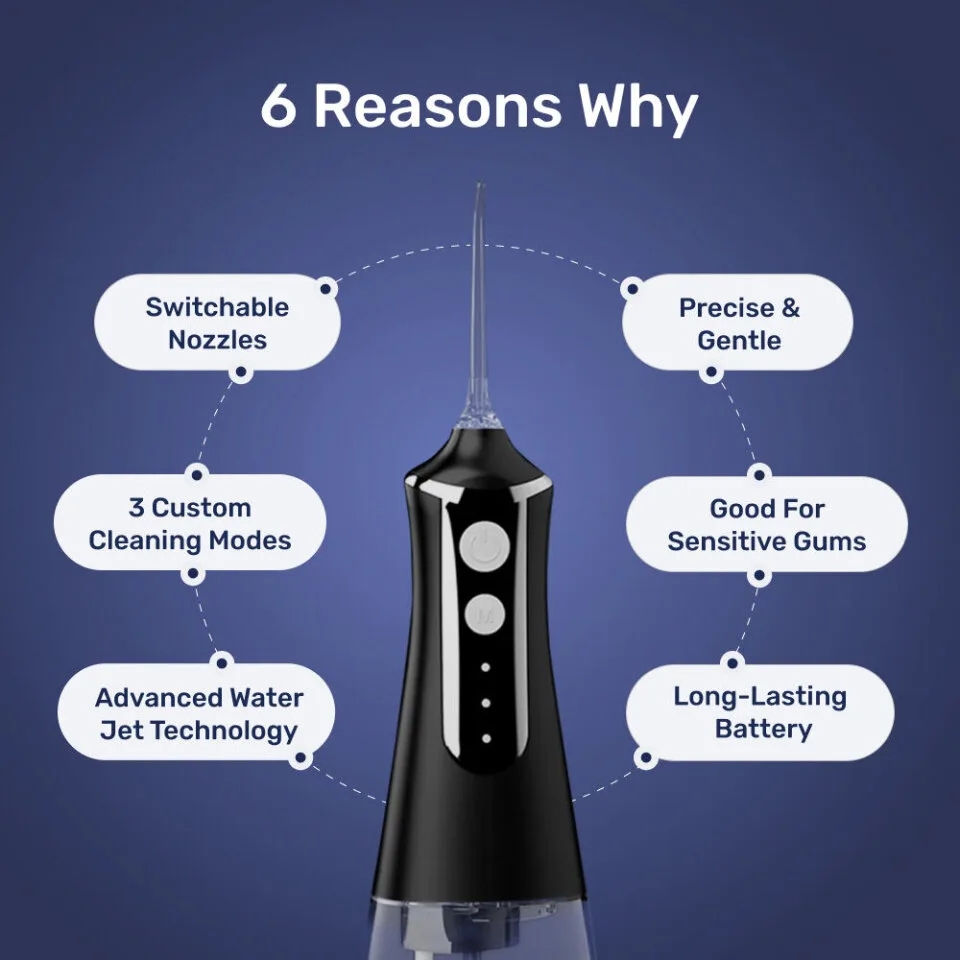
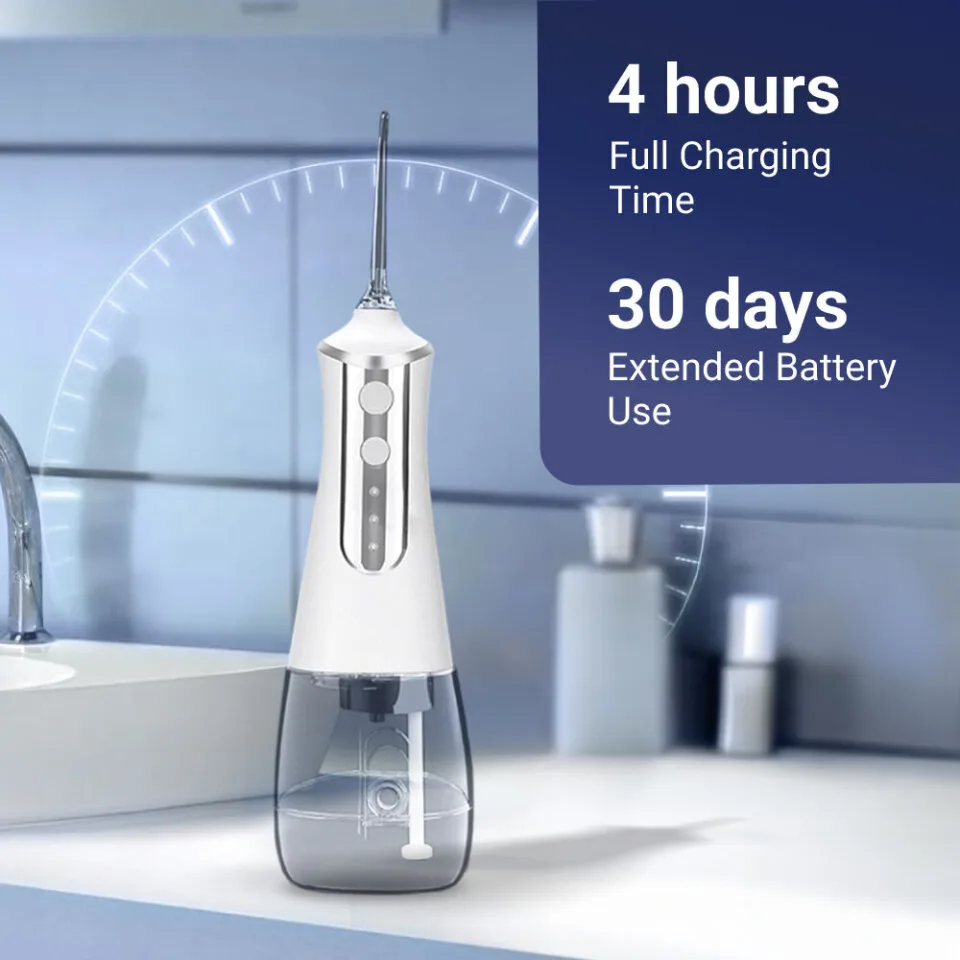
The WellaWhite Water Flosser is a cordless, rechargeable flosser with a built-in water tank, three cleaning modes and interchangeable nozzles. The modes let you start gently and work up as your gums get used to it; the nozzles let you choose the right tip or share it with family members using separate tips. It's compact enough for small bathrooms and travel, and braces-friendly. It's sold at up to 75% off on the official site. Read our WellaWhite Water Flosser review and how to use a water flosser.
A cordless flosser that fits any bathroom
WellaWhite cordless water flosser: three modes, interchangeable nozzles, rechargeable, compact and travel-friendly. Up to 75% off on the official site.
Check today's price →Up to 75% off on the official site
Who should choose which?
| Your situation | Best fit |
|---|---|
| Small bathroom, no outlet near the sink | Cordless |
| Travel often or split time between homes | Cordless |
| Want to floss in the shower | Cordless (water-resistant) |
| Braces | Either; cordless is handy for after meals and school |
| Implants and bridges | Either, with your dentist's guidance |
| Want many pressure settings and a big tank | Countertop |
| Shared family bathroom with lots of counter space | Either |
See water flossers for braces and water flossers for implants.
How do you deal with a smaller tank?
Cordless tanks are smaller, so some people refill once during a session. A few tips: fill with lukewarm water, start with the back teeth so the hardest areas get cleaned first, keep the stream moving steadily instead of pausing too long, and refill quickly if needed. Many people find one tank is enough once they get the technique down.
How long does the battery last?
Most rechargeable flossers last for multiple sessions on a charge, often a week or more of daily use depending on the model and mode. Keep the charger in a dry spot, charge it when the indicator shows low battery and avoid leaving it on a wet counter. Check your model's manual for specific battery life.
How do you maintain each type?
- Empty the tank after each use and let it air-dry.
- Rinse the tank and tip weekly.
- Descale every couple of weeks if you have hard water, following the manual.
- Replace tips every few months.
- Countertop models: also check the hose and reservoir valve.
Is flossing in the shower a good idea?
For many people, it's the easiest way to avoid splashing at the sink. With a cordless, water-resistant flosser, you can use warm shower water to fill the tank and rinse freely. Just check that your model is rated for use in the shower, and dry and charge it as directed afterward.
How do the costs compare?
Prices vary widely for both types, but cordless models are often affordable and frequently discounted online. Countertop models can cost more for premium versions with many settings. Think about cost per use: the flosser you'll actually use every day gives you the most value. See how often to use a water flosser.
Which type is better for kids and teens?
Cordless models are often easier for kids and teens: lighter, simpler to handle and less intimidating than a countertop unit with a hose. They're also easy to take on sleepovers and school trips, which matters for teens with braces. Start on the lowest mode, show them how to lean over the sink and close their lips around the tip, and supervise until they can aim along the gum line on their own.
Does technique change between the two types?
Not much. With either type, lean over the sink, close your lips partly around the tip, aim at the gum line at about 90 degrees and move slowly from tooth to tooth, pausing briefly between each. With a cordless model, the tank is in your hand, so hold it upright and let the water drain from your mouth into the sink. With a countertop model, keep the hose free and the base level. Start on a low setting with either, and turn it on only once the tip is in your mouth, to avoid splashing the mirror.
How do you avoid making a mess?
The first few sessions with any water flosser can be messy. Lean well over the sink, keep your lips closed around the tip just enough for water to drain out, and switch the flosser on only after the tip is inside your mouth. Point the tip down slightly toward the sink and pause the stream before taking it out. With a cordless model, the shower is the mess-free option. After a week or two, most people do it without splashing at all.
Which should you buy first if you're new to water flossing?
If you've never used one, a cordless model is an easy, affordable way to start. You'll find out quickly whether you enjoy the routine, and it takes up almost no space. Many people who start cordless never feel the need to upgrade. If you later want more settings or a bigger tank, a countertop model can be added for home use while the cordless one becomes your travel flosser.
Which type is quieter?
Both make a buzzing pump sound, but cordless models are often quieter simply because their motors are smaller, which is handy if you floss late at night or early in the morning while others are sleeping. Countertop models can be louder at high settings. If noise matters to you, use a lower setting and keep the bathroom door closed.
The bottom line
Cordless water flossers win on convenience, space and travel; countertop models win on tank size and the number of settings. Both clean well when used daily with good technique. For most people who want an easy daily habit and a tidy bathroom, a cordless flosser is the practical choice.
For a cordless flosser with the features most people need, our pick is the WellaWhite Water Flosser. Check today's WellaWhite Water Flosser price.
Sources
- ADA MouthHealthy. Water Flossers.
- American Dental Association. Floss.
- Official WellaWhite product page, checked October 2026.
Frequently asked questions
Are cordless water flossers as good as countertop ones?
Both clean well when used daily with good technique. Countertop models offer bigger tanks and more settings; cordless ones win on convenience and travel.
What are the downsides of a cordless water flosser?
A smaller tank that may need a refill mid-session, fewer pressure settings and a battery to recharge.
Which water flosser is best for a small bathroom?
A cordless model, since it needs no outlet near the sink and takes up little counter space.
Can you use a water flosser in the shower?
Many cordless, water-resistant models can be used in the shower. Check that your model is rated for it.
Which water flosser is better for braces?
Either works. A cordless flosser is handy for after meals and at school or on trips.
Is the WellaWhite Water Flosser cordless?
Yes. It's rechargeable, with three modes and interchangeable nozzles, and is sold at up to 75% off on the official site.

Michelle Hert
Michelle researches at-home oral care products, from whitening kits to water flossers, and reads the dental research and buyer feedback behind them so readers can make smarter choices. She is not a dentist, and her guides are not a substitute for professional dental care. Her guides are built on published research, manufacturer information and verified buyer feedback, and are updated when new information comes out. More about Michelle.