
- There's no good evidence that swishing coconut or sesame oil changes the color of your teeth.
- It may help a little with surface film and fresh breath for some people, which can make teeth feel cleaner.
- The American Dental Association doesn't recommend it as a replacement for brushing, cleaning between teeth or proven whitening.
- If you enjoy it, it's generally fine as an extra, as long as you spit the oil in the trash, not the sink.
General information about consumer products, not dental advice. If you have dental work, gum disease or a medical condition, ask your dentist before adding new routines.
Oil pulling has gone from an ancient Ayurvedic practice to a social media trend: a spoonful of coconut oil swished around the mouth for 15 to 20 minutes, promising whiter teeth, fresher breath and healthier gums, all naturally. It's cheap, easy and sounds gentle, which is why so many people try it. But does it actually whiten teeth? This guide explains what oil pulling is, what the research says, what dental organizations recommend, the possible benefits and drawbacks, how to do it safely if you want to try it and which whitening options actually change tooth color.
In this guide:
- what oil pulling is
- what the research says about whitening
- possible benefits and limits
- how to do it safely
- side effects and mistakes
- whitening options that work
Our pick: the WellaWhite Purple Whitening Foam
A peroxide-free purple color-correcting foam you brush with for 2 minutes. Gentle option for sensitive teeth.
Check today's price →Up to 70% off on the official site
What is oil pulling?
Oil pulling means swishing a tablespoon of edible oil, usually coconut, sesame or sunflower, around your mouth and between your teeth for 5 to 20 minutes, then spitting it out. It comes from traditional Indian medicine (Ayurveda), where it was used for oral hygiene long before toothbrushes were common. The idea is that the oil "pulls" bacteria and debris from the mouth and teeth.
Coconut oil became the favorite in recent years because it's pleasant tasting and contains lauric acid, a fatty acid that has some antibacterial properties in lab studies.
Does oil pulling make teeth whiter?
There's no reliable scientific evidence that oil pulling whitens teeth. Tooth color comes from two things:
- Surface stains on the enamel from coffee, tea, wine, tobacco and food.
- Internal color of the dentin underneath, which shows through enamel and changes with age, genetics and some medications.
Oil doesn't contain bleaching agents, so it can't lighten the internal color, and it has no abrasive action to polish off set-in surface stains. Some people notice their teeth feel smoother and look a little cleaner, likely because swishing for a long time loosens some of the soft film on the surface. That's different from whitening. To understand why teeth change color, see why are my teeth yellow?
What do dentists say about oil pulling?
The American Dental Association says there isn't enough reliable scientific evidence to show that oil pulling reduces cavities, whitens teeth or improves oral health, and it doesn't recommend oil pulling as a replacement for standard oral care. Read the ADA's position on oil pulling. Brushing twice a day with fluoride toothpaste and cleaning between teeth daily remain the foundation of a healthy mouth.
Are there any benefits to oil pulling?
Some small studies have reported reductions in certain mouth bacteria, plaque scores or bad breath after oil pulling, but they tend to be small, short and hard to compare. Possible benefits people report:
- a cleaner, smoother feel on the teeth
- fresher breath for a while
- a calming morning ritual
None of these replace brushing and cleaning between teeth, and none of them change tooth color in a meaningful way.
Our pick: the WellaWhite Purple Whitening Foam
A peroxide-free purple color-correcting foam you brush with for 2 minutes. Gentle option for sensitive teeth.
Check today's price →Up to 70% off on the official site
How do you oil pull safely if you want to try it?
- Use about 1 tablespoon of coconut oil (melt it in your mouth if it's solid) or another edible oil.
- Swish gently around your teeth and gums. Don't gargle or swallow it.
- Start with 5 minutes and build up if your jaw feels comfortable. Many people stop at 10 to 15 minutes.
- Spit it into a paper towel or the trash, not the sink or toilet. Oil can harden and clog pipes.
- Rinse with water, then brush your teeth as usual.
Does oil pulling have side effects?
- Jaw ache from swishing too long.
- Nausea for some people, especially first thing in the morning.
- Upset stomach if oil is swallowed.
- Risk of breathing in oil if you gargle or swish too hard, which can be dangerous. Avoid it for young children.
- Clogged drains from spitting oil in the sink.
- Allergy if you're allergic to the oil you use.
The biggest risk is skipping proven care because you think oil pulling is enough.
Which whitening options actually work?
| Option | How it works | Typical result |
|---|---|---|
| Oil pulling | Swishing oil | No proven whitening |
| Whitening toothpaste | Mild abrasives and stain removers | Light surface stain removal |
| Purple foam | Purple pigment cancels yellow tones | Instant, temporary brightening |
| Whitening strips | Peroxide gel on strips | Noticeable over 1 to 2 weeks |
| LED whitening kit | Peroxide gel in trays with an LED light | Noticeable over 1 to 2 weeks |
| Professional whitening | Higher-strength peroxide at the dentist | Fastest and strongest |
Compare them in the best at-home teeth whitening, how to whiten teeth naturally and does baking soda whiten teeth?
Why try purple foam instead?
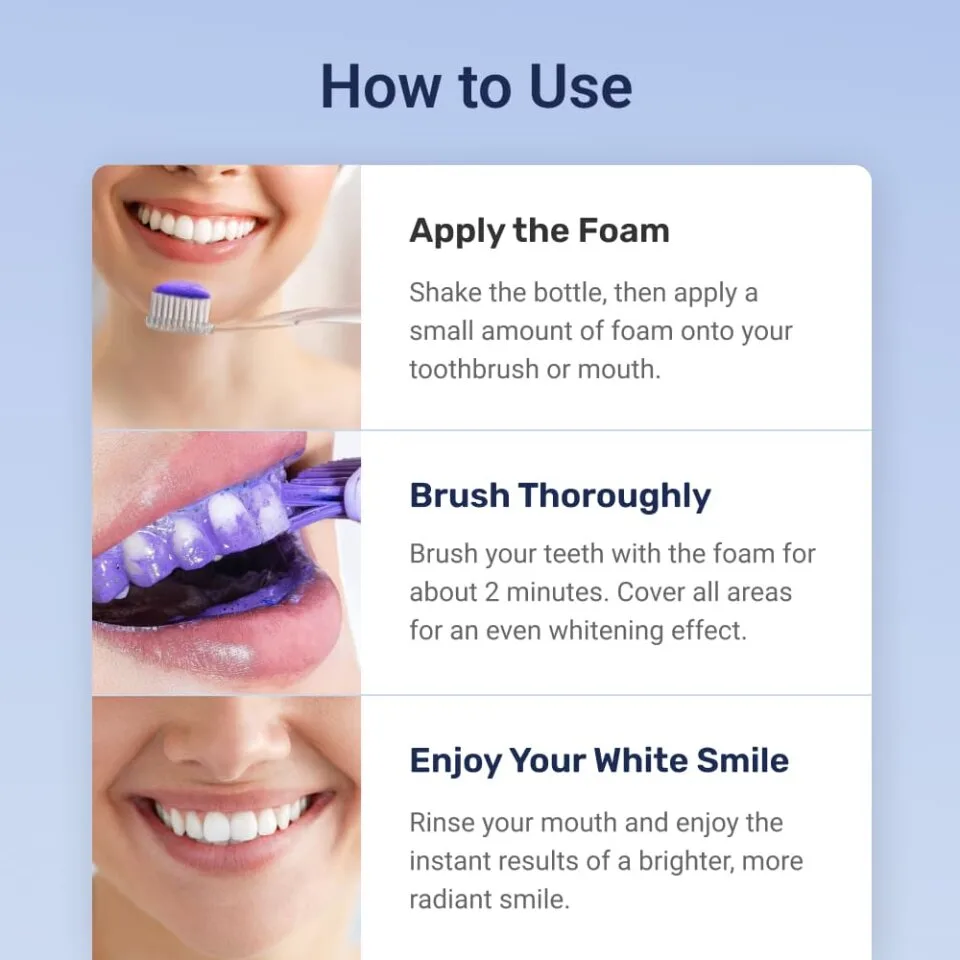
If you were drawn to oil pulling because you want something gentle and quick, a purple color-correcting foam is closer to what you're looking for. You brush with it for two minutes, and the purple pigment cancels out yellow tones on the surface, so teeth look whiter right away. It's peroxide-free, which makes it a comfortable option for sensitive teeth, and it's great before photos and events. The effect is temporary, so many people pair it with real whitening. See our WellaWhite Purple Foam review and does purple toothpaste work?
What if you want a real shade change?
For a visible change in tooth color, the gel needs to be held against your teeth for a while. An LED kit uses moldable trays to keep the whitening gel in place for 15 to 30 minutes per session, with a blue LED light. The WellaWhite At-Home LED System includes the gel, trays, light and a shade guide. See our WellaWhite LED review and how to use an LED whitening kit.
Where does oil pulling fit into a healthy routine?
If you enjoy it, oil pulling can be an optional extra, but it should never replace the basics:
- brush twice a day for two minutes with fluoride toothpaste
- clean between your teeth once a day with floss or a water flosser
- clean your tongue
- limit sugary snacks and rinse after coffee, tea and wine
- see your dentist regularly
Our full guide: a complete oral care routine.
Which oil pulling myths can you ignore?
- "It pulls toxins out of your body." There's no evidence for this.
- "It whitens teeth like bleach." Oil contains no whitening agent.
- "It can replace brushing and flossing." It can't remove plaque the way brushing and cleaning between teeth do.
- "Longer is always better." Twenty minutes isn't needed and can tire your jaw.
What actually causes the stains you want to remove?
Knowing the cause of discoloration helps you pick the right fix:
- Coffee, tea, red wine and dark sodas leave surface stains that build up over time. Rinsing with water after drinking them helps, and whitening methods lift them. See drinks that stain teeth.
- Tobacco causes yellow to brown stains that are harder to remove.
- Age thins enamel, so the yellower dentin shows through more.
- Certain medications and childhood fluoride exposure can cause internal discoloration that at-home whitening may not change much.
- Tartar near the gumline looks yellow or brown and has to be removed by a hygienist.
If your teeth have darkened suddenly or only one tooth has changed color, see a dentist. The National Institute of Dental and Craniofacial Research has reliable information on oral health topics, and your dentist can tell you which whitening approach suits your teeth. A professional cleaning is often the best first step, because it removes surface stains and tartar before you whiten.
Is coconut oil better than sesame oil for oil pulling?
Coconut oil is the most popular choice because many people like its mild taste, and it contains lauric acid. Sesame and sunflower oils are the traditional options. There's no strong evidence that one oil works better than the others for teeth, so if you try oil pulling, choose the edible oil you find most pleasant and avoid it if you have an allergy.
Whichever you choose, keep the routine short and comfortable, and treat it as an optional extra to your brushing, not a whitening treatment.
The bottom line
Does oil pulling whiten teeth?
- there's no reliable evidence it changes tooth color
- it may leave teeth feeling cleaner and breath fresher for a while
- the ADA doesn't recommend it as a replacement for brushing and cleaning between teeth
- if you try it, spit the oil in the trash and brush afterward
- for real whitening, use peroxide-based options; for instant brightening, try purple foam
The WellaWhite Purple Whitening Foam gives a quick, peroxide-free brightening and is often up to 70% off on the official site. For a visible shade change, the WellaWhite At-Home LED System starts at $59 per kit in bundles.
Our pick: the WellaWhite Purple Whitening Foam
A peroxide-free purple color-correcting foam you brush with for 2 minutes. Gentle option for sensitive teeth.
Check today's price →Up to 70% off on the official site
Frequently asked questions
Does oil pulling really whiten teeth?
There's no reliable evidence that it changes tooth color. It may leave teeth feeling cleaner, but it contains no whitening agent.
What does the ADA say about oil pulling?
The ADA says there isn't enough reliable evidence that oil pulling reduces cavities, whitens teeth or improves oral health, and doesn't recommend it as a replacement for standard care.
How long should you oil pull?
If you try it, start with about 5 minutes and build up to 10 to 15 if your jaw feels comfortable.
Where should you spit oil after oil pulling?
Into a paper towel or the trash. Oil can harden and clog sink and toilet pipes.
Is oil pulling safe?
It's generally fine for adults as an extra, but it can cause jaw ache or nausea and shouldn't replace brushing and cleaning between teeth.
What works better than oil pulling for whiter teeth?
Peroxide-based methods like LED kits or strips for a real shade change, or a purple color-correcting foam for instant, temporary brightening.

Michelle Hert
Michelle researches at-home oral care products, from whitening kits to water flossers, and reads the dental research and buyer feedback behind them so readers can make smarter choices. She is not a dentist, and her guides are not a substitute for professional dental care. Her guides are built on published research, manufacturer information and verified buyer feedback, and are updated when new information comes out. More about Michelle.