- Pressing too hard instead of letting the brush do the work.
- Scrubbing back and forth like with a manual brush.
- Using medium or hard heads instead of soft.
- Using worn, splayed heads.
- Starting on an intense mode before gums adjust.
General information about consumer products, not dental advice. If your gums bleed, recede or hurt, talk to your dentist.
Some people worry that the speed and vibration of an electric toothbrush might be too much for their gums. Others notice bleeding or soreness when they first switch from a manual brush. In most cases, electric toothbrushes are actually gentler than manual brushing, because they do the cleaning with light pressure. Problems usually come from technique, brush heads or pressure. This guide explains when an electric toothbrush might irritate gums, how to brush safely, and what's normal when you first switch.
Are electric toothbrushes safe for gums?
Yes, when used as directed. A Cochrane review found powered toothbrushes reduced plaque and gingivitis more than manual brushes, and didn't find evidence they cause more harm to gums when used properly. The American Dental Association says both manual and powered brushes can clean effectively. See electric toothbrush vs manual.
What can make an electric brush irritate gums?
| Cause | What happens | Fix |
|---|---|---|
| Pressing too hard | Gums get sore, can recede over time | Hold lightly; let the brush work |
| Scrubbing motion | Unnecessary friction | Glide slowly tooth by tooth |
| Medium or hard heads | Abrasion | Use soft heads |
| Worn heads | Splayed bristles poke gums | Replace every 3 months or sooner |
| Intense mode too soon | Discomfort | Start on sensitive mode |
Is some bleeding normal when switching?
Many people notice a little bleeding or tingling in the first week or two, especially if gums were already inflamed. An electric brush often cleans plaque along the gumline better than before, and inflamed gums bleed easily. This usually settles as gums get healthier. If bleeding continues past two weeks, or gums are swollen or painful, see your dentist. The NIDCR explains gum disease signs. See how to stop bleeding gums.
How should you brush with an electric toothbrush?
- Put a pea-sized amount of fluoride toothpaste on the head.
- Place the brush on your teeth before turning it on.
- Angle the bristles 45 degrees toward the gumline.
- Glide slowly from tooth to tooth, holding for a moment on each.
- Use light pressure, just enough to keep the bristles in contact.
- Follow the timer: about 30 seconds per quarter of your mouth.
See how to brush teeth properly.
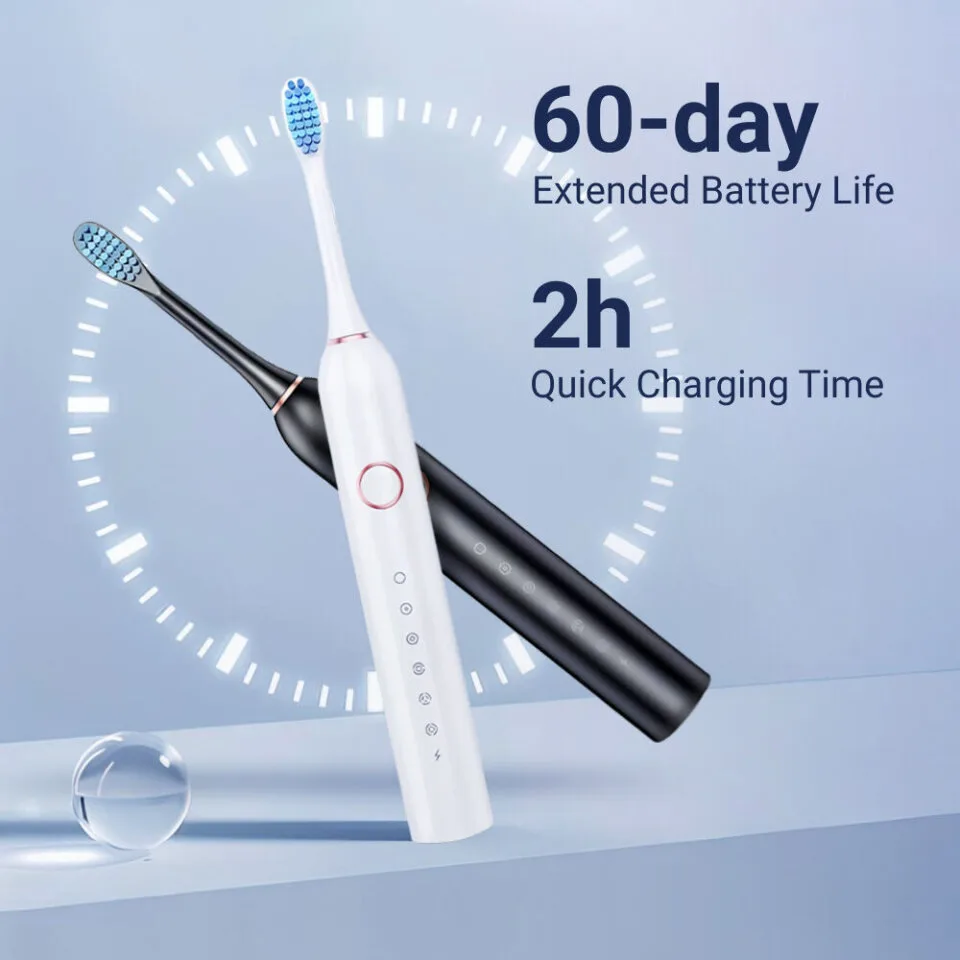
Gentle, guided brushing
WellaWhite Sonic Toothbrush: smart timer, six modes including Sensitive and Whitening, four brush heads and up to 60 days of battery. Up to 75% off on the official site.
Check today's price →Up to 75% off on the official site
Why does a Sensitive mode help?
A sensitive mode lowers the intensity, which is helpful when you first switch or when gums are tender. The WellaWhite Sonic Toothbrush has six modes including Sensitive and Whitening, a smart timer, four brush heads and up to 60 days of battery. Start on Sensitive and move to other modes as your gums adjust. Read our WellaWhite Sonic Toothbrush review.
Can an electric toothbrush cause gum recession?
Gum recession has several causes, including gum disease, genetics and aggressive brushing. Brushing too hard with any brush, manual or electric, can contribute over time. Using soft heads and light pressure reduces the risk. If you notice teeth looking longer or sensitivity at the gumline, see your dentist. See receding gums.
Do pressure sensors help?
Some brushes have pressure sensors that warn you if you press too hard. If yours doesn't, watch the bristles: if they splay out quickly, you're pressing too hard. Holding the brush with your fingertips rather than your fist naturally lightens pressure.
What about sensitive teeth?
Use soft heads, the sensitive mode and a toothpaste for sensitive teeth. Avoid scrubbing at the gumline. See electric toothbrush for sensitive teeth and sensitive teeth causes.
How often should you replace brush heads?
About every three months, or sooner if bristles splay. Worn heads clean less well and can be rougher on gums. See how often to replace a toothbrush.
Is sonic or oscillating gentler?
Both can be gentle when used correctly. Sonic brushes vibrate at high speed with side-to-side motion; oscillating brushes rotate back and forth. Many people with sensitive gums find sonic brushes comfortable. Technique matters more than type. See sonic vs oscillating toothbrush.
Are electric toothbrushes safe for kids' gums?
Yes, with kid-sized soft heads and supervision. Many kids brush longer with an electric brush because of the timer and fun factor. Choose models designed for children.
What about crowns, implants and braces?
Electric toothbrushes are generally safe around dental work when used gently. Angle the bristles toward the gumline around crowns and implants. For braces, see electric toothbrush for braces.
Can an electric toothbrush help gingivitis?
Better plaque removal along the gumline can help reduce gingivitis. Combine brushing with daily cleaning between teeth and regular dental visits. See gingivitis home care and how to improve gum health.
What are signs you're brushing too hard?
- Bristles splay within weeks.
- Gums look red or worn at the edges.
- Teeth feel sensitive near the gumline.
- Gums seem to be receding.
How long should you brush?
Two minutes, twice a day. A built-in timer helps. Brushing longer or harder doesn't clean better and can irritate gums. See how long should you brush your teeth?
Does toothpaste matter for gum comfort?
Very abrasive whitening pastes and strong flavors can feel harsh on tender gums. A fluoride toothpaste for sensitive teeth is a gentle choice while gums adjust. Use a pea-sized amount.
What's a gum-friendly routine?
- Clean between teeth once a day.
- Brush twice daily for two minutes with a soft head on sensitive mode.
- Glide slowly with light pressure, angling toward the gumline.
- Spit, don't rinse heavily.
- Replace heads every three months.
Any tips for switching from manual?
Expect a new feeling for the first few days. Start on the gentlest mode, resist the urge to scrub and let the brush rest on each tooth. Most people adapt within a week and find their teeth feel cleaner than with manual brushing.
What mistakes should you avoid?
- Turning the brush on before it's in your mouth.
- Pressing hard to "feel" it working.
- Using the whitening or deep-clean mode every day on tender gums.
- Keeping heads past three months.
- Skipping cleaning between teeth.
Can an electric toothbrush wear enamel?
Used with soft heads and normal toothpaste, electric toothbrushes aren't expected to harm enamel. Very abrasive toothpastes combined with heavy pressure can wear enamel and exposed root surfaces over time, with any brush. Gentle pressure and a regular fluoride toothpaste keep teeth and gums protected. See does teeth whitening damage enamel?
Why clean between teeth too?
Healthy gums need clean spaces between teeth, which a brush can't fully reach. Add a water flosser or string floss once a day. See water flosser vs floss.
What's the takeaway?
Soft heads, light pressure, a slow glide and a sensitive mode keep electric brushing gentle and effective.
When should you see a dentist?
- Bleeding continues beyond two weeks.
- Gums are swollen, painful or pulling back.
- Teeth feel loose.
- Sensitivity at the gumline gets worse.
These can be signs of gum disease that needs professional care.
Is an electric toothbrush good for older adults?
Often yes. A thicker handle and powered motion can make thorough brushing easier for people with arthritis or limited dexterity, and the timer helps. Use soft heads and the sensitive mode for receding or tender gums.
Does battery life matter?
A long-lasting battery means the brush is always ready and keeps consistent power. The WellaWhite Sonic offers up to 60 days per charge.
Is the whitening mode harsher?
Whitening modes often use a slightly different pulse pattern to polish surfaces. They're designed for normal use, but if your gums are tender, save the whitening mode for a few times a week and use the sensitive mode on other days.
Why are soft heads recommended?
Soft bristles clean plaque effectively while being kind to gums and enamel. The American Dental Association recommends soft-bristled brushes for most people. Medium and hard bristles add abrasion without cleaning better.
How do you keep the brush hygienic?
Rinse the head after brushing, let it air-dry upright and don't cover it while wet. Wipe the handle regularly.
What if your gums hurt only on one side?
You may be pressing harder on one side, often your dominant hand side. Slow down there, use light pressure and watch in a mirror. If soreness persists in one area, have your dentist check for a gum problem or a tooth issue.
Is it worth switching to electric?
For most people, yes: more consistent brushing, a built-in timer and better plaque removal, with gentle settings for sensitive gums.
The bottom line
Electric toothbrushes are gentle on gums when used with soft heads, light pressure and a slow, gliding technique. Some bleeding in the first week or two is common and usually improves; persistent bleeding needs a dentist's check.
For gentle, guided brushing, our pick is the WellaWhite Sonic Toothbrush. Check today's WellaWhite Sonic Toothbrush price.
Sources
- Cochrane. Powered versus manual toothbrushing for oral health.
- American Dental Association. Toothbrushes.
- National Institute of Dental and Craniofacial Research. Gum Disease.
Frequently asked questions
Can an electric toothbrush hurt your gums?
Used gently with soft heads, it's generally kind to gums; pressing hard or scrubbing can irritate them.
Why do my gums bleed after switching to electric?
Inflamed gums often bleed at first; it usually settles within two weeks.
Can an electric toothbrush cause gum recession?
Brushing too hard with any brush can contribute; use soft heads and light pressure.
Which mode is best for sensitive gums?
A sensitive or gentle mode.
How hard should I press?
Just enough to keep bristles in contact; let the brush do the work.
How often should I replace electric brush heads?
About every three months, or sooner if bristles splay.

Michelle Hert
Michelle researches at-home oral care products, from whitening kits to water flossers, and reads the dental research and buyer feedback behind them so readers can make smarter choices. She is not a dentist, and her guides are not a substitute for professional dental care. Her guides are built on published research, manufacturer information and verified buyer feedback, and are updated when new information comes out. More about Michelle.