
- Split your mouth into four quarters and spend about 30 seconds on each.
- Clean every surface: outside, inside and chewing surfaces.
- Use a timer: most people brush for well under two minutes when they guess.
- Brush gently; longer and gentler beats shorter and harder.
General information about consumer products, not dental advice.
Two minutes doesn't sound like much, but when you're standing at the sink at the end of a long day, it can feel like forever. That's why most people brush for far less time than they think, often 45 seconds to a minute. The result is plaque left behind, especially on the back teeth and along the gum line, where cavities and gum disease start.
This guide explains why two minutes is the standard, how to divide that time, whether brushing longer is better, the best times of day to brush and simple ways to make sure you actually brush for the full time.
Why is two minutes the recommended time?
Plaque is a soft, sticky film of bacteria that forms on teeth constantly. Removing it from every surface of every tooth takes time: an adult mouth has 28 to 32 teeth, each with several surfaces. Two minutes gives you enough time to clean each area thoroughly without rushing. The ADA's MouthHealthy recommends brushing twice a day for two minutes with a soft-bristled brush and fluoride toothpaste.
How should you divide the two minutes?
| Section | Time | What to clean |
|---|---|---|
| Upper right | 30 seconds | Outside, inside, chewing surfaces |
| Upper left | 30 seconds | Outside, inside, chewing surfaces |
| Lower left | 30 seconds | Outside, inside, chewing surfaces |
| Lower right | 30 seconds | Outside, inside, chewing surfaces |
Finish with a gentle brush of the tongue to reduce bacteria that cause bad breath. See what causes bad breath.
What's the right technique during those two minutes?
- Angle the bristles at 45 degrees toward the gum line.
- Use short, gentle strokes or small circles, about one tooth wide.
- Brush the outer surfaces, then the inner surfaces, then the chewing surfaces.
- For the inside of the front teeth, tilt the brush vertically and use up-and-down strokes.
- Don't press hard; let the bristles do the work.
See our full guide on how to brush your teeth properly and brushing too hard.
Is brushing for longer than two minutes better?
Brushing a bit longer with gentle pressure is fine and may remove a little more plaque, especially if you have braces or a lot of dental work. But much longer, especially with hard pressure, doesn't add much and can irritate gums and wear enamel near the gum line. The goal isn't maximum time; it's covering every surface gently. Two minutes done well is the sweet spot for most people.
What happens if you brush for less time?
Short brushing usually means skipped areas: the back molars, the inside surfaces and the gum line, which is exactly where plaque does the most damage. Over time, leftover plaque hardens into tartar, causes gum inflammation and increases the risk of cavities. The NIDCR explains that plaque buildup is the starting point of gum disease. See how to remove plaque at home.
How do you make sure you brush for two minutes?
- Use an electric toothbrush with a timer; many also signal every 30 seconds to move to the next quarter.
- Set a phone timer or use a two-minute song.
- Use a sand timer on the sink.
- Follow a set order every time so you don't skip areas.
- Brush somewhere comfortable; some people brush while walking around or in the shower.
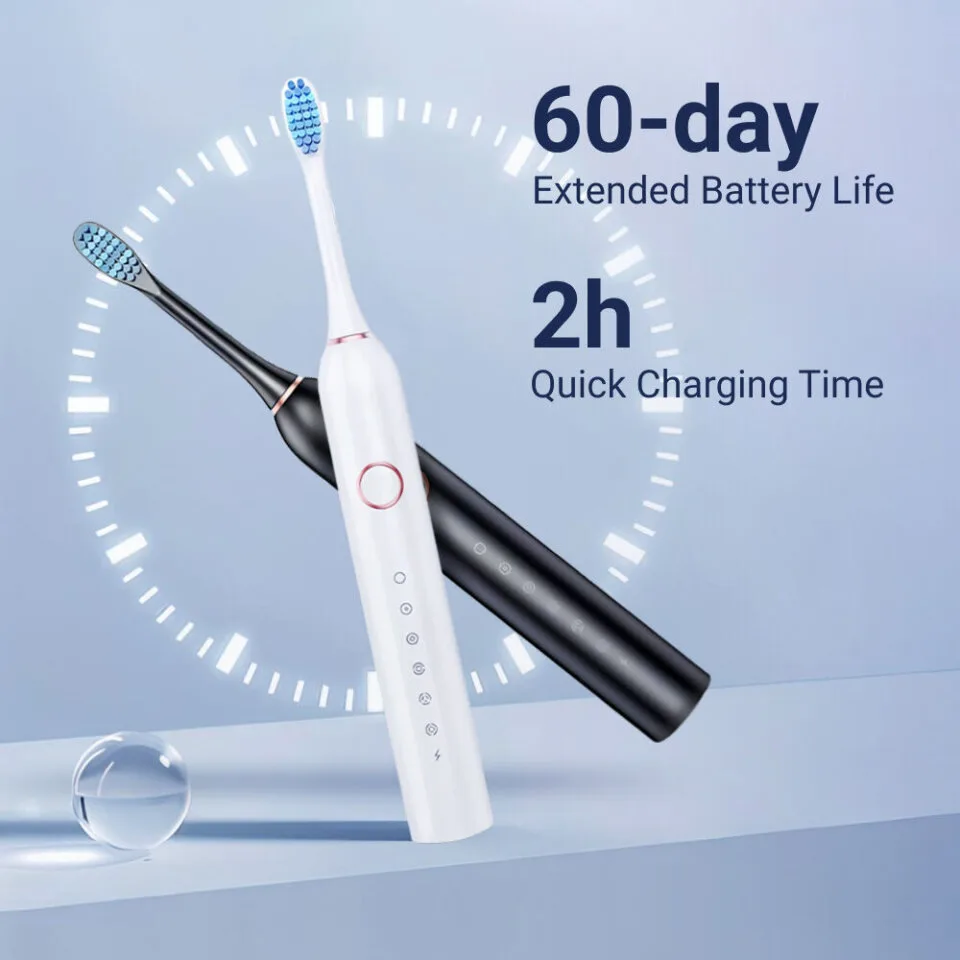
Which toothbrush makes two minutes automatic?
With an electric toothbrush, the timer does the counting for you. The WellaWhite Sonic Toothbrush has a smart timer that helps you brush for the full two minutes, six modes including Sensitive and Whitening, four brush heads and a battery that lasts up to 60 days per charge. You just guide it slowly over each tooth while it does the movement. It's sold at up to 75% off on the official site. Read our WellaWhite Sonic Toothbrush review.
Powered brushes are also effective: a Cochrane review found that they reduce plaque and gum inflammation more than manual brushes.
Two full minutes, every time
WellaWhite Sonic Toothbrush: smart timer, six modes including Sensitive and Whitening, four brush heads and up to 60 days of battery. Up to 75% off on the official site.
Check today's price →Up to 75% off on the official site
When is the best time to brush?
- Morning: before or after breakfast. If breakfast includes acidic foods or juice, brushing before eating, or waiting 30 to 60 minutes after, protects softened enamel.
- Night: right before bed, the most important brushing of the day, since saliva flow drops while you sleep.
- After meals, if you have braces or food gets stuck.
Does flossing count toward the two minutes?
No. Cleaning between your teeth is a separate step, done once a day, and it takes another minute or two. A toothbrush can't reach between teeth, so flossing or water flossing is essential. See water flosser vs floss.
How long should children brush?
Children should also brush for two minutes twice a day, with an adult helping or supervising until they can do it well, often around age 7 or 8. Use a pea-sized amount of fluoride toothpaste for kids 3 and older and a smear the size of a grain of rice for younger children. Songs, apps and timers make it fun.
What about braces?
With braces, brushing takes a bit longer because you need to clean above and below the brackets and around the wires. Many orthodontists suggest brushing after meals and taking extra time, along with a water flosser or interdental brushes. See water flossers for braces.
Which brushing mistakes should you avoid?
- Guessing the time instead of using a timer.
- Always starting in the same spot and running out of time at the back.
- Scrubbing hard to "make up" for short brushing.
- Rinsing with lots of water right after brushing, which washes away fluoride (many dentists suggest spitting instead).
- Using a worn-out brush. See how often to replace your toothbrush.
How do you build the two-minute habit?
Habits stick when they're easy and tied to something you already do. Keep your toothbrush charged and in sight, brush at the same times each day, and use the timer every single time for the first few weeks until two minutes starts to feel normal. Many people are surprised how much cleaner their teeth feel, and how much less plaque the hygienist finds at the next cleaning, once they consistently brush for the full time.
Should you brush your tongue too?
Yes, if you can. The tongue's rough surface holds bacteria and food particles that contribute to bad breath. After brushing your teeth, gently brush or scrape your tongue from back to front a few times and rinse. It only takes a few seconds and doesn't need to count toward your two minutes of tooth brushing.
How do you time two minutes with a manual brush?
With a manual toothbrush, you need an outside timer. A phone timer works, but many people prefer a small sand timer on the sink or a playlist of two-minute songs, which makes the time pass faster. Some brush in front of a clock with a second hand. Whatever you use, follow the same order every time: start with the outside of the upper right teeth, move around the mouth, then do the inside surfaces, so you never end up skipping the same spot.
Why does brushing at night matter most?
During sleep, saliva flow drops, so the mouth's natural cleaning slows down. Any plaque and food left on the teeth at bedtime sits there for hours, giving bacteria time to produce the acids that cause cavities and gum irritation. That's why the night brushing, followed by cleaning between your teeth, is the most important part of your routine. If you're ever going to skip a brushing, don't let it be the one before bed.
What if you're too tired to brush properly at night?
Try brushing earlier in the evening, right after dinner or as soon as you get home, instead of at the very end of the night. Keep a spare toothbrush and floss picks in a second bathroom or by your bed. An electric toothbrush with a timer also helps on tired nights, since it does the work and tells you when you're done.
How can you tell if you're brushing long enough?
Your teeth should feel smooth when you run your tongue over them, especially along the gum line and on the back teeth. Your hygienist's comments at checkups are another clue: if they find a lot of plaque or tartar in the same spots each time, you're probably rushing those areas. Disclosing tablets, which temporarily color plaque, make missed areas easy to see and are a fun way to check, especially for kids.
The bottom line
Brush for two minutes, twice a day, spending about 30 seconds on each quarter of your mouth and covering every surface with gentle strokes. Most people brush for less time than they think, so a timer, especially one built into an electric toothbrush, is the easiest way to get it right. Add daily cleaning between your teeth for a complete routine.
For a brush with a smart timer built in, our pick is the WellaWhite Sonic Toothbrush. Check today's WellaWhite toothbrush price.
Sources
- ADA MouthHealthy. Brushing Your Teeth.
- National Institute of Dental and Craniofacial Research. Gum Disease.
- Cochrane. Powered versus manual toothbrushing for oral health.
- Official WellaWhite product page, checked October 2026.
Frequently asked questions
How long should you brush your teeth?
Two minutes, twice a day, with a soft-bristled brush and fluoride toothpaste, as the ADA recommends.
How should I divide two minutes of brushing?
Split your mouth into four quarters and spend about 30 seconds on each, cleaning the outside, inside and chewing surfaces.
Is brushing longer than two minutes better?
A little longer with gentle pressure is fine, but much longer with hard pressure can irritate gums and wear enamel. Covering every surface gently matters most.
What happens if you only brush for 30 seconds?
You'll likely miss the back teeth, inside surfaces and gum line, leaving plaque that can lead to tartar, gum inflammation and cavities.
Should I brush before or after breakfast?
Either works. If breakfast is acidic, brushing before eating or waiting 30 to 60 minutes afterward protects softened enamel.
Does the WellaWhite Sonic Toothbrush have a timer?
Yes. It has a smart timer for the full two minutes, six modes, four brush heads and up to 60 days of battery.

Michelle Hert
Michelle researches at-home oral care products, from whitening kits to water flossers, and reads the dental research and buyer feedback behind them so readers can make smarter choices. She is not a dentist, and her guides are not a substitute for professional dental care. Her guides are built on published research, manufacturer information and verified buyer feedback, and are updated when new information comes out. More about Michelle.