- Brushing too hard.
- Gum recession.
- Acidic foods and drinks.
- Teeth grinding.
- Cavities, cracked teeth or worn fillings.
- Temporary sensitivity after whitening or dental work.
General information, not dental advice. Sudden, severe or one-tooth sensitivity can signal a cavity, crack or infection. See your dentist promptly.
That sharp zing when you sip ice water, bite into ice cream or breathe in cold air is one of the most common dental complaints. For some people it's an occasional annoyance; for others it makes eating and drinking a daily challenge. Sensitive teeth have clear causes, and in many cases simple changes bring real relief.
This guide explains why teeth become sensitive, the most common triggers and causes, what you can do at home, what dentists can do, and how to protect your teeth from getting more sensitive.
Why do teeth become sensitive?
A healthy tooth is protected by enamel on the crown and by the gums and cementum covering the root. Under those layers is dentin, which contains thousands of tiny tubules leading toward the nerve. When dentin is exposed, hot, cold, sweet or acidic stimuli can travel through those tubules and trigger a short, sharp pain. The ADA's MouthHealthy explains that sensitive teeth are typically the result of worn tooth enamel or exposed tooth roots, and that sensitivity can also be caused by cavities, cracked teeth, worn fillings or gum disease.
What triggers tooth sensitivity?
- Cold drinks, ice cream, smoothies and ice.
- Hot drinks and foods, like coffee, tea and soup.
- Sweet foods and sugary drinks.
- Acidic foods and drinks, such as citrus and soda.
- Cold air on winter days.
- Brushing or flossing, especially near the gumline.
What are the most common causes of sensitive teeth?
| Cause | How it leads to sensitivity |
|---|---|
| Brushing too hard or with hard bristles | Wears enamel near the gumline and pushes gums back |
| Gum recession | Exposes root surfaces, which have no enamel |
| Acidic foods and drinks | Soften and erode enamel |
| Teeth grinding or clenching | Wears enamel and can crack teeth |
| Cavities and cracked teeth | Open a path to the dentin and nerve |
| Worn or leaking fillings | Expose dentin around the edges |
| Gum disease | Causes recession and inflammation |
| Whitening and recent dental work | Temporary sensitivity, usually short-lived |
How does brushing technique affect sensitivity?
Aggressive brushing is one of the most common and most fixable causes. Scrubbing hard with a medium or hard brush wears away enamel near the gumline and can push gums back, exposing sensitive root surfaces. Switch to a soft-bristled brush, hold it with your fingertips, angle it at 45 degrees to the gumline and use gentle, short strokes. The ADA notes that both manual and powered brushes clean effectively when used properly. See how to brush your teeth properly.
An electric toothbrush can help because you guide it rather than scrub. The WellaWhite Sonic Electric Toothbrush has a dedicated Sensitive mode among its 6 modes, a smart timer to keep you to two minutes without over-brushing any area, 4 brush heads and up to 60 days of battery, according to the brand. It's sold on the official site with discounts of up to 75%. See sonic vs oscillating toothbrush.
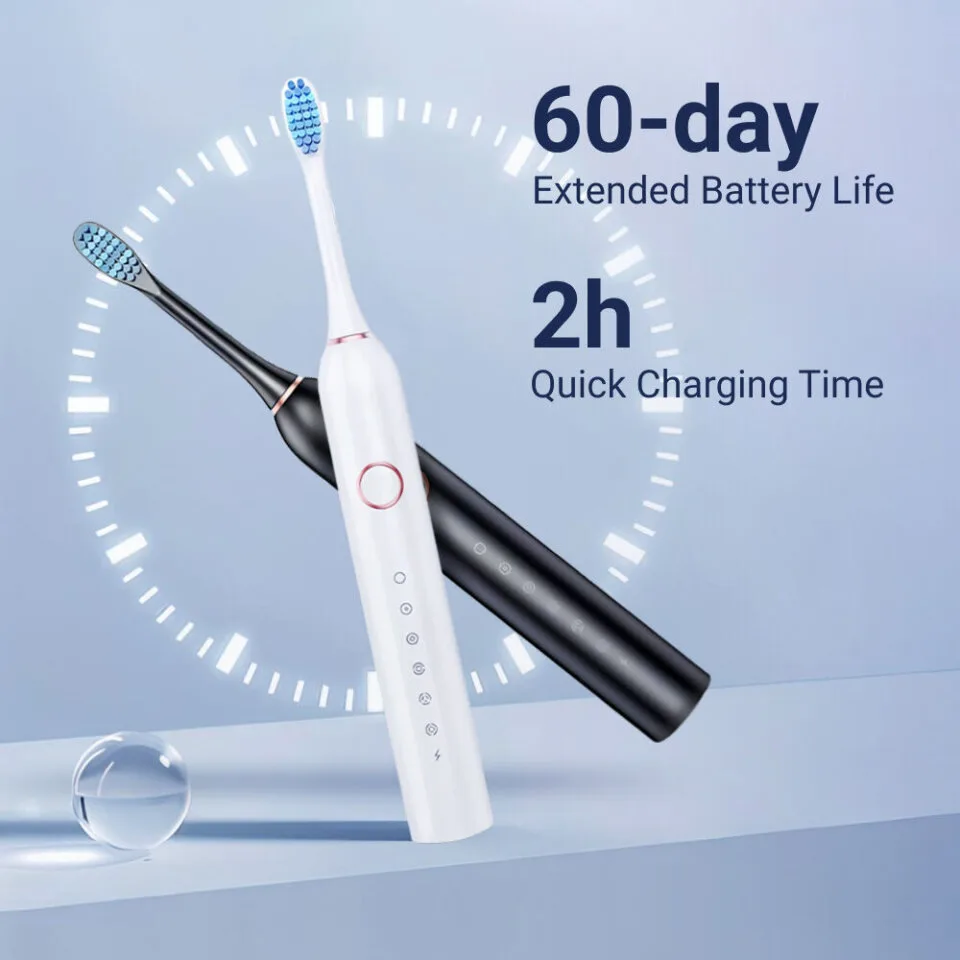
Gentler brushing for sensitive teeth
WellaWhite Sonic Toothbrush: Sensitive mode among 6 modes, smart timer, 4 brush heads, up to 60 days of battery. Up to 75% off on the official site.
Check today's price →Up to 75% off on the official site
How do acidic foods and drinks cause sensitivity?
Soda, sports drinks, energy drinks, citrus fruits and juices, wine, vinegar-based dressings and frequent sipping of lemon water can soften enamel. Over time, repeated acid exposure erodes enamel and exposes dentin. To protect your teeth:
- Have acidic drinks with meals rather than sipping them slowly all day.
- Use a straw for acidic drinks to reduce contact with your front teeth.
- Rinse with plain water afterward.
- Wait about 30 minutes before brushing after acidic food or drink.
How does gum recession cause sensitivity?
When gums pull back, root surfaces are exposed. Roots aren't covered by enamel, so they react easily to temperature. Recession can result from aggressive brushing, gum disease, genetics, grinding and aging. The ADA's MouthHealthy also covers gum disease, a common contributor. See receding gums and signs of gum disease.
Can grinding your teeth make them sensitive?
Yes. Grinding and clenching, often at night or during stress, wear down enamel and can cause tiny cracks. Signs include jaw soreness, headaches in the morning, flattened or chipped teeth and a partner hearing grinding at night. A dentist can fit a night guard to protect your teeth.
What helps sensitive teeth at home?
- Use a toothpaste for sensitive teeth consistently; it can take a few weeks to work. Some people dab a little on sensitive spots before bed.
- Switch to a soft brush and gentle technique, or an electric brush with a sensitive mode.
- Limit acidic foods and drinks, and rinse with water after.
- Use fluoride toothpaste to strengthen enamel.
- Clean between your teeth gently every day; a water flosser on a low setting can be comfortable. See water flosser vs floss.
- Avoid extreme temperatures while sensitivity is bad.
- Wear a night guard if you grind.
How do sensitivity toothpastes work?
Toothpastes for sensitive teeth use ingredients that either calm the nerve's response or block the tiny channels in exposed dentin, so hot and cold can't reach the nerve as easily. Common ingredients include potassium nitrate and stannous fluoride. They aren't instant: most people notice improvement after two to four weeks of consistent use, twice a day. Keep using it even after the sensitivity improves, since stopping often brings it back. Spit rather than rinse after brushing so the active ingredients stay on your teeth longer. If you've used a sensitivity toothpaste for a month with no improvement, see your dentist to look for another cause.
Which everyday habits make sensitivity worse?
Some small habits add up. Sipping soda, sports drinks, kombucha or lemon water slowly through the day keeps enamel in an acidic environment for hours. Brushing right after breakfast juice or a citrus fruit scrubs softened enamel. Chewing ice can crack teeth. Using whitening toothpaste with abrasive particles every day may bother some sensitive teeth. Biting nails or opening packages with your teeth stresses enamel. Swapping a few of these habits, such as drinking acidic drinks with meals, rinsing with water and waiting before brushing, often makes a noticeable difference within weeks.
Can children have sensitive teeth?
Yes. Children can feel sensitivity from new permanent teeth coming in, cavities, enamel defects, grinding or acidic drinks. Because children may not describe it clearly, watch for them avoiding cold foods or chewing on one side. Mention it to their dentist, who can check for cavities and recommend age-appropriate toothpaste.
Why do teeth hurt more in cold weather?
Breathing cold air through your mouth can trigger sensitivity in exposed dentin, and some people notice it most on winter walks or runs. Temperature swings may also make teeth feel more reactive. Breathing through your nose, wearing a scarf over your mouth in very cold weather and using a sensitivity toothpaste through the winter help. If cold-air sensitivity is new or severe, mention it at your next checkup.
What can a dentist do?
Depending on the cause, a dentist may apply fluoride varnish or desensitizing agents, bond or seal exposed root surfaces, replace worn fillings, treat cavities or cracks, recommend a gum graft for significant recession, treat gum disease or, rarely, recommend root canal treatment if the nerve is affected. A checkup is the only way to rule out problems like a cavity or crack.
Can you whiten sensitive teeth?
Often yes, with care. Whitening can cause temporary sensitivity, so use a sensitivity toothpaste beforehand, choose a gentle product, space out sessions and follow instructions. A purple color-correcting foam is a peroxide-free option for instant brightening. See teeth whitening for sensitive teeth.
When is sensitivity a warning sign?
See your dentist promptly if sensitivity is severe, lingers for more than a few seconds after the trigger, affects one specific tooth, comes with pain when biting, swelling or a bad taste, or wakes you at night. These can point to a cavity, crack, infection or nerve problem that needs treatment.
How do you prevent sensitivity from getting worse?
- Brush gently with a soft brush and fluoride toothpaste twice a day.
- Clean between your teeth daily, gently.
- Limit acidic drinks and sip water throughout the day instead.
- Protect teeth from grinding with a custom night guard.
- Don't use your teeth as tools to open packages.
- Replace your toothbrush every three to four months. See how often to replace your toothbrush.
- See your dentist regularly for checkups and cleanings.
What does improving sensitivity look like in practice?
A common case: someone notices zings with cold water on a few teeth near the gumline. At a checkup, there are no cavities, but the dentist points out mild recession and enamel wear from brushing hard with a medium brush, plus a habit of sipping sparkling lemon water all afternoon. They switch to a soft electric brush on a gentle mode, use a sensitivity toothpaste twice a day, drink their lemon water with lunch instead of all day and rinse with plain water after. Within three or four weeks, the zings become rare. The underlying recession doesn't reverse, but with gentler habits it's much less likely to progress.
The bottom line
Sensitive teeth are usually caused by exposed dentin from worn enamel or receding gums, often linked to hard brushing, acidic drinks, grinding or dental problems. A sensitivity toothpaste, a soft brush with gentle technique, fewer acidic drinks and a dental checkup solve most cases. Persistent or severe sensitivity needs a dentist.
For gentle daily brushing, our pick is the WellaWhite Sonic Toothbrush with its Sensitive mode. Check today's WellaWhite toothbrush price.
Sources
- MouthHealthy (ADA). Sensitive Teeth.
- American Dental Association. Toothbrushes.
- MouthHealthy (ADA). Gum Disease.
Frequently asked questions
Why are my teeth suddenly sensitive?
Common causes include worn enamel, gum recession, acidic drinks, hard brushing, grinding, a new cavity or crack, or recent whitening or dental work. Sudden sensitivity in one tooth needs a dentist.
What is the best thing for sensitive teeth?
A toothpaste for sensitive teeth used consistently, a soft brush with gentle technique, fewer acidic drinks and a dental checkup to rule out problems.
Can brushing too hard cause sensitive teeth?
Yes. Hard brushing can wear enamel near the gumline and push gums back, exposing sensitive root surfaces.
Does an electric toothbrush help sensitive teeth?
It can, because you guide it rather than scrub. A sensitive mode and soft heads make brushing gentler.
Is tooth sensitivity after whitening normal?
Temporary sensitivity is common after whitening and usually fades within days.
When should I see a dentist for sensitive teeth?
If sensitivity is severe, lingers, affects one tooth, hurts when biting, comes with swelling or wakes you at night.

Michelle Hert
Michelle researches at-home oral care products, from whitening kits to water flossers, and reads the dental research and buyer feedback behind them so readers can make smarter choices. She is not a dentist, and her guides are not a substitute for professional dental care. Her guides are built on published research, manufacturer information and verified buyer feedback, and are updated when new information comes out. More about Michelle.