- Sonic toothbrushes vibrate side to side at very high speed with an oval head, much like a manual brush. Many people find them gentle and comfortable, especially with sensitive gums.
- Oscillating-rotating toothbrushes have a small round head that turns back and forth, cleaning one tooth at a time.
General information, not dental advice. Ask your dentist which brush suits your teeth and gums, especially if you have gum recession, sensitivity or orthodontic work.
Once you decide to switch to an electric toothbrush, you run into another choice: sonic or oscillating? Marketing makes both sound revolutionary, with numbers about strokes per minute and rotations. But what actually matters for your teeth and gums? And does one really clean better?
This guide explains how each type works, what research says, how they compare on comfort, cleaning, sensitivity, noise and cost, and how to choose the right one for you.
Are electric toothbrushes better than manual ones?
For most people, yes. A Cochrane review of clinical trials found that powered toothbrushes reduced plaque and gingivitis more than manual toothbrushes, in both the short and long term. That said, the American Dental Association notes that both manual and powered brushes can effectively remove plaque when used properly. Electric brushes make good technique easier, especially with built-in timers. See electric vs manual toothbrush.
How does a sonic toothbrush work?
A sonic toothbrush has an oval head, similar in shape to a manual brush, that vibrates side to side very rapidly. Those vibrations move the bristles in tiny sweeps, and the fast motion also moves fluid (saliva and toothpaste) around the teeth and along the gumline. You hold the brush at a 45-degree angle to the gumline and glide it slowly from tooth to tooth; there's no need to scrub.
How does an oscillating-rotating toothbrush work?
An oscillating-rotating brush has a small, round head that turns back and forth in a partial rotation, sometimes with a pulsating motion too. The small head cups each tooth individually. You guide it from tooth to tooth, pausing on each surface for a moment.
How do sonic and oscillating toothbrushes compare?
| Sonic | Oscillating-rotating | |
|---|---|---|
| Head shape | Oval, like a manual brush | Small and round |
| Motion | Fast side-to-side vibration | Back-and-forth rotation |
| Feel | Often described as smoother and gentler | More "scrubbing" sensation |
| Technique | Glide along teeth and gumline | Pause on each tooth |
| Switching from manual | Familiar shape; easy transition | Different feel; short learning curve |
| Noise | Usually a quieter hum | Often more audible |
| Evidence | Both reduce plaque and gingivitis compared with manual brushing when used well | |
Which cleans better?
Some studies have compared the two types, with results that vary by study design and models tested. Overall, both types clean well and both outperform manual brushing for most people. In practice, technique and consistency matter more than the motion: brushing for the full two minutes, twice a day, reaching the gumline, using gentle pressure and replacing the head on time. Pick the brush you'll enjoy using and use correctly every day.
Which is better for sensitive teeth and gums?
Many people with sensitive teeth or gums prefer sonic brushes because the vibration feels gentler and the head moves across the gumline without a scrubbing sensation. Look for a sensitive mode, soft bristles and a pressure-conscious technique. Whatever brush you use, brushing too hard is a common cause of gum irritation and recession, so let the brush do the work. See what causes sensitive teeth.
Which features matter most in an electric toothbrush?
- Two-minute timer with 30-second quadrant alerts to guide you.
- Multiple modes, especially a gentle or sensitive mode.
- Soft bristles and easy-to-find, affordable replacement heads.
- Long battery life, handy for travel and fewer cables.
- Pressure sensor (on some models) to prevent over-brushing and protect gums.
- Comfortable, non-slip handle and reasonable noise.
- Easy charging, ideally a stand or USB cable that travels well.
Which sonic toothbrush do we recommend?
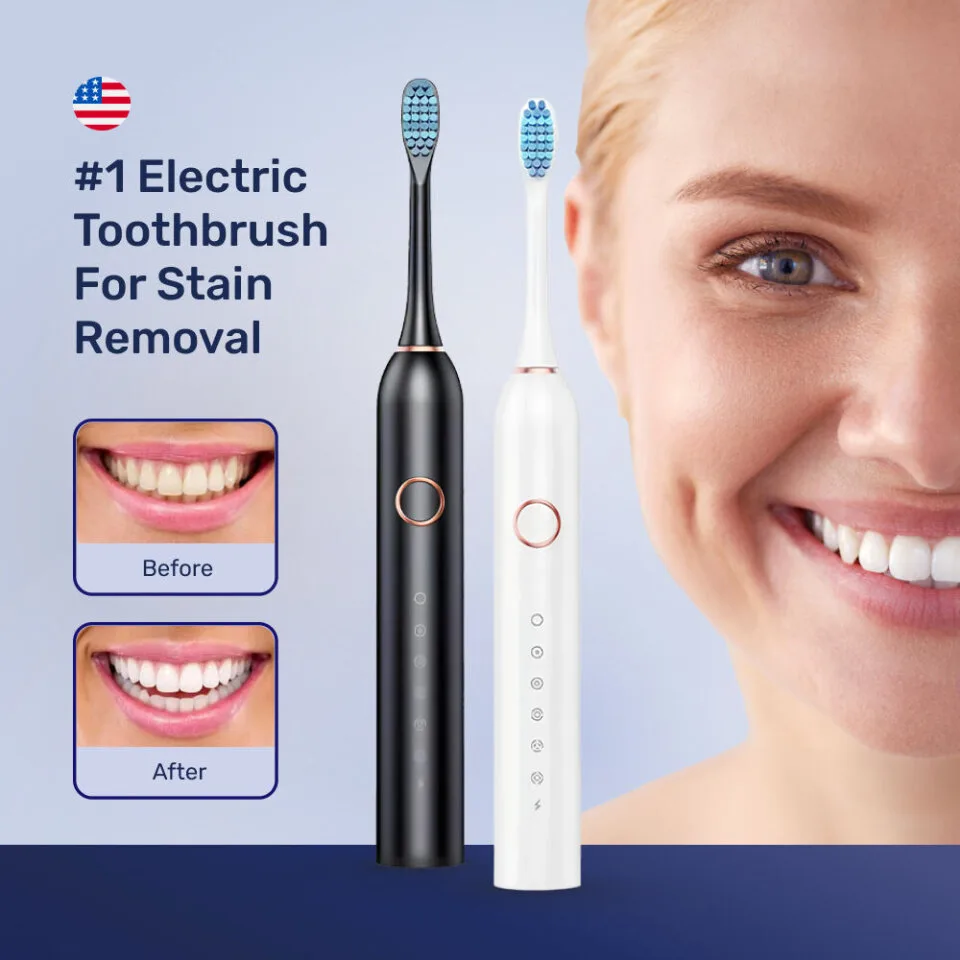
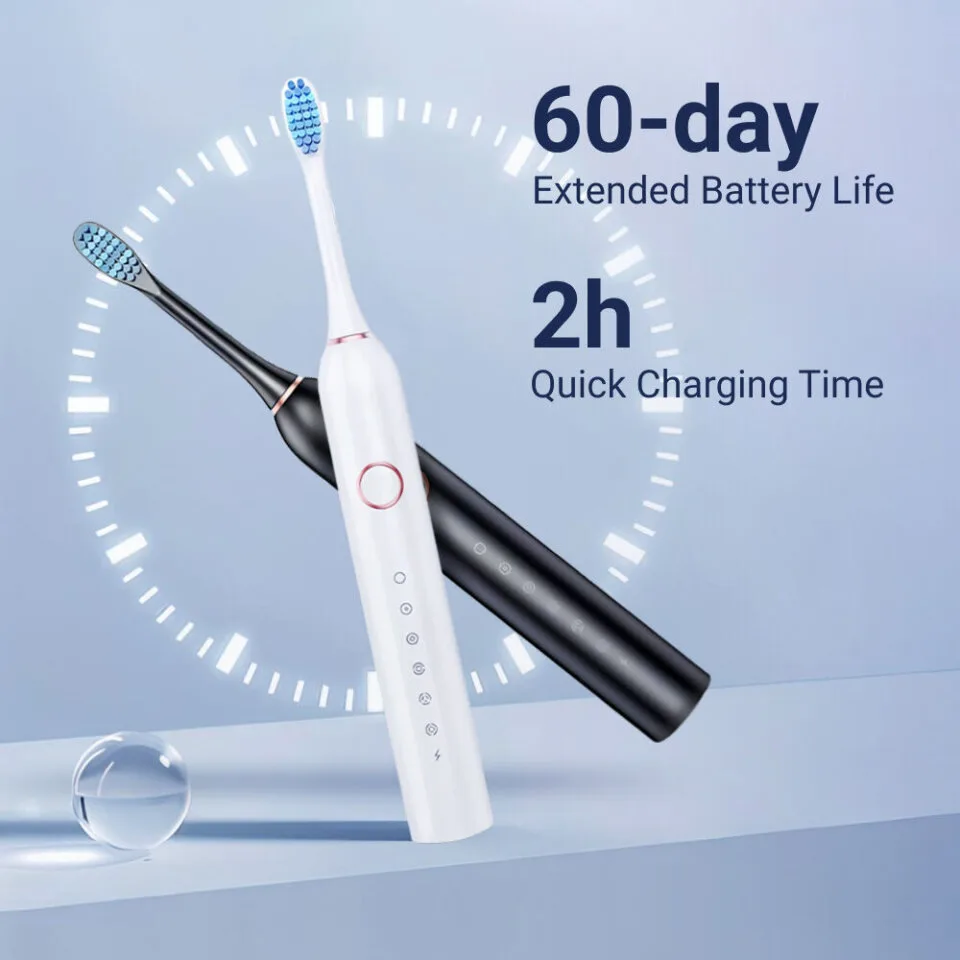
The WellaWhite Sonic Electric Toothbrush covers the features that matter most for everyday use. According to the brand, it has 6 modes including Sensitive and Whitening, a smart timer, 4 brush heads included and up to 60 days of battery per charge. That means a gentle option for sensitive days, a polishing option for surface stains, guided two-minute brushing, and enough heads for about a year of on-time replacement. It's sold on the official site with discounts of up to 75%. See our WellaWhite toothbrush review.
A comfortable sonic upgrade from manual brushing
WellaWhite Sonic Toothbrush: 6 modes including Sensitive and Whitening, smart timer, 4 heads, up to 60 days of battery. Up to 75% off on the official site.
Check today's price →Up to 75% off on the official site
Do strokes per minute matter?
Brands love big numbers: tens of thousands of strokes or movements per minute for sonic brushes, thousands of oscillations for rotating ones. Because the two types move differently, those numbers aren't directly comparable, and a higher figure doesn't automatically mean cleaner teeth. What matters more is whether the bristles reach the gumline and the spaces where plaque collects, whether you brush for the full two minutes, and whether you use gentle pressure. Treat the numbers as a sign the brush is a true powered brush, not as a scorecard. A comfortable brush you use well twice a day beats a more powerful one you rush through.
How do brush heads differ?
Sonic heads are usually oval and come in different bristle layouts: standard, sensitive with extra-soft bristles, and whitening or polishing heads designed to help lift surface stains. Oscillating heads are round and also come in variations, including gentler options and orthodontic designs. Whichever type you choose, make sure replacement heads are easy to buy, reasonably priced and compatible with your handle. Soft bristles are recommended for most people. Check the heads every few weeks and replace them every three to four months, or sooner if the bristles splay.
How important is battery life?
Battery life varies widely between models, from about a week to several weeks per charge. Longer battery life is convenient for travel and means fewer cables on the bathroom counter. Some models charge on a stand, others by USB. Lithium-ion batteries generally hold up better over time than older types. If you travel often, a brush that lasts several weeks per charge, like the WellaWhite's up to 60 days according to the brand, lets you leave the charger at home on most trips.
How do you care for an electric toothbrush?
Rinse the head and the base where it attaches after each use, since toothpaste and water collect there. Every week or two, remove the head and clean the connection point. Store the brush upright to air-dry, and don't leave it sitting in water on the charger. Wipe the handle occasionally. Replace the head on schedule. With basic care, the handle lasts for years.
How should you brush with each type?
Sonic: angle the bristles at 45 degrees toward the gumline, let the brush hum along slowly, moving to the next couple of teeth every few seconds, and cover outer, inner and chewing surfaces in each quadrant. Oscillating: hold the round head against one tooth for a couple of seconds, following the curve of the tooth and the gumline, then move to the next tooth. With either type, don't press hard or scrub; the brush does the motion. See how to brush properly.
Which is better with braces?
Both work. Oscillating round heads can get around brackets one tooth at a time; sonic heads glide along the arch. Many orthodontic patients use either type plus a water flosser to clean under wires; see water flossers for braces.
Do electric toothbrushes whiten teeth?
They help remove surface stains from coffee, tea and wine more effectively than many people manage manually, and "whitening" or "polish" modes can help with that. But they don't change the internal shade of teeth. For deeper whitening, use a peroxide-based product; see how to whiten teeth at home.
How do costs compare?
Both types range from budget to premium. Beyond the handle, the ongoing cost is replacement heads every three to four months. A brush that includes several heads, like the WellaWhite with four, lowers that ongoing cost. See how often to replace your toothbrush.
What should you expect when switching from manual?
The first few days can feel ticklish, especially with a sonic brush, and you may drool a little until you learn to keep your lips mostly closed while brushing. Start the brush once it's in your mouth to avoid splatter. Many people notice their teeth feel smoother and cleaner within days. If your gums bleed a little at first, keep going gently; it often settles as gums get healthier. If it continues, see your dentist.
How do you choose between sonic and oscillating?
- If you want a familiar feel and an easy transition from manual: sonic.
- If you have sensitive gums: many prefer sonic with a sensitive mode.
- If you like a tooth-by-tooth feel: oscillating.
- If noise bothers you: sonic tends to be quieter.
- Either way: choose a timer, soft heads and easy replacements.
What about kids and electric toothbrushes?
Many children enjoy electric brushes, and timers help them brush long enough. Choose a kids' model or a gentle mode with a small head, supervise brushing until they can do it well, and follow your child's dentist's advice. Making brushing fun with a timer or song is often the biggest win.
The bottom line
Sonic and oscillating-rotating toothbrushes both clean well and both beat manual brushing for most people. Sonic brushes feel more like a manual brush, tend to be gentler and quieter and suit sensitive gums; oscillating brushes clean tooth by tooth with a round head. Choose the one you'll use correctly every day, with a timer and soft heads.
Our pick for an easy, comfortable switch is the WellaWhite Sonic Toothbrush. Check today's WellaWhite toothbrush price.
Sources
- Cochrane. Powered versus manual toothbrushing for oral health.
- American Dental Association. Toothbrushes.
- Official WellaWhite Sonic Toothbrush product page, checked October 2026.
Frequently asked questions
Is a sonic toothbrush better than an oscillating one?
Both clean well and both outperform manual brushing for most people. Technique and consistency matter more than the motion.
Which electric toothbrush is best for sensitive gums?
Many people with sensitive gums prefer sonic brushes with a sensitive mode and soft bristles, used with gentle pressure.
Are electric toothbrushes better than manual?
A Cochrane review found powered brushes reduced plaque and gingivitis more than manual brushes in the short and long term.
How do you use a sonic toothbrush?
Angle the bristles at 45 degrees to the gumline and glide slowly from tooth to tooth without scrubbing, for two minutes.
Do electric toothbrushes whiten teeth?
They help remove surface stains but don't change the internal shade of teeth. Use peroxide whitening for deeper results.
What features does the WellaWhite toothbrush have?
According to the brand, 6 modes including Sensitive and Whitening, a smart timer, 4 brush heads and up to 60 days of battery.

Michelle Hert
Michelle researches at-home oral care products, from whitening kits to water flossers, and reads the dental research and buyer feedback behind them so readers can make smarter choices. She is not a dentist, and her guides are not a substitute for professional dental care. Her guides are built on published research, manufacturer information and verified buyer feedback, and are updated when new information comes out. More about Michelle.