- Start low for the first week, especially if your gums bleed or are sensitive.
- Move up gradually as your gums get healthier and used to it.
- Medium is enough for most people for everyday cleaning.
- Use gentler settings around implants, recent dental work, sore spots and for kids.
- Higher isn't always better: if it hurts, turn it down.
General information about consumer products, not dental advice. Ask your dentist or hygienist about the right settings, especially if you have gum disease, implants, bridges or braces.
Water flossers usually come with several pressure settings or modes, and new users often wonder which one to choose. Too gentle and it may not feel like it's doing much; too strong and it can sting, cause bleeding or send water spraying across the bathroom. The right setting depends on your gums, your teeth and what you're cleaning around. This guide explains how pressure settings work, how to choose one, how to adjust over time and how to get a thorough clean on any setting.
How do water flosser settings work?
A water flosser pumps water through a narrow tip in rapid pulses. Higher settings increase the pressure and force of the stream; some flossers also offer different modes, such as a soft pulse, a standard pulse or a massage pattern. Cordless flossers typically have a few modes, while countertop models may have many pressure levels. See cordless vs countertop water flosser.
Which setting should you start with?
Start on the lowest or gentlest mode for the first week. New users, especially those who haven't been cleaning between teeth regularly, often notice some gum bleeding at first. A gentle setting lets gums adjust. The ADA's MouthHealthy notes that water flossers can be a helpful option for people who find string floss difficult.
Which setting fits which situation?
| Situation | Suggested setting |
|---|---|
| First week of use | Lowest / gentle |
| Bleeding or tender gums | Lowest / gentle |
| Everyday cleaning, healthy gums | Medium |
| Braces (around brackets) | Medium, with orthodontic tip if available |
| Implants and bridges | Low to medium, as advised by your dentist |
| Kids | Lowest |
| Sensitive teeth | Low, with lukewarm water |
When should you increase the pressure?
Once flossing feels comfortable and bleeding has stopped, usually after one to two weeks, try the next setting up. If it feels fine, stay there; if it stings, go back down. Many people end up on a medium setting for daily use and use the gentle mode for sensitive spots.
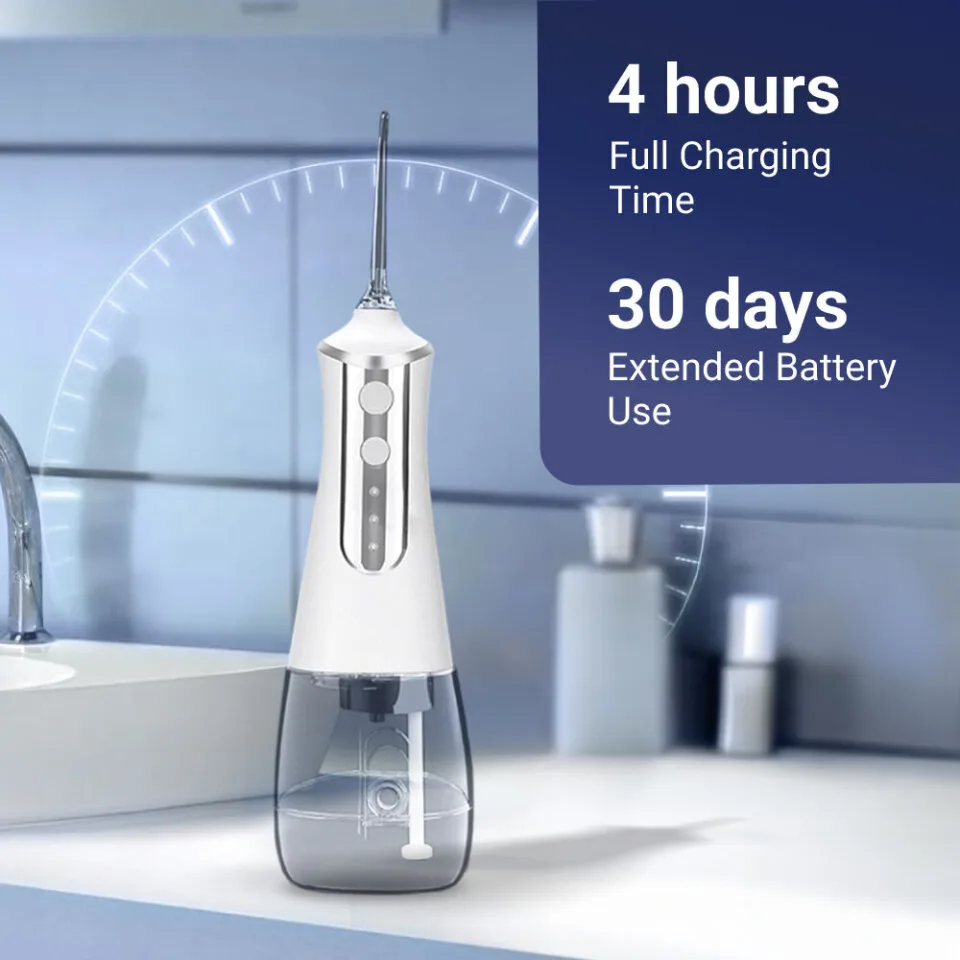
Three modes to start gentle and work up
WellaWhite Water Flosser: cordless and rechargeable, 3 modes, interchangeable nozzles, braces-friendly and compact for travel. Up to 75% off on the official site.
Check today's price →Up to 75% off on the official site
Why do three modes help?
Having a few clear modes makes it easy to pick the right one without guesswork. The WellaWhite Water Flosser is cordless and rechargeable with three modes, so you can start gentle, move to a standard clean as your gums adjust and switch back for sensitive areas. Interchangeable nozzles and a braces-friendly design make it flexible for the whole family. Read our WellaWhite Water Flosser review.
Does technique matter more than pressure?
Often, yes. Even on a gentle setting, good technique cleans well:
- Lean over the sink and close your lips around the tip.
- Aim the tip at the gumline at about a 90-degree angle.
- Glide slowly along the gumline, pausing between teeth.
- Clean the outside and inside of all teeth.
- Take about one minute for the whole mouth.
See how to use a water flosser.
What happens if the pressure is too high?
- Stinging or discomfort.
- More gum bleeding.
- Water splashing everywhere.
- Food pushed deeper into gaps instead of flushed out (if aimed wrongly).
Turn it down and focus on angle and pace instead.
Is bleeding a sign the pressure is too high?
Bleeding in the first week or two is common when gums are inflamed and usually improves with daily cleaning. Use the gentlest setting during this time. If bleeding continues beyond two weeks, or gums are swollen or painful, see your dentist. The NIDCR explains the signs of gum disease. See how to stop bleeding gums.
What setting is best for braces?
A medium setting usually flushes food from around brackets and under wires well. Use an orthodontic tip if available and work bracket by bracket. See water flosser for braces.
What about implants?
Implants need careful cleaning around the gumline. Many dentists suggest a low to medium setting with the tip angled toward the implant. Follow your dentist's advice. See water flosser for implants.
What if you have sensitive gums?
Use the lowest setting, lukewarm water and a slow pace. Many people find water flossing gentler than string floss once they get used to it. See water flosser for sensitive gums.
Do different tips change the pressure?
Yes. Standard jet tips give a focused stream; orthodontic tips have small bristles for braces; some flossers include tips for implants or periodontal pockets. A narrower or specialized tip changes how the water feels even on the same setting. Use the tip designed for your situation and replace tips regularly, often every few months.
How do you avoid splashing?
Lean over the sink, place the tip in your mouth before turning it on and close your lips enough to prevent spraying while letting water drain into the sink. Turn it off before taking the tip out. A lower setting splashes less while you learn.
What setting should kids use?
Kids should use the lowest setting with adult supervision, and parents should check with the child's dentist. Make it fun but keep it brief and gentle. See water flosser for kids.
Does water temperature affect comfort?
Yes. Lukewarm water feels much more comfortable than cold, especially for sensitive teeth. Avoid hot water, which can damage some flossers and isn't needed.
Does battery level affect pressure?
On some cordless flossers, pressure can feel weaker as the battery runs low. Keep it charged so each session feels consistent.
How often should you use it?
Once a day is enough for most people, often before brushing at night. See how often should you use a water flosser? and water flosser before or after brushing.
What mistakes should you avoid?
- Starting on the highest setting.
- Moving too fast along the gumline.
- Pointing the stream straight down into gaps instead of at the gumline.
- Skipping the inside surfaces of teeth.
- Using a worn or cracked tip.
Do cordless flossers have enough pressure?
Most cordless flossers have plenty of pressure for daily cleaning, and their simple mode buttons make it easy to choose. Countertop models may offer more levels and a bigger tank. For most people, a cordless flosser on a medium mode cleans well, and the convenience means they use it more often, which matters most.
How do you know it's cleaning well?
Your teeth should feel smoother along the gumline, food between teeth should be gone, and over a couple of weeks you should notice less bleeding. At your next dental visit, your hygienist may see less plaque. If you still find food stuck after flossing, slow down rather than turning up the pressure.
Does flosser maintenance affect pressure?
Mineral buildup and old tips can reduce pressure. Clean the tank and tips regularly, descale occasionally with a vinegar solution as your manual suggests and replace tips every few months. See how to clean a water flosser.
What's a pressure checklist?
- Week 1: lowest setting, lukewarm water.
- Week 2: try the next setting if comfortable.
- Daily: medium for most teeth, gentle for sensitive spots.
- Always: tip at the gumline, slow pace, about one minute.
Should you use high pressure for deep gum pockets?
No, not without your dentist's guidance. Deep pockets from gum disease need professional care, and your dentist may suggest a specific tip and a gentle setting. Water flossing supports professional treatment; it doesn't replace it. See water flosser for gum disease.
What's the takeaway?
Start gentle, move up slowly, aim at the gumline and floss every day. Comfort and consistency beat maximum pressure.
What is a massage mode for?
Some flossers include a massage or pulse-variation mode that alternates pressure. Many people enjoy it along the gumline. It's a matter of comfort; use whichever mode you'll stick with every day. If your gums feel tender, return to the gentle mode for a few days.
Can a family share one flosser?
Yes, with separate tips for each person. Each family member can use their preferred setting. Label or color-code tips and replace them regularly.
Does pressure change when traveling?
No, but a cordless flosser lets you keep your routine on the road. Pack it charged and use the same setting you use at home. See water flosser for travel.
What should water flossing feel like?
A firm, pleasant pulsing along the gumline, never sharp pain. If it hurts, lower the setting and slow down.
Are higher settings louder?
Usually a little. If noise bothers you at night, a gentler mode is quieter and still cleans well.
The bottom line
Choose the gentlest setting that cleans well and feels comfortable. Start low, move up gradually as gums adjust, and remember that angle, pace and daily use matter as much as pressure.
For easy, adjustable flossing, our pick is the WellaWhite Water Flosser. Check today's WellaWhite Water Flosser price.
Sources
- ADA MouthHealthy. Water Flossers.
- National Institute of Dental and Craniofacial Research. Gum Disease.
- Official WellaWhite product page, checked October 2026.
Frequently asked questions
What pressure should I use on my water flosser?
The lowest setting that cleans well and feels comfortable, often medium once gums adjust.
Should I start on low pressure?
Yes, start on the gentlest setting for the first week.
Is higher pressure better?
Not necessarily; technique and daily use matter more.
What setting is best for braces?
Usually medium, with an orthodontic tip if available.
Why do my gums bleed when I water floss?
Inflamed gums often bleed at first; it usually improves within two weeks.
What setting should kids use?
The lowest setting with adult supervision.

Michelle Hert
Michelle researches at-home oral care products, from whitening kits to water flossers, and reads the dental research and buyer feedback behind them so readers can make smarter choices. She is not a dentist, and her guides are not a substitute for professional dental care. Her guides are built on published research, manufacturer information and verified buyer feedback, and are updated when new information comes out. More about Michelle.