
- Many kids can start with parent supervision once they can follow instructions and keep their lips closed around the tip, often around school age; ask your child's dentist.
- Use the gentlest setting and lukewarm water.
- Make it fun and routine: same time every night, before brushing.
- It doesn't replace brushing twice a day or dental checkups.
General information about consumer products, not dental advice. Ask your child's dentist or orthodontist before starting a new oral care tool, and supervise young children.
Getting kids to brush for two full minutes is hard enough; getting them to floss can feel impossible. String floss is fiddly, especially for small fingers, and kids with braces have even more spots where food gets stuck. That's why many parents turn to water flossers, which feel more like a game and can make cleaning between teeth easier.
This guide covers whether water flossers are safe for kids, what age to start, how to choose and set up a flosser for children, step-by-step instructions, tips to make it fun, special advice for braces, and how to keep the whole family's oral care routine on track.
Why does flossing matter for kids?
Cavities can form between teeth where a toothbrush can't reach. The American Dental Association recommends cleaning between teeth daily with an interdental cleaner. For children, parents often need to help, since small kids don't yet have the coordination to floss well on their own. A water flosser is one option that many kids find easier.
Are water flossers safe for kids?
Used on a gentle setting with supervision, water flossers are generally a gentle way for kids to clean between teeth. The ADA's MouthHealthy site notes that water flossers can help people who have trouble flossing by hand and those with braces. Supervise younger children, start with the lowest pressure and make sure they don't point the stream at the back of the throat or ears.
What age can kids start?
There's no single rule. Many kids can start with help once they can hold the handle, keep their lips closed around the tip and follow simple instructions, often around school age. Kids with braces are frequently encouraged to use one by their orthodontist. Ask your child's dentist what's right for them.
What should you look for in a flosser for kids?
- Gentle modes so you can start low.
- Compact, cordless design that fits small hands and doesn't need a power outlet near the sink.
- Interchangeable nozzles so each family member has their own tip.
- Easy to clean and quick to empty.
- Fun colors or a timer can help motivation.
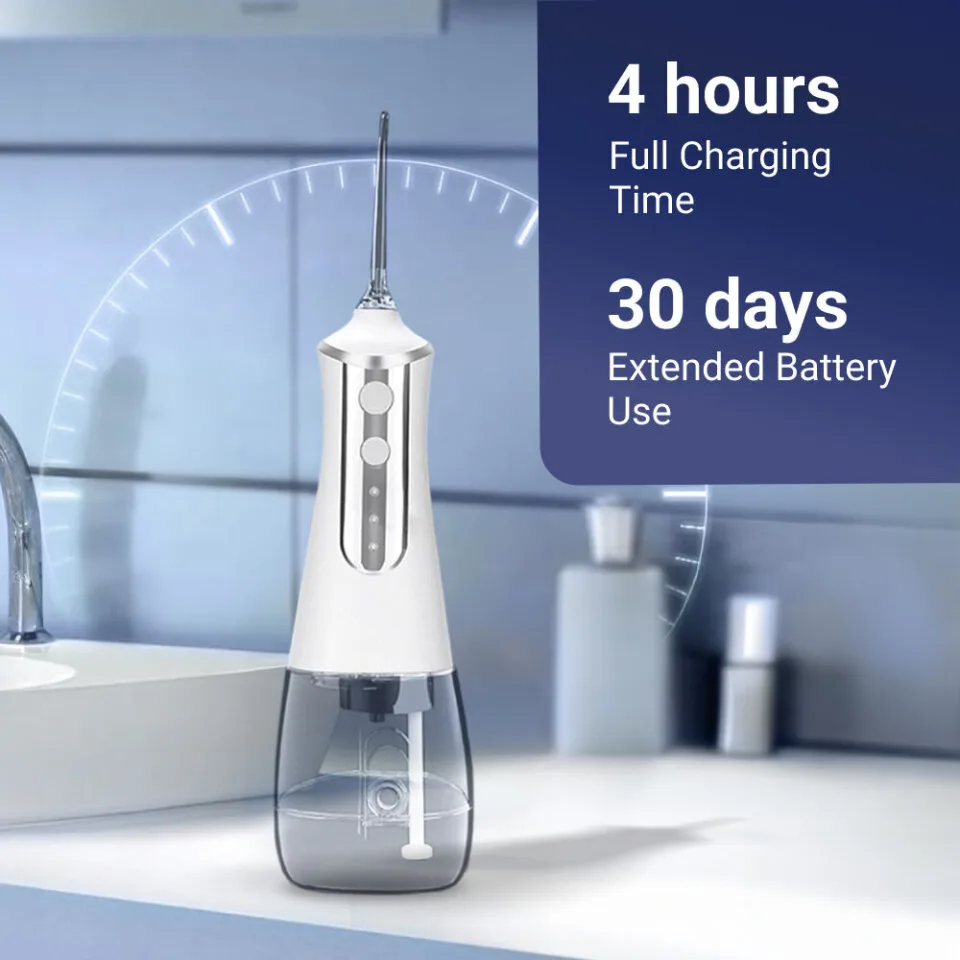
A compact flosser the whole family can share
WellaWhite Water Flosser: cordless and rechargeable, with 3 cleaning modes and interchangeable nozzles. Braces-friendly. Up to 75% off on the official site.
Check today's price →Up to 75% off on the official site
How do kids use a water flosser?
- Fill the reservoir with lukewarm water.
- Put on the child's own color-coded tip.
- Set the lowest pressure.
- Have your child lean over the sink.
- Place the tip in the mouth, then close lips around it so water doesn't spray.
- Turn it on and glide along the gumline, pausing between teeth.
- Let the water drain into the sink.
- Turn it off before taking the tip out.
Start with just the front teeth for the first few days, then add more teeth as they get comfortable. More detail: how to use a water flosser.
How do you make it fun?
- Play a favorite one-minute song.
- Use a sticker chart for a week of flossing.
- Let them choose their own tip color.
- Floss together as a family.
- Turn it into a "find the hidden food" game.
What about kids with braces?
Braces trap food around brackets and wires, which increases the risk of plaque, gum inflammation and white spots on teeth. A water flosser makes it much easier to clean around braces than threading string floss under wires. Some flossers include orthodontic tips. Follow your orthodontist's advice. See water flossers for braces.
Does it replace brushing?
No. Kids still need to brush twice a day for two minutes with fluoride toothpaste, using the amount their dentist recommends. Parents should help or supervise until kids can brush well on their own. See how long to brush and how to brush properly.
How do you avoid a mess?
The most common mess comes from opening the mouth while the flosser is running. Teach kids to close their lips around the tip, keep their head over the sink and turn the flosser off before taking it out. Keep a towel nearby for the first few weeks.
What if your child's gums bleed?
Mild bleeding at first is common if gums are a bit inflamed, and it usually improves with daily cleaning. If bleeding is heavy, lasts more than a week or two, or your child has pain or swelling, see the dentist. See how to stop bleeding gums.
What does a family routine look like?
- Morning: brush for two minutes.
- Night: water floss, then brush.
- Weekly: clean the flosser reservoir.
- Every 3 to 6 months: replace tips.
- Twice a year: dental checkups, or as recommended.
Keeping the flosser clean: how to clean a water flosser.
Should kids use whitening products?
Whitening products aren't designed for young children and generally aren't recommended for kids and young teens unless a dentist suggests it. Focus on brushing, flossing and limiting sugary drinks instead. If you're concerned about discoloration, talk to your child's dentist.
Is the WellaWhite Water Flosser good for families?
The WellaWhite Water Flosser is cordless and rechargeable, with three cleaning modes and interchangeable nozzles, and it's braces-friendly, which makes it practical for families who share one device with separate tips. It's often up to 75% off on the official site. Read our WellaWhite Water Flosser review.
What are common myths?
- "Kids don't need to floss baby teeth." Cavities can form between baby teeth too.
- "Water flossers are too strong for kids." Low settings are gentle.
- "Flossing replaces brushing." Kids need both.
- "Bleeding means stop." Mild bleeding at first usually improves.
How do you get teens to keep flossing?
Teens often care more about fresh breath and how their smile looks than about cavities, so focus on that. A water flosser that's quick, cordless and easy to use in their own bathroom helps. Let them pick their tip color, remind them that it takes only a minute or two, and point out how it helps keep breath fresh and braces clean. Positive reminders work better than nagging.
Can water flossers help kids with special needs?
For some children with sensory sensitivities or limited motor skills, a water flosser may be easier than string floss, while for others the noise or water sensation may take getting used to. Start very slowly, maybe just touching the tip to the teeth without turning it on, then a few seconds at the lowest setting. Ask your child's dentist for tips tailored to your child.
Which habits matter as much as flossing?
Limiting sugary drinks and sticky snacks, drinking water between meals and not letting kids sip juice all day protect teeth as much as any cleaning tool. Crunchy fruits and vegetables, cheese and plain yogurt are tooth-friendly snacks. A dental-friendly diet plus brushing and flossing gives kids the best chance of a cavity-free smile.
Can kids use it when traveling?
A cordless flosser is easy to pack for trips. Empty and dry it before packing, keep each child's tip in a separate bag, and charge it fully before you leave. Keeping the routine on vacation helps kids stay in the habit.
How can parents check if kids are doing it right?
For the first few weeks, stand with your child while they floss. Watch that they close their lips, move slowly along the gumline and reach both the outside and inside of teeth. Afterward, look for leftover food between teeth, especially the back molars. Plaque-disclosing tablets, which temporarily color plaque, can turn checking into a fun game and show which areas need more attention.
Which toothbrush works best with a water flosser for kids?
A soft-bristled brush sized for your child's mouth works well. Many kids enjoy electric toothbrushes with timers, which can make two minutes feel shorter. Replace brush heads every three months or sooner if bristles fray. See how often to replace a toothbrush.
What should you ask the dentist?
At your child's next checkup, ask whether a water flosser is a good fit, which setting and tip to use, and whether there are areas that need extra attention. Dentists and hygienists can also demonstrate the technique, which kids often take more seriously than instructions from parents.
How long until it becomes a habit?
For most kids, a few weeks of consistent nightly flossing with praise and small rewards turns it into routine. Keep the flosser in the same spot, floss at the same time each night and celebrate milestones like a full week or month.
The bottom line
A water flosser can make cleaning between teeth easier and more fun for kids, especially those with braces or tight teeth. Start on the gentlest setting with lukewarm water, supervise younger children, teach them to close their lips and lean over the sink, and keep brushing twice a day and seeing the dentist regularly. Ask your child's dentist when to start.
Our family pick is the WellaWhite Water Flosser. Check today's WellaWhite Water Flosser deal.
Sources
- American Dental Association. Floss.
- MouthHealthy (ADA). Water Flossers.
- Official WellaWhite product page, checked October 2026.
Frequently asked questions
Can kids use a water flosser?
Yes, on a gentle setting with supervision; ask your child's dentist when to start.
What age can kids start water flossing?
Many can start around school age once they can follow instructions.
Are water flossers good for kids with braces?
Yes, they make cleaning around brackets much easier.
How do I avoid a mess?
Teach kids to close their lips around the tip and lean over the sink.
Does water flossing replace brushing for kids?
No, kids still need to brush twice a day.
Can the family share one flosser?
Yes, with a separate tip for each person.

Michelle Hert
Michelle researches at-home oral care products, from whitening kits to water flossers, and reads the dental research and buyer feedback behind them so readers can make smarter choices. She is not a dentist, and her guides are not a substitute for professional dental care. Her guides are built on published research, manufacturer information and verified buyer feedback, and are updated when new information comes out. More about Michelle.