- Use it once a day, on a low to medium setting.
- Aim at the gumline, then above and below each bracket.
- Combine it with careful brushing twice a day.
General information, not dental advice. Follow your orthodontist's instructions; they may recommend specific tools or techniques for your appliance.
Braces straighten teeth, but they also create dozens of new hiding places for food and plaque: around every bracket, under the wire, between teeth and along the gumline. Without careful cleaning, that buildup can lead to swollen gums, bad breath, cavities and white spots on the teeth that stay visible after the braces come off. Many people with braces find string flossing so slow and frustrating that they skip it.
That's where a water flosser shines. This guide explains why water flossers suit braces, how to use one step by step, which settings and tips to choose, and how to build a daily routine that keeps teeth and gums healthy until the day your braces come off.
Why is cleaning with braces so hard?
- Brackets and wires trap food after almost every meal and snack, even soft ones.
- Threading floss under the wire for every tooth takes time and patience.
- Gums can become swollen and tender, making cleaning uncomfortable, especially after adjustments.
- Plaque around brackets can cause white spot lesions (early demineralization) that remain after braces are removed.
- Busy schedules, school and sports make it easy to skip the evening routine, exactly when it matters most.
Why is a water flosser good for braces?
A water flosser sends a thin, pulsing stream of water between teeth and along the gumline, flushing out food particles and plaque. With braces, it can reach around brackets and under wires without threading anything. The ADA recommends cleaning between your teeth once a day with floss or another interdental cleaner, and according to the ADA's MouthHealthy, water flossers with the ADA Seal have been shown to remove plaque and help reduce gingivitis. Most people also find it faster and more comfortable, which means they actually do it every day.
How do you use a water flosser with braces?
- Brush first or after, but be consistent; many people brush first to loosen food around brackets.
- Fill the reservoir with lukewarm water.
- Start on low pressure; tender gums appreciate it.
- Lean over the sink, put the tip in your mouth, then turn it on with lips partly closed.
- Trace the gumline on the outside of each tooth, pausing between teeth.
- Aim above each bracket (between bracket and gum) and below each bracket (between bracket and biting edge).
- Aim under the wire between brackets, tooth by tooth.
- Clean the inner surfaces along the gumline.
- Check in the mirror for any food left and go over those spots again, slowly.
The whole routine takes about two to three minutes once you're used to it. For general technique, see how to use a water flosser.
What settings and tips work best with braces?
- Pressure: start low and increase gradually to a comfortable medium; you don't need the maximum.
- Mode: a pulse mode helps dislodge food around brackets.
- Tips: a standard jet tip works for most people; some flossers offer orthodontic tips with small bristles for extra scrubbing.
- Water temperature: lukewarm is most comfortable for sensitive teeth and gums, especially after adjustments.
Which water flosser works well for braces?
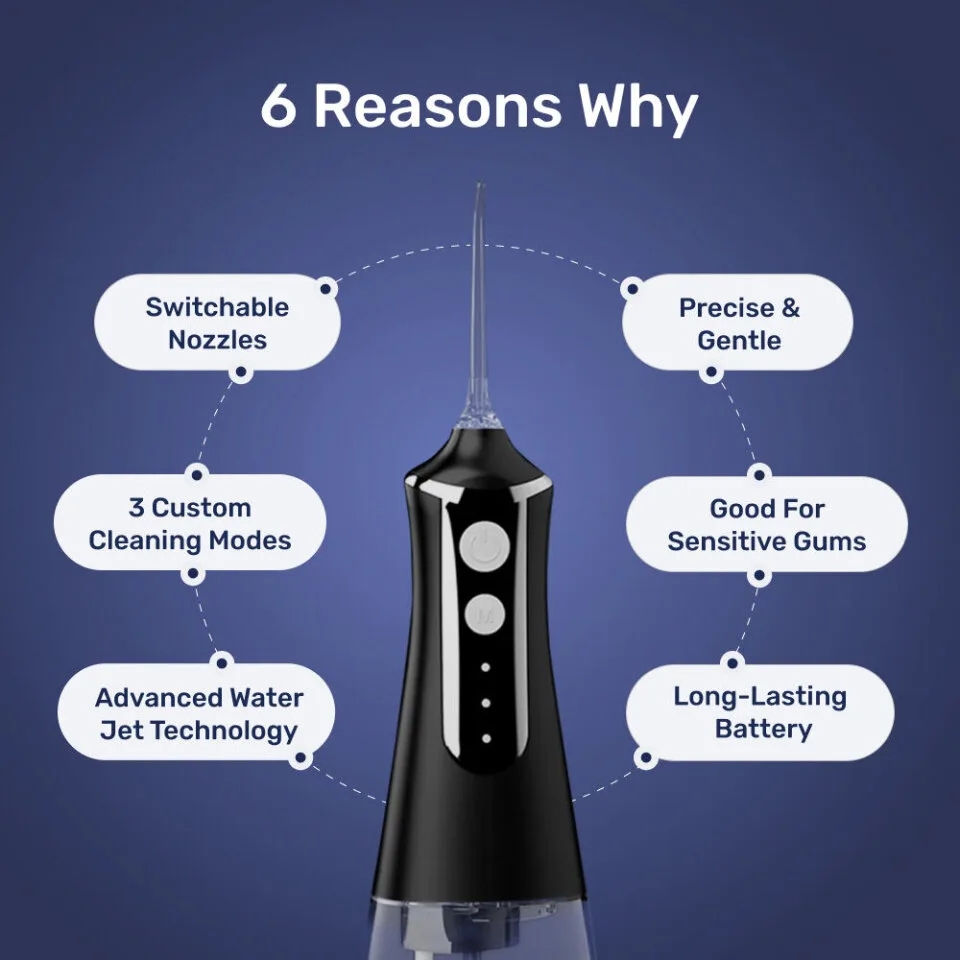
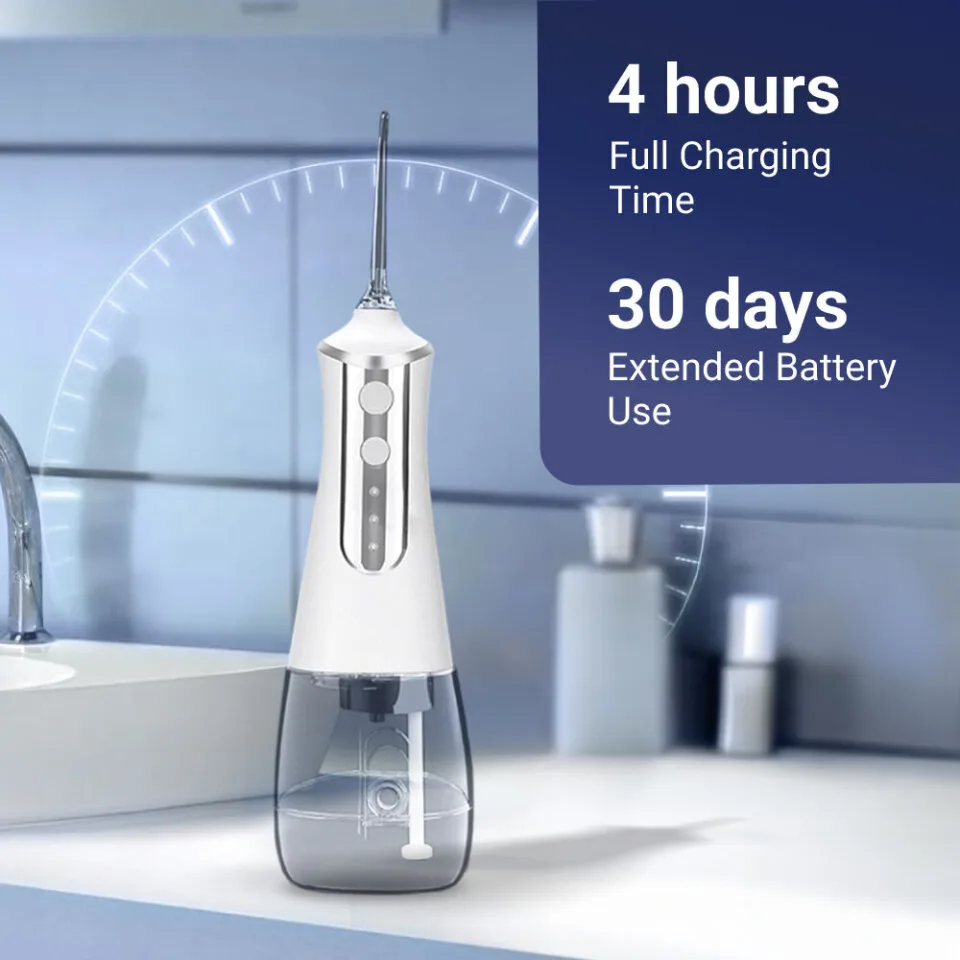
For teens and adults with braces, convenience matters: a flosser that's easy to grab and use daily gets used. The WellaWhite Water Flosser is cordless and rechargeable, with 3 cleaning modes and interchangeable nozzles, and it's designed to be braces-friendly. Cordless means no cables on a crowded bathroom counter, and the different nozzles let family members share the base with their own tips. It's sold on the official site with discounts of up to 75%. See our guide to water flosser vs floss.
Clean around brackets and wires in minutes
WellaWhite Water Flosser: cordless, 3 modes, interchangeable nozzles, braces-friendly. Up to 75% off on the official site.
Check today's price →Up to 75% off on the official site
How should you brush with braces?
- Use a soft brush or an electric brush and fluoride toothpaste, and replace heads often because brackets wear bristles quickly.
- Angle the brush toward the gumline and clean along it.
- Brush above the brackets with the brush angled down, and below the brackets with it angled up.
- Clean each bracket individually with small strokes.
- Brush the inner and chewing surfaces.
- Use an interdental (proxy) brush to clean under the wire if your orthodontist recommends it.
An electric toothbrush with a timer helps make sure you spend enough time; see electric vs manual toothbrush and how to brush properly.
What does a daily braces cleaning routine look like?
| When | Step |
|---|---|
| After meals (when possible) | Rinse with water; brush if you can |
| Morning | Brush 2 minutes around brackets and gumline |
| Evening | Water floss around brackets and under wires, then brush 2 minutes |
| Weekly | Check in the mirror for buildup; replace worn brush heads |
| Every visit | Ask your orthodontist and dentist how your cleaning looks |
Which foods should you avoid with braces?
Orthodontists usually advise avoiding hard, sticky and chewy foods that can damage brackets or get stuck: hard candy, nuts, popcorn, caramel, gum, ice and very crunchy snacks. Cut hard fruits and vegetables like apples and carrots into small pieces, and take corn off the cob. Limit sugary and acidic drinks, which increase the risk of cavities and white spots around brackets.
What if gums are swollen or bleeding with braces?
Swollen, bleeding gums are common with braces when plaque builds up along the gumline. Gentle, thorough daily cleaning usually improves them within a couple of weeks. The National Institute of Dental and Craniofacial Research lists red, swollen and bleeding gums among early signs of gum problems. If bleeding persists, tell your orthodontist or dentist. See how to stop bleeding gums.
How does a water flosser compare with floss threaders?
With braces, string floss needs a threader or special floss with a stiff end to pass under the wire between each pair of teeth. Done well, it cleans the contact points very effectively, but it can take ten minutes or more and requires patience and good dexterity, which is why so many people skip it. Small interdental brushes are another option, good for cleaning under the wire and around brackets. A water flosser covers the gumline, the spaces between teeth and the areas around brackets quickly and comfortably in one tool. Many orthodontists are happy with any method that a patient will actually use every day. Some people combine them: a water flosser daily and a threader or interdental brush a few times a week for tight spots. Ask your orthodontist which combination suits your braces.
What should you expect in the first weeks with braces?
The first days after getting braces or an adjustment can make teeth sore, and cleaning may feel uncomfortable. Use the lowest flosser setting and lukewarm water, and be gentle with your brush. Soft foods help while teeth are tender. As soreness fades, gradually increase the pressure to a comfortable level. Most people settle into a routine within a week or two, and the cleaning time drops as the technique becomes familiar. Keep going even when it feels like extra work: the habits you build early protect your teeth for the whole treatment.
What about clear aligners and retainers?
With clear aligners, you remove the trays to eat, so cleaning teeth before putting them back in is essential; food trapped under aligners sits against teeth for hours. A water flosser helps clean thoroughly and quickly. Clean the aligners and retainers as your orthodontist instructs. After braces, a water flosser is also handy for cleaning around a fixed retainer wire behind the front teeth.
How do you help a teen stick with it?
Teens often struggle with braces hygiene because it takes extra time. Make it easy: keep the flosser charged and visible, set a nightly routine, and remind them that clean teeth mean no white spots when the braces come off, which is the whole point of the investment. Many teens prefer a water flosser to string floss because it's faster and feels better. Praise progress, and let the orthodontist reinforce the message at visits.
How do you prevent white spots around brackets?
White spot lesions are areas of early enamel demineralization where plaque sat against the tooth. They can remain visible after the braces are removed, which is frustrating after months of treatment. Prevention comes down to removing plaque every day, especially at the edges of each bracket and along the gumline, limiting sugary snacks and drinks, and using fluoride toothpaste. Some orthodontists recommend an additional fluoride rinse for patients at higher risk. Daily water flossing plus careful brushing is one of the best defenses, and checking your teeth in the mirror after cleaning helps you spot any area you keep missing.
How do you clean braces away from home?
Keep a small kit in a backpack or bag: a travel toothbrush, a mini toothpaste, an interdental brush and a small mirror. After lunch at school or work, rinse with water and brush if you can. A cordless water flosser is easy to pack for trips and sleepovers; empty the reservoir before packing so it doesn't leak.
The bottom line
Braces make cleaning harder, and a water flosser makes it much easier. Use it once a day around brackets, under wires and along the gumline, combined with careful brushing twice a day, smart food choices and regular orthodontic and dental visits. Your gums stay healthier, and your smile looks its best when the braces come off.
Our pick is the WellaWhite Water Flosser. Check today's WellaWhite Water Flosser price.
Sources
- MouthHealthy (ADA). Water Flossers.
- National Institute of Dental and Craniofacial Research. Gum Disease.
- Official WellaWhite Water Flosser product page, checked October 2026.
Frequently asked questions
Is a water flosser good for braces?
Yes. It cleans around brackets, under wires and along the gumline without threading floss, and many people find it faster and easier to do daily.
How do you use a water flosser with braces?
Start on low pressure, trace the gumline, then aim above and below each bracket and under the wire between brackets, inside and out.
Can a water flosser replace flossing with braces?
The ADA recommends cleaning between teeth daily with floss or another interdental cleaner, and water flossers are one option. Follow your orthodontist's advice.
Why do my gums bleed with braces?
Plaque along the gumline is common with braces. Gentle daily cleaning usually helps within a couple of weeks; see your orthodontist if it continues.
How do I prevent white spots with braces?
Remove plaque daily around brackets, limit sugary and acidic drinks and use fluoride toothpaste.
Can I use a water flosser with clear aligners?
Yes. Clean your teeth thoroughly before putting aligners back in, and clean the aligners as your orthodontist instructs.

Michelle Hert
Michelle researches at-home oral care products, from whitening kits to water flossers, and reads the dental research and buyer feedback behind them so readers can make smarter choices. She is not a dentist, and her guides are not a substitute for professional dental care. Her guides are built on published research, manufacturer information and verified buyer feedback, and are updated when new information comes out. More about Michelle.