
- Natural differences: canines are often a shade darker than front teeth, and enamel thickness varies from tooth to tooth.
- Dental work: crowns, veneers, fillings and bonding don't change color with whitening or stains the way natural teeth do.
- Uneven stains from coffee, tea, soda or smoking, plus plaque near the gumline.
- A tooth that's darker on its own, which can follow an injury, a root canal or nerve problems. Show this to a dentist.
- White spots from early enamel changes or fluorosis.
General information about consumer products, not dental advice. A tooth that suddenly darkens, hurts or follows an injury should be checked by a dentist.
You look in the mirror and notice it: one tooth looks yellower than its neighbors, your canines seem darker than your front teeth, or a crown is whiter than everything around it. Uneven tooth color is very common. Most of the time it's harmless and fixable. Sometimes, though, a single dark tooth is a sign that something needs a dentist's attention.
This guide covers:
- the most common reasons teeth are different colors
- how dental work affects whitening
- which color differences are normal and which aren't
- how to even out your smile at home
- when to see a dentist
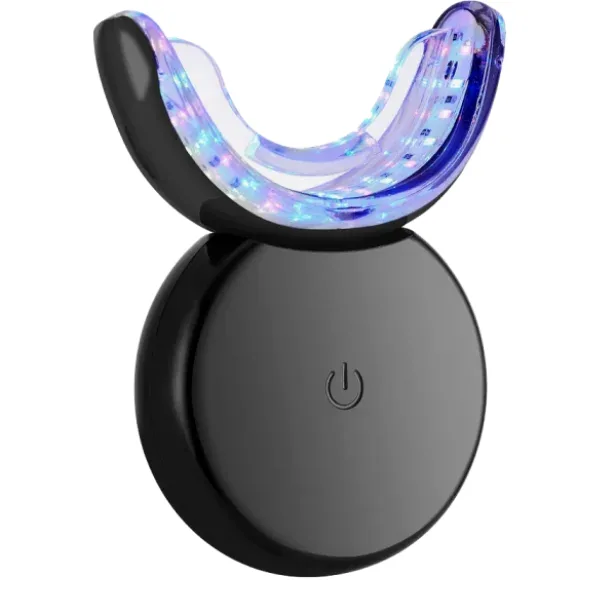
Our pick: the WellaWhite At-Home LED System
Whitening gel, LED light, moldable trays and a shade guide in one kit. 15 to 30 minutes per session, from $59 per kit in bundles.
Check today's price →From $59 per kit · PayPal accepted
Is it normal for teeth to be different colors?
Yes, to a degree. Natural teeth aren't one flat shade. Several things are completely normal:
- Canines are often darker. They have thicker dentin, the yellowish layer under the enamel, so they can look a shade or two darker than the front incisors.
- Edges look different. The biting edges of front teeth can look slightly translucent or gray-blue because the enamel there is thin.
- Each tooth has its own enamel thickness. Thinner enamel lets more of the yellow dentin show.
- Lighting matters. Bathroom lights, phone cameras and daylight all change how shades look.
What causes uneven tooth color?
| Cause | What it looks like | What helps |
|---|---|---|
| Thicker dentin (canines) | Canines a shade darker | At-home whitening often evens it out |
| Surface stains | Yellow or brown, often between teeth and at the gumline | Better cleaning, dental polish, whitening |
| Crowns, veneers, fillings, bonding | Restorations brighter or duller than natural teeth | Whitening changes natural teeth only; dentist can replace work |
| Tooth injury or root canal | One tooth gray, brown or dark | See a dentist |
| White spots | Chalky white patches | Dentist can advise; whitening may help blend |
| Thinning enamel | More yellow, sometimes see-through edges | Gentle care, sensitive-teeth products |
| Tetracycline or developmental stains | Gray or banded color | Ask a dentist; harder to whiten |
The Cleveland Clinic explains the difference between surface (extrinsic) stains, which respond well to cleaning and whitening, and deeper (intrinsic) discoloration, which may need dental treatment.
Why does dental work look a different color?
Crowns, veneers, tooth-colored fillings and bonding are made to match your teeth on the day they're placed. After that, your natural teeth keep changing: they pick up stains, and they get lighter if you whiten. Restorations don't change color the same way. That's why a crown can look bright white next to yellowing teeth, or look too dark after you whiten the rest. The American Dental Association notes that whitening doesn't change the color of fillings, crowns or veneers.
A good plan: whiten your natural teeth first, then ask your dentist whether any old dental work should be updated to match. See does whitening work on crowns?, whitening with fillings, whitening with veneers and whitening with bonding.
What if one tooth is darker than the rest?
A single tooth that turns gray, brown or dark yellow, especially after a knock or fall, can mean the nerve inside has been damaged or the tooth has had a root canal. This isn't something to whiten at home first. See a dentist, who can check the tooth and talk you through options. For gray shades in general, see teeth whitening for gray teeth.
What about white spots?
Chalky white spots can come from early enamel changes, often near the gumline or around where braces brackets used to be, or from mild fluorosis during childhood. Whitening can sometimes make the rest of the tooth lighter so spots blend in, but it can also make them stand out for a few days. Ask your dentist first. See white spots after teeth whitening.
Why do stains build up unevenly?
Stains collect where plaque sits longest: between teeth, along the gumline and on the inside surfaces. Crowded or overlapping teeth are harder to clean, so they often look darker. People who drink coffee, tea or soda on one side, or smoke, may notice uneven patches. Better cleaning helps a lot:
- brush for two full minutes, angling at the gumline
- clean between teeth daily with floss or a water flosser
- get regular professional cleanings
See why are my teeth yellow? and how to remove plaque at home.
How can you even out tooth color at home?
- Clean first. A dental cleaning removes tartar and polishes surface stains, so whitening works more evenly.
- Whiten the natural teeth. An at-home peroxide whitening kit lightens natural teeth and often reduces the difference between canines and front teeth.
- Be consistent. Follow the full course; uneven use gives uneven results.
- Keep it up. Rinse after dark drinks and do occasional touch-ups.
- Match dental work last. Once you're happy with your shade, ask the dentist about updating old fillings or crowns.
Why does an LED kit work well for uneven color?
The WellaWhite At-Home LED System uses a peroxide whitening gel with an LED light in short daily sessions. Because the gel covers all your natural teeth in the mouthpiece, it lightens them together, which helps reduce patchy, uneven yellow tones from coffee, tea and soda. Its benefits:
- Even coverage of the front teeth in each session.
- Short sessions that fit into a busy day.
- Prices of $79 for one kit (from $158), $74 each for two, $69 each for three and $59 each for five. US shipping is $6.90.
Remember that it won't change crowns, veneers or fillings. Read our WellaWhite LED review and how to use an LED whitening kit.
Even out yellow, patchy tones at home
WellaWhite At-Home LED System: peroxide gel and LED light in short daily sessions. $79 per kit, or from $59 each in bundles.
Check today's price →From $59 per kit · PayPal accepted
Is there a quick fix for an event?
If you need a brighter look today, a peroxide-free purple foam can help. WellaWhite Purple Whitening Foam visually cancels yellow tones for a temporary brighter smile. It's gentle on sensitive teeth and pairs well with an LED kit for longer-lasting results. See our purple foam review.
What if whitening makes your teeth sensitive?
Temporary sensitivity is a common side effect of peroxide whitening. Use a toothpaste for sensitive teeth, take a day off between sessions if needed and avoid very hot or cold drinks right after whitening. If sensitivity is strong or lasts, stop and talk to your dentist. See teeth sensitivity after whitening.
When should you see a dentist about tooth color?
- One tooth has darkened, especially after an injury.
- A tooth is painful, sensitive to biting or has a bump on the gum nearby.
- You see gray or banded colors that don't respond to whitening.
- White spots are spreading or feel rough.
- You plan to whiten and have lots of dental work.
Why do teeth look different in photos?
Flash, warm indoor lighting and phone filters all change how teeth look. Yellow light makes teeth look yellower; cool daylight makes them look whiter. To check your real shade, look in a mirror near a window in daylight and compare with a shade guide if you have one.
Do teeth change color with age?
Yes. Over the years, enamel slowly wears thinner and the dentin underneath gets darker, so teeth tend to look more yellow. Decades of coffee, tea and soda also add surface stains. That's why many people notice their canines and lower teeth darkening first. Whitening still works well for most older adults, as long as gums and teeth are healthy. See teeth whitening for older adults.
Why are my teeth uneven after braces?
After brackets come off, the areas that were under them can look lighter or darker than the surrounding enamel. Plaque often collects around brackets, leaving stains or white spots. Give your teeth a few weeks to settle, have a professional cleaning and ask your orthodontist when it's safe to whiten. See teeth whitening after braces.
How long does it take to even out tooth color?
With an at-home LED kit, many people notice a brighter, more even smile within the first week or two of daily sessions. Canines and deeper stains may take the full course. Results depend on your starting shade and habits. Keep a photo in daylight on day one so you can compare fairly. See LED teeth whitening results.
Is yellow or gray easier to whiten?
Yellow and light brown tones from food and drink usually respond best to peroxide whitening. Gray tones, especially those from medication or a damaged tooth, are harder to change and may need a dentist's help.
The bottom line
Teeth are often different colors, and that's usually normal:
- canines can be naturally darker
- surface stains build up unevenly
- dental work doesn't change color like natural teeth
Clean first, then whiten your natural teeth evenly with an at-home LED kit like the WellaWhite At-Home LED System ($79, or from $59 each in bundles). Ask a dentist about any single dark tooth.
Our pick: the WellaWhite At-Home LED System
Whitening gel, LED light, moldable trays and a shade guide in one kit. 15 to 30 minutes per session, from $59 per kit in bundles.
Check today's price →From $59 per kit · PayPal accepted
Frequently asked questions
Is it normal for teeth to be different colors?
Yes. Canines are often a shade darker and enamel thickness varies, so natural teeth aren't one flat shade.
Why are my canines darker than my front teeth?
Canines have thicker dentin, the yellowish layer under the enamel, so they can look darker.
Does whitening change crowns and fillings?
No. Whitening only lightens natural teeth, so dental work may need replacing to match.
Why is one of my teeth turning gray?
It can follow an injury, nerve damage or a root canal. See a dentist before whitening.
Can an LED kit even out tooth color?
It lightens natural teeth together, which often reduces patchy yellow tones from stains.
How much does the WellaWhite LED kit cost?
$79 for one kit, $74 each for two, $69 each for three and $59 each for five.

Michelle Hert
Michelle researches at-home oral care products, from whitening kits to water flossers, and reads the dental research and buyer feedback behind them so readers can make smarter choices. She is not a dentist, and her guides are not a substitute for professional dental care. Her guides are built on published research, manufacturer information and verified buyer feedback, and are updated when new information comes out. More about Michelle.