
- If teeth look grayish-yellow from aging or surface stains, an at-home peroxide kit often helps; it may need a longer, gentler course.
- Gray from medication (like tetracycline), trauma to a single tooth or old metal fillings usually responds less to at-home whitening; see a dentist.
- A dentist may suggest in-office whitening, internal bleaching for a single darkened tooth, bonding or veneers.
- For an instant brighter look, a purple color-correcting foam can help tone down yellowish hues.
General information about consumer products, not dental advice. A single tooth that turns gray can be a sign of nerve damage; see a dentist. If you have sensitive teeth, gum disease, cavities or dental work on your front teeth, talk to a dentist before whitening.
Most whitening advice focuses on yellow teeth, the classic result of coffee, tea and aging. Gray teeth are a different story. Whether your whole smile has a gray tint or one tooth looks darker than the rest, it can be frustrating when whitening strips or toothpaste don't seem to make much difference.
This guide explains what causes gray teeth, why gray stains respond differently to whitening, which at-home options can still help, which professional treatments are available, how to tell if a single gray tooth needs attention, and how to make your smile look brighter in the meantime.
What causes gray teeth?
| Cause | What it looks like | Response to whitening |
|---|---|---|
| Aging and thinning enamel | Grayish or yellow-gray, more translucent edges | Often improves somewhat |
| Surface stains (tobacco, tea) | Dull, gray-brown film | Often improves after a cleaning and whitening |
| Tetracycline or other medications | Gray or blue-gray bands, often many teeth | Responds slowly or little |
| Trauma to one tooth | One tooth darker or gray | Needs a dentist; may need internal bleaching |
| Old silver (amalgam) fillings | Gray shadow around fillings | Won't change with whitening |
| Genetics | Naturally darker or grayer shade | Varies |
Cleveland Clinic notes that intrinsic stains, which form inside the tooth from things like medication or trauma, are often harder to remove than surface stains.
Why are gray stains harder to whiten?
Peroxide whitening works especially well on the yellow and brown compounds that build up from food, drinks and aging. Gray discoloration from medication or trauma often sits deeper in the dentin and has a different chemical makeup, so it lightens more slowly. That doesn't mean whitening never helps, but expectations should be realistic. The ADA notes that whitening results vary with the type of stain and recommends talking to a dentist about the cause of discoloration.
Can at-home whitening help gray teeth?
Sometimes. If your teeth look gray mainly because of surface stains or aging, a professional cleaning followed by an at-home peroxide course can make them look noticeably brighter. If the gray comes from medication, at-home whitening may lighten teeth slightly over a longer course, but results are usually less dramatic than with yellow stains. Start with your dentist's okay, then try a full course and track changes with a shade guide.
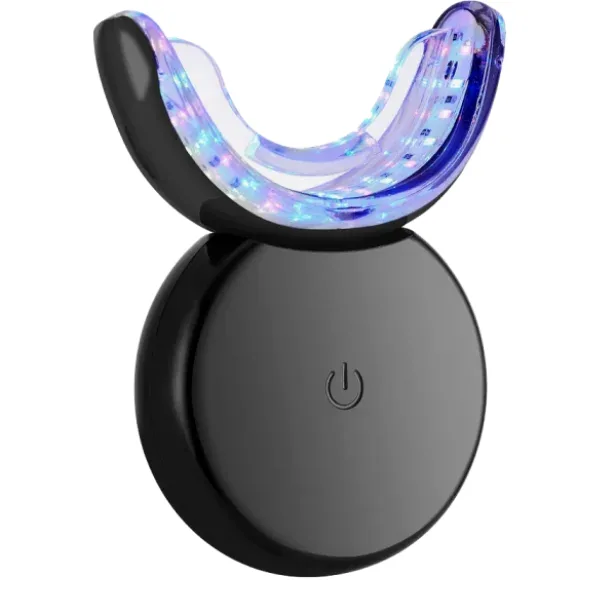
Try a gentle at-home course
WellaWhite At-Home LED System: whitening gel, LED light, moldable trays and a shade guide. 15 to 30 minutes per session. From $59 per kit in bundles, PayPal accepted.
Check today's price →From $59 per kit · PayPal accepted
What's a good at-home plan for grayish teeth?
- Get a dental exam to confirm the cause and rule out problems.
- Have a professional cleaning to remove surface stains and tartar.
- Take a before photo in daylight and note your shade.
- Do daily LED sessions for the full course, or every other day if sensitive.
- Compare photos at the end; if there's progress, a second course after a few weeks' rest may help.
See how to use an LED kit and LED whitening results.
What if only one tooth is gray?
A single tooth that turns gray or dark, especially after a fall, sports injury or old dental work, can mean the nerve inside is damaged or has died. This needs a dental exam, because it may require treatment such as a root canal. After treatment, a dentist can whiten the tooth from the inside, called internal bleaching, or recommend a crown or veneer. At-home whitening won't fix this on its own.
What professional options exist?
| Option | Best for |
|---|---|
| In-office whitening | Stubborn stains needing stronger gel |
| Custom take-home trays | Longer, supervised courses for medication stains |
| Internal bleaching | A single dark tooth after root canal treatment |
| Bonding | Covering mild discoloration on a few teeth |
| Veneers | Severe or widespread gray discoloration |
| Replacing amalgam fillings | Gray shadows from old silver fillings |
See LED vs professional whitening.
Does thin enamel make teeth look gray?
Yes. As enamel thins with age or wear, the edges of teeth become more translucent and can look gray or bluish, while the darker dentin underneath shows through. Whitening can brighten the dentin, but it can't thicken enamel. Protect enamel by brushing gently, limiting acidic drinks and not overusing abrasive DIY remedies. See does whitening damage enamel?
Can purple foam help gray teeth?
Purple color-correcting foam works by canceling yellow tones, so it's most effective on yellow or yellow-gray teeth. On purely gray teeth, the effect is smaller, but many people with mixed tones still see a brighter, cleaner look for special occasions. It's peroxide-free and gentle. Read our WellaWhite Purple Foam review.
Which habits help gray teeth look brighter?
- Brush twice daily and floss to keep surface stains from building up.
- Rinse after coffee, tea and wine.
- Avoid tobacco, which adds gray-brown stains.
- Keep regular cleanings to remove tartar.
- Choose lip colors with blue undertones, which can make teeth look whiter.
Will longer courses cause sensitivity?
Longer courses can increase the chance of sensitivity. Use shorter sessions, whiten every other day and use a sensitivity toothpaste. If sensitivity is strong, pause and talk to your dentist. See sensitivity after whitening.
Is WellaWhite worth trying for grayish teeth?
If your dentist confirms that your gray tint comes mainly from surface stains or aging, an at-home kit is an affordable first step before more expensive treatments. The WellaWhite At-Home LED System includes whitening gel, an LED light, moldable trays and a shade guide, with 15 to 30 minutes per session. It's from $59 per kit in bundles. Returns are accepted within 30 days for unopened products. Read our WellaWhite review.
What are common myths?
- "Gray teeth can't be whitened at all." Some improve, especially with surface or aging stains.
- "A gray tooth is just a stain." A single gray tooth can mean nerve damage.
- "More gel fixes gray stains." It mostly increases sensitivity.
- "Veneers are the only option." Cleaning, whitening and bonding may be enough.
How can you tell if teeth are gray or yellow?
Look at your teeth in natural daylight next to a white sheet of paper. Yellow teeth have a warm, creamy or golden tone. Gray teeth look cooler, duller or slightly bluish, sometimes with darker bands or a darker shadow inside the tooth. Many people have a mix. The shade guide in a whitening kit or at the dentist's office can help you describe your shade. Knowing your undertone helps you set expectations before whitening.
What should you know about tetracycline stains?
Tetracycline antibiotics taken while teeth were forming in childhood can cause gray, brown or bluish bands inside the teeth. These intrinsic stains are among the hardest to whiten. Some people see gradual improvement with long, supervised whitening courses, while others need bonding or veneers for a uniform look. A dentist can assess how deep the stains are and what's realistic.
Can fluorosis cause gray or mottled teeth?
Too much fluoride during childhood can cause fluorosis, which usually shows as white streaks or spots, and in more severe cases brown or gray mottling. Whitening can sometimes make white spots blend in better, but results vary. Treatments like microabrasion or bonding may help. Ask a dentist about options.
How much do professional options cost?
Costs vary widely by location and treatment. In-office whitening and custom trays are usually the least expensive professional options, while veneers are the most expensive. Because most whitening and cosmetic treatments aren't covered by insurance, many people try a cleaning and an affordable at-home course first, then decide whether they need more.
Is whitening worth it for older adults with grayer teeth?
Many older adults find that a cleaning plus a gentle whitening course makes their smile look fresher, even if the result isn't as dramatic as for younger people. Gum recession and exposed roots are more common with age, so ask a dentist first and choose shorter sessions. Even a shade or two brighter can make a noticeable difference in photos and confidence. See how white can teeth get?
What should you do first?
Book a checkup and cleaning, ask the dentist what's causing the gray tone, and take a daylight photo. Then you'll know whether an at-home course is likely to help or whether a professional option makes more sense.
Every smile is different.
The bottom line
Gray teeth can come from aging, surface stains, medication, trauma or old fillings. Surface and aging-related gray tones often improve with a cleaning and an at-home whitening course, while medication stains and single gray teeth usually need professional care. Start with a dental exam, set realistic expectations and use gentle, consistent whitening if your dentist agrees.
Our at-home pick is the WellaWhite LED System. Check today's WellaWhite price.
Sources
- Cleveland Clinic. Tooth Discoloration.
- American Dental Association. Whitening.
- Official WellaWhite product page, checked October 2026.
Frequently asked questions
Can gray teeth be whitened?
Some improve, especially gray from surface stains or aging; medication stains respond less.
Why is one of my teeth gray?
A single gray tooth can mean nerve damage after trauma; see a dentist.
Does at-home whitening work on tetracycline stains?
It may lighten them slowly; professional options are often needed.
What are professional options for gray teeth?
In-office whitening, custom trays, internal bleaching, bonding or veneers.
Does purple foam help gray teeth?
It works best on yellow tones but can brighten mixed shades.
Should I see a dentist first?
Yes, to find the cause and the best option.

Michelle Hert
Michelle researches at-home oral care products, from whitening kits to water flossers, and reads the dental research and buyer feedback behind them so readers can make smarter choices. She is not a dentist, and her guides are not a substitute for professional dental care. Her guides are built on published research, manufacturer information and verified buyer feedback, and are updated when new information comes out. More about Michelle.