
- A first visible difference after a few sessions, often within the first week.
- Their best results by the end of a one- to two-week course of daily sessions.
- Results lasting several months, longer with good habits and occasional touch-ups.
General information about consumer products, not dental advice. If you have sensitive teeth, gum disease, cavities or dental work on your front teeth, talk to a dentist before whitening.
Before-and-after photos of LED teeth whitening are all over social media, and some look almost too good to be true. If you're thinking about buying a kit, the most useful question isn't whether a perfect influencer smile is possible, but what results you can realistically expect for your own teeth, how quickly you'll see them and how to make them last.
This guide explains how LED whitening results develop over time, which factors decide how white your teeth will get, how to measure your progress honestly, why some teeth respond faster than others, how long results last and how to get the best possible outcome from your kit.
What does a typical results timeline look like?
| When | What many people notice |
|---|---|
| After 1 to 3 sessions | A slight brightening, sometimes with temporary white spots that fade |
| After about 1 week | A visible difference in photos and the mirror |
| After 1 to 2 weeks | Best results for the course |
| Weeks after | Shade settles; slight darkening is normal |
| Months later | Gradual return of stains; a touch-up refreshes results |
These are general patterns. Your kit's instructions and your teeth decide the details.
What decides how white your teeth will get?
- Stain type: surface and yellow stains respond best.
- Starting shade: darker yellow teeth often show more dramatic changes.
- Age: enamel thins with age, showing more yellow dentin; whitening still helps.
- Consistency: daily sessions for the full course matter more than long sessions.
- Tray fit: even contact gives even results.
- Habits: coffee, tea, wine and smoking during the course slow progress.
- Dental work: crowns, veneers and fillings don't change color.
Which stains respond best?
Cleveland Clinic divides tooth stains into extrinsic (on the surface, from food, drinks and tobacco) and intrinsic (inside the tooth, from aging, medication, trauma or too much fluoride). Peroxide whitening works on both, but responses differ:
| Stain | Typical response |
|---|---|
| Yellow from coffee and tea | Responds well |
| Brown from wine or tobacco | Responds well, may take longer |
| Yellow from aging | Usually responds well |
| Gray from medication or trauma | Responds less; see a dentist |
| White spots | May look less noticeable or more noticeable; ask a dentist |
See how to get rid of yellow teeth and whitening gray teeth.
How should you measure your results?
- Take a before photo in natural daylight, same spot, same angle, no filters.
- Note your starting shade with the shade guide.
- Check every few days in the same light.
- Take an after photo a day or two after your last session, when temporary white spots have faded.
Bathroom lighting and phone filters can make results look better or worse than they are, so consistent daylight photos are the most honest comparison.
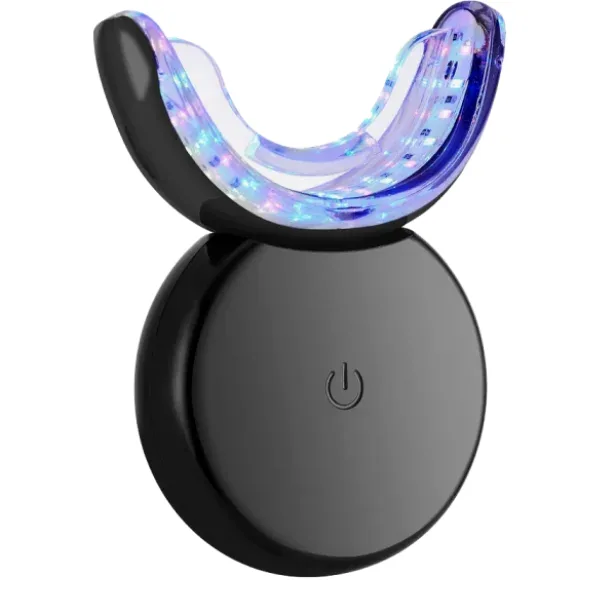
Track your progress with the included shade guide
WellaWhite At-Home LED System: whitening gel, LED light, moldable trays and a shade guide. 15 to 30 minutes per session. From $59 per kit in bundles, PayPal accepted.
Check today's price →From $59 per kit · PayPal accepted
What's a realistic expectation?
A realistic goal is a noticeably brighter, natural-looking smile, often a few shades lighter on a shade guide, rather than a bright paper-white. The ADA notes that results vary from person to person. Very white veneer-like teeth usually require dental work. See how white can teeth get?
Why do white spots appear during whitening?
Temporary chalky white spots during the first days are common. Peroxide temporarily dehydrates the enamel, which makes some areas look brighter than others. They usually fade within hours to a day as teeth rehydrate, and the overall shade evens out. See white spots after whitening.
What if results look uneven?
- Check that the trays fit well and the gel covers each tooth.
- Remember that the edges of teeth are thinner and often look more translucent.
- Dental work won't change color.
- Give it a few days, since temporary white spots fade.
How long do results last?
Results often last several months, sometimes longer. Coffee, tea, red wine and smoking bring stains back faster. A short touch-up of a few sessions every few months keeps your smile bright. See how long whitening lasts.
How do you keep your results?
- Brush twice a day and floss daily.
- Rinse with water after dark drinks and use a straw for iced drinks.
- Avoid staining foods and drinks for about an hour after each session.
- Use a purple foam for an instant brighter look on special days.
- Plan touch-ups before big events.
Will sensitivity affect results?
Mild, temporary sensitivity is common but doesn't reduce your results. If you need to skip a day or shorten sessions, you can still finish the course a little later and get a similar result. Slow and comfortable beats fast and painful.
How do at-home results compare with professional whitening?
In-office whitening uses stronger gel and can give fast results in one visit, but it costs much more. At-home LED kits take longer, a week or two, but can produce noticeable, natural-looking results for a fraction of the price. See LED whitening vs professional.
Can you speed up results?
Not safely by overusing gel. The best way to get results quickly is to follow the course exactly, use well-fitted trays, start with clean teeth and avoid staining foods and drinks during the course. A professional cleaning before you start also helps. See how to whiten teeth fast.
What can you expect from WellaWhite?
The WellaWhite At-Home LED System includes whitening gel, an LED light, moldable trays and a shade guide, with 15 to 30 minutes per session. Many users notice a brighter smile within the first week or two. It's $79 for one kit, $74 each for two, $69 each for three and $59 each for five, with PayPal accepted. Read our WellaWhite review.
What are common myths about results?
- "One session changes everything." Most results build over one to two weeks.
- "Results are permanent." They fade gradually; touch-ups help.
- "Everyone gets the same shade." Results depend on stains and starting color.
- "Crowns whiten too." Dental work doesn't change color.
Do smokers see the same results?
Tobacco stains are often darker and more stubborn than coffee stains, so smokers may need the full course, and sometimes a second course, to see their best results. Results also fade faster if smoking continues. A professional cleaning before whitening helps remove built-up surface stains and tartar. See smoker's teeth whitening and how to remove tobacco stains.
Do results differ with age?
Younger adults often have thicker enamel and lighter dentin, so they may see results faster. As we age, enamel thins and teeth naturally look more yellow, but whitening still helps many older adults achieve a brighter, fresher smile. If you have gum recession or exposed roots, ask a dentist first, since exposed areas can be more sensitive.
How can you show your results in photos?
Use natural daylight from a window, face the light and keep the phone at the same distance and angle as your before photo. Turn off beauty filters and automatic smoothing. Smile naturally rather than baring all your teeth. Comparing similar photos side by side gives the most accurate picture of your progress.
When should you do a second course?
If you've finished a full course and want a bit more brightness, wait a few weeks before starting again so your teeth can rest. Many people then do short touch-ups rather than a full second course. Don't chase an unnaturally white shade; healthy, natural brightness looks best.
Do results look different on men and women?
Whitening works the same way regardless of gender. Differences come from stain habits, enamel thickness and starting shade. Men who drink more coffee or smoke may start with darker stains and see a bigger change. Everyone benefits from the same steps: clean teeth, good tray fit, consistent sessions and protective habits.
How far before an event should you start?
Start two to four weeks before a wedding, reunion or photo shoot. That gives time to finish a full course, let any sensitivity settle and see your final shade. On the day itself, a purple foam adds an extra instant boost. See whitening before the holidays.
Patience and consistency are the real secrets behind great at-home whitening results. Give your kit the full course, protect your teeth from new stains and enjoy the brighter smile you've worked for.
The bottom line
With an at-home LED whitening kit, most people see a first difference within a week and their best results after a one- to two-week course. Yellow and brown stains respond best, while gray stains and dental work change less. Track progress with daylight photos and a shade guide, keep good habits, and plan short touch-ups every few months to keep your smile bright.
Our pick is the WellaWhite LED System. Check today's WellaWhite price.
Sources
- Cleveland Clinic. Tooth Discoloration.
- American Dental Association. Whitening.
- Official WellaWhite product page, checked October 2026.
Frequently asked questions
How fast does LED whitening work?
Many people see a difference within a week and their best results after one to two weeks.
Which stains respond best?
Yellow and brown stains from coffee, tea, wine and aging.
Do gray stains whiten?
They usually respond less; see a dentist for options.
How long do results last?
Often several months, longer with good habits and touch-ups.
Why do I see white spots?
Temporary enamel dehydration; they usually fade within a day.
How should I measure results?
Use daylight photos from the same angle and the kit's shade guide.

Michelle Hert
Michelle researches at-home oral care products, from whitening kits to water flossers, and reads the dental research and buyer feedback behind them so readers can make smarter choices. She is not a dentist, and her guides are not a substitute for professional dental care. Her guides are built on published research, manufacturer information and verified buyer feedback, and are updated when new information comes out. More about Michelle.