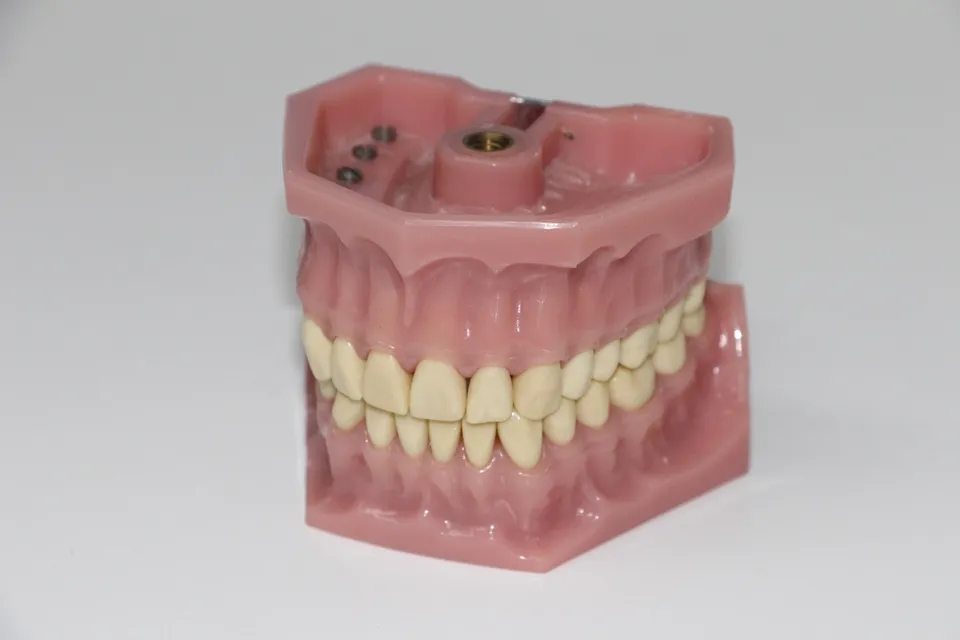
- Whiten first, then match: if you're planning new crowns or veneers, whiten your natural teeth first, then have the dental work matched to your new shade.
- Existing dental work may look darker after you whiten the teeth around it.
- Surface stains on crowns can often be polished by a dentist.
- Talk to your dentist before whitening if you have work on your front teeth.
General information about consumer products, not dental advice. Ask your dentist before whitening if you have crowns, veneers, bonding or fillings on visible teeth, so you can plan for an even result.
If you have a crown on a front tooth or a few veneers, you may wonder whether whitening will brighten them along with your natural teeth. It's one of the most common questions people ask before buying a whitening kit, and the answer surprises many: dental work doesn't respond to whitening.
That doesn't mean you can't whiten. It means you need a plan, so your smile ends up even rather than mismatched. This guide explains why whitening doesn't work on dental work, what happens when you whiten around crowns and veneers, how to plan whitening before new dental work, and how to keep crowns and veneers looking their best.
Why doesn't whitening work on crowns and veneers?
Whitening gels use peroxide, which moves into the porous structure of natural enamel and breaks apart stain molecules. Crowns and veneers are usually made of porcelain, ceramic or zirconia, which are dense and glazed, and bonding and tooth-colored fillings are made of composite resin. These materials don't absorb peroxide the same way, so their color stays the same. The American Dental Association notes that whitening doesn't change the color of fillings, crowns, veneers or bonding, and recommends talking to a dentist before whitening for that reason.
What happens if you whiten teeth with crowns or veneers?
| Dental work | Effect of whitening | Possible result |
|---|---|---|
| Porcelain crown | No color change | Crown may look darker than whitened neighbors |
| Veneers | No color change | Unaffected; natural teeth around them get lighter |
| Composite bonding | No real color change | Bonding may stand out as darker |
| Tooth-colored fillings | No color change | Visible fillings may look darker |
| Natural teeth | Lighter shade | Brighter smile |
On back teeth, a small mismatch rarely matters. On front teeth, it can be noticeable.
How should you plan whitening before new crowns or veneers?
If you're about to get crowns, veneers or bonding on visible teeth, whiten first:
- Talk to your dentist about your plans and timing.
- Whiten your natural teeth to the shade you want.
- Wait about two weeks after whitening for the shade to stabilize (many dentists recommend this before shade matching and bonding).
- Have the dental work matched to your new, brighter shade.
- Keep your teeth at that shade with occasional touch-ups.
This way, the new crown or veneer matches your whitened smile from the start.
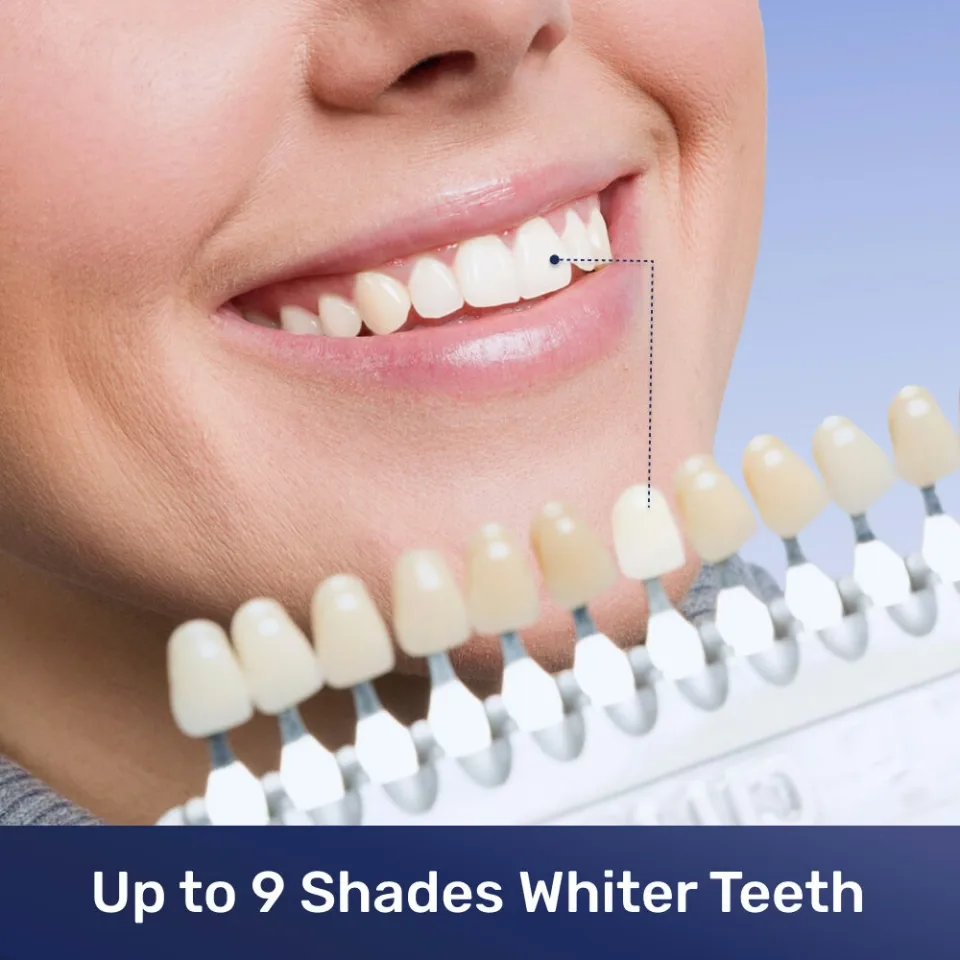
Which at-home kit helps you reach a target shade?
When you're planning dental work, it helps to know exactly what shade you've reached. The WellaWhite At-Home LED System includes whitening gel, an LED light device, moldable trays and a shade guide, so you can track your progress and stop at a consistent shade your dentist can match. Sessions take about 15 to 30 minutes. It costs $79, or as little as $59 per kit in bundles, with PayPal accepted, and unopened kits can be returned within 30 days. Read our WellaWhite LED review (4.5/5) and how white teeth can get.

Reach and track your target shade at home
WellaWhite At-Home LED System: whitening gel, LED light, moldable trays and a shade guide. 15 to 30 minutes per session. From $59 per kit in bundles, PayPal accepted.
Check today's price →From $59 per kit · PayPal accepted
What if you already have crowns or veneers?
If your crowns or veneers were matched to your teeth years ago and your natural teeth have since yellowed, whitening the natural teeth may bring them back closer to the dental work. But if the dental work is already lighter or the same shade, whitening the surrounding teeth could make the dental work look darker by comparison. Ask your dentist to compare shades before you start. Options include whitening only partially, or replacing older dental work after whitening.
Can stained crowns and veneers be cleaned?
Yes, surface stains on porcelain and composite can often be polished away by a dental hygienist. Porcelain is quite stain-resistant, but the edges and the cement line can pick up color. Composite bonding stains more easily. At home, avoid very abrasive toothpastes, which can scratch the glaze and make staining worse. Use a soft brush or a sonic toothbrush on a gentle mode. See brushing too hard.
Is it safe to whiten if you have dental work?
Generally, peroxide whitening used as directed doesn't damage porcelain crowns or veneers. But there are a few things to consider:
- Exposed edges: gel may irritate the gum where a crown meets the tooth.
- Leaky fillings or decay around dental work can become sensitive; get a checkup first.
- Composite bonding may change surface texture slightly with frequent whitening.
- Uneven results are the main issue, not damage.
See does teeth whitening damage enamel?
Is there a way to brighten the whole smile evenly?
A peroxide-free purple color-correcting foam affects the appearance of the tooth surfaces it touches by canceling yellow tones. Its effect is temporary and subtle on porcelain, but it can give a quick, even-looking brightness before an event without changing the shade relationship between your teeth and dental work. See does purple toothpaste work?
What can a dentist do for a mismatched crown or veneer?
- Polish surface stains on the dental work.
- Replace the crown, veneer or bonding with a new shade matched to your whitened teeth.
- Add or adjust bonding on the natural teeth to even out color.
- Suggest partial whitening so the natural teeth match the existing work.
What about a single dark tooth?
A single tooth that has turned gray or dark, often after an injury or a root canal, usually has discoloration inside the tooth. Regular whitening may not help much. A dentist can whiten it from the inside (internal bleaching), or cover it with a crown or veneer. The Cleveland Clinic explains the difference between surface and internal discoloration.
How do you keep crowns and veneers looking great?
- Brush twice a day with a non-abrasive toothpaste.
- Clean between teeth daily; a water flosser is gentle around crown edges. See water flossers for implants and crowns.
- Rinse after coffee, tea and red wine.
- Wear a night guard if you grind.
- Avoid biting ice, pens or very hard foods.
- Get regular cleanings and checkups.
Does whitening work on implant crowns?
No. Implant crowns are made of the same materials as regular crowns, so they won't change color. The same planning applies: whiten natural teeth first, then match the implant crown, or keep natural teeth at a shade that matches an existing implant crown.
How do you keep a matched smile matched?
Once your new crowns or veneers are matched to your whitened teeth, the goal is to keep your natural teeth from drifting darker again, since the dental work won't change. Check your shade every few months with your shade guide, do short touch-up sessions when you see it slipping, and keep up the habits that slow staining: rinsing after coffee and wine, brushing twice a day and regular cleanings. This keeps your natural teeth and dental work looking like one even smile for years.
Is it worth whitening before getting veneers?
If you're getting veneers on only a few front teeth, whitening the rest first is usually worth it, because it lets the dentist choose a brighter, more natural-looking shade for the veneers that the surrounding teeth can match. If you're getting a full set of veneers covering every visible tooth, whitening matters less for those teeth, but it can still help the teeth further back that show when you smile widely or laugh. Ask your dentist which teeth will be visible and plan from there.
Can you whiten only some teeth?
Whitening trays cover all your front teeth, so it's hard to whiten just one or two at home. If you need a few natural teeth to match an existing crown, your dentist can guide you on how many sessions to do, or use whitening trays with gel only on certain teeth. Sometimes the simplest route is to whiten everything to a bright, even shade and then replace one older crown to match. Your dentist can show you the options with a shade tab next to your teeth before you begin.
The bottom line
Whitening doesn't change the color of crowns, veneers, bonding or fillings; it only lightens natural enamel. If you're planning new dental work, whiten first and have the work matched to your new shade. If you already have dental work on front teeth, talk to your dentist before whitening so your smile stays even.
For reaching and tracking a target shade at home, our pick is the WellaWhite LED System. Check today's WellaWhite price.
Sources
- American Dental Association. Whitening.
- Cleveland Clinic. Tooth Discoloration.
- Official WellaWhite product page, checked October 2026.
Frequently asked questions
Does teeth whitening work on crowns?
No. Porcelain, ceramic and zirconia crowns don't change color with whitening; only natural enamel gets lighter.
Can you whiten veneers?
No. Veneers keep their original shade. Surface stains can often be polished by a dentist, and veneers can be replaced to match whitened teeth.
Should I whiten before getting crowns or veneers?
Yes. Whiten your natural teeth first, wait about two weeks for the shade to settle, then have the new dental work matched to it.
Will my crown look darker after whitening?
It can, because the teeth around it get lighter while the crown stays the same. Ask your dentist to compare shades before you start.
Is whitening safe if I have fillings or bonding?
Generally yes when used as directed, but fillings and bonding won't change color, and leaky fillings can become sensitive. Get a checkup first.
Does the WellaWhite kit include a shade guide?
Yes, plus whitening gel, an LED light and moldable trays, from $59 per kit in bundles.

Michelle Hert
Michelle researches at-home oral care products, from whitening kits to water flossers, and reads the dental research and buyer feedback behind them so readers can make smarter choices. She is not a dentist, and her guides are not a substitute for professional dental care. Her guides are built on published research, manufacturer information and verified buyer feedback, and are updated when new information comes out. More about Michelle.