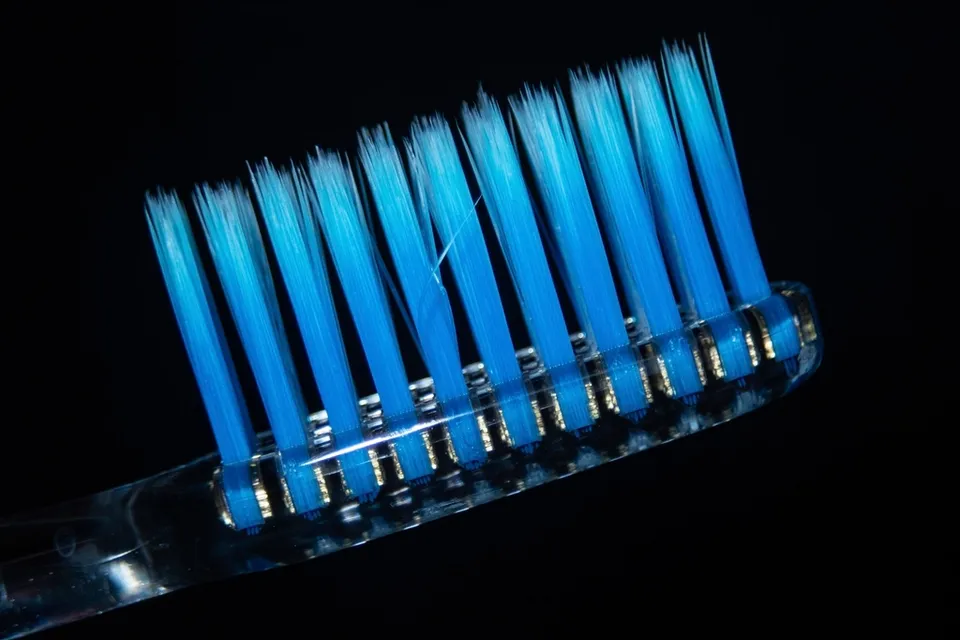
- After every use: rinse the brush head under running water, shake it, and let it air-dry upright.
- Once a week: pop off the head, rinse the metal shaft and the inside of the head, and wipe the handle with a damp cloth.
- Every couple of weeks: wipe the charger and clean any buildup at the base.
- Every 3 months: replace the brush head, or sooner if the bristles fray.
General information about consumer products, not dental advice. Always follow your toothbrush manufacturer's cleaning instructions.
Most people rinse their toothbrush and put it back in the holder without a second thought. But an electric toothbrush has more places for grime to hide than a manual one: the gap where the head meets the handle, the hollow inside of the brush head, the charger and the base. Over time, toothpaste residue, water and bacteria can collect there, leaving gunk that looks and smells unpleasant.
Keeping an electric toothbrush clean takes only a few minutes a week. This guide covers daily rinsing, a weekly deep clean, how to clean the charger, what to avoid, how to store the brush and when to replace the head.
Why does an electric toothbrush get dirty?
- Toothpaste and saliva run down the bristles into the head and onto the shaft.
- Water sits in the joint between the head and the handle.
- Bathroom humidity keeps everything damp.
- The charger and base collect drips and dust.
- Closed cases and caps trap moisture, which helps bacteria and mold grow.
The American Dental Association recommends rinsing toothbrushes thoroughly with tap water after brushing, storing them upright to air-dry and not routinely covering them or storing them in closed containers, which can encourage bacterial growth.
How do you clean an electric toothbrush every day?
- Rinse the bristles under running water after brushing until no toothpaste remains.
- Run the brush for a few seconds under the tap with the head pointed down; the vibration shakes out toothpaste between the bristles.
- Shake off excess water.
- Wipe the handle quickly with a towel.
- Store it upright in an open holder so it can air-dry.
That's it for daily care: about 15 seconds.
How do you deep clean it once a week?
- Turn it off and remove it from the charger.
- Pop off the brush head.
- Rinse the inside of the head under warm running water, flushing out any residue in the hollow part.
- Rinse the metal shaft of the handle and wipe it with a cloth or cotton swab.
- Wipe the handle with a damp cloth and a drop of mild soap, then wipe with clean water.
- Clean the joint where the head connects, using a cotton swab to remove any buildup.
- Let both parts dry separately before putting them back together.
Can you soak the brush head?
Some people soak the detached brush head (never the handle) in an antibacterial mouthwash or diluted hydrogen peroxide for a few minutes, then rinse it well. This can help freshen it, but it's optional; thorough rinsing and drying is the main thing. Don't boil brush heads, put them in the microwave or use bleach, which can damage the bristles and plastic. Check your manufacturer's advice before soaking.
How do you clean the charger?
Unplug the charger first. Wipe the charger base and the charging post with a damp cloth, then dry it. Use a cotton swab to clean around the post, where dried toothpaste and water spots collect. Never submerge the charger or run it under the tap. If there's hard water buildup, a cloth slightly dampened with a little white vinegar and water can help, followed by a wipe with plain water and a dry cloth.
What should you avoid when cleaning an electric toothbrush?
| Avoid | Why |
|---|---|
| Dishwasher | Heat and detergent can damage the handle, seals and bristles |
| Submerging the handle | Unless the manual says it's fully waterproof |
| Boiling or microwaving heads | Melts and warps bristles and plastic |
| Bleach and harsh cleaners | Damage materials; residue isn't safe for the mouth |
| Closed travel caps at home | Trap moisture and promote bacteria |
| Sharing brush heads | Spreads bacteria between people |
How often should you replace the brush head?
About every three months, or sooner if the bristles are frayed, splayed or discolored. The ADA recommends replacing toothbrushes every three to four months. Worn bristles clean less effectively. Also replace the head after being sick, like after a cold or flu, if you want an extra precaution. See how often to replace your toothbrush.
Which electric toothbrush makes this easy?
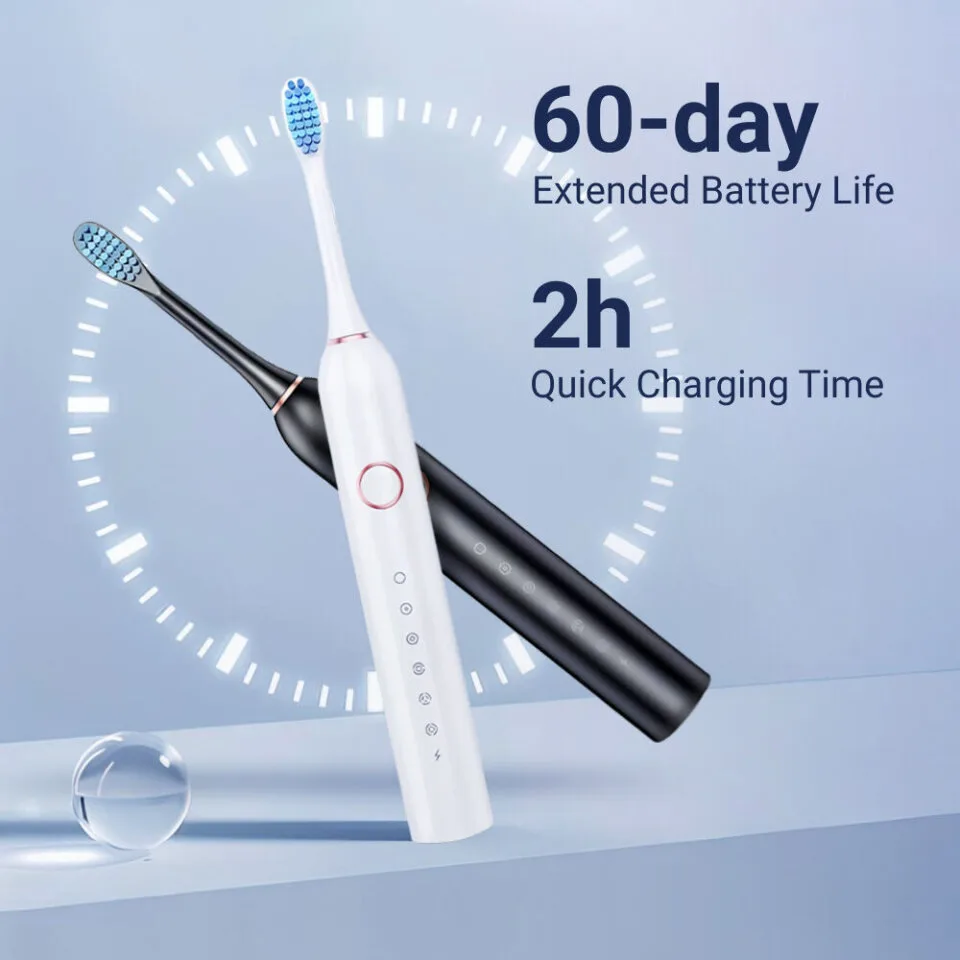
The WellaWhite Sonic Toothbrush comes with four brush heads, which covers about a year of replacements at the recommended three-month interval. It has six modes, including Sensitive and Whitening, a smart timer that helps you brush for the full two minutes, and a battery that lasts up to 60 days per charge, so the charger spends less time collecting drips on the counter. It's sold at up to 75% off on the official site. Read our WellaWhite Sonic Toothbrush review and electric vs manual toothbrushes.
A sonic brush with four heads included
WellaWhite Sonic Toothbrush: six modes including Sensitive and Whitening, smart timer, four brush heads and up to 60 days of battery. Up to 75% off on the official site.
Check today's price →Up to 75% off on the official site
How should you store an electric toothbrush?
- Upright, in an open holder, so the head dries.
- Away from the toilet; close the lid when flushing.
- Not touching other brushes, to avoid spreading bacteria.
- On the charger only when needed, if the battery lasts weeks.
- Travel caps only for travel, and let the head dry before capping.
What if there's black gunk or mold?
Black or green buildup inside the brush head or around the shaft usually means moisture has been trapped. Pop off the head, rinse and scrub the shaft and joint with a cotton swab and a little mild soap, rinse well and let everything dry completely. If the inside of the head is moldy, replace it. To prevent it from coming back, remove the head once a week to let both parts dry, and store the brush in an open, ventilated spot.
Can a family share one handle?
Many households share one handle with separate, color-coded heads for each person. That works, as long as each person has their own head, the heads are stored apart so they don't touch, and the handle and shaft are rinsed between users. Never share brush heads.
How do you care for the battery?
Clean contacts and a dry base help the charger work properly. Follow the manufacturer's charging instructions, avoid leaving the brush in very hot or cold places, and if the battery seems to drain faster than usual, check that the charger is clean and dry. A long-lasting battery also means you don't have to keep the brush on a wet charging base all the time.
Which habits keep your whole brushing routine clean?
- Wash your hands before brushing.
- Rinse and air-dry the brush after every use.
- Deep clean the head and handle weekly.
- Replace heads every three months.
- Keep the holder clean; rinse it weekly too.
- Clean your water flosser tank and tips regularly as well. See how to use a water flosser.
Should you replace the brush head after being sick?
Many people replace the brush head after a cold, flu or strep throat as a precaution, especially if the illness lasted a while. It's an inexpensive step that gives peace of mind. Keeping heads separated in the holder also helps prevent passing germs between family members.
How do you keep it clean when traveling?
Travel is when toothbrushes get the dirtiest: packed while still wet, stuffed in a bag next to other toiletries. Let the brush head dry for as long as possible before packing, use a ventilated travel cap or case, and take it out to air-dry as soon as you arrive. If your brush has a long-lasting battery, you can often leave the charger at home for short trips. Replace the head after a trip if it was stored wet for a long time or picked up a musty smell. Pack your water flosser the same way, with the tank empty and dry. See how to use a water flosser.
How do you clean the toothbrush holder?
The holder is often the dirtiest thing on the bathroom counter: water and toothpaste drip into the bottom and sit there. Rinse it weekly with hot soapy water, scrub the inside with a bottle brush, rinse and let it dry fully. Many ceramic or plastic holders are dishwasher-safe; check the label. Choose a holder with drainage holes or an open design, so water doesn't pool under the brush.
How do you clean kids' electric toothbrushes?
Kids' brushes get chewed, dropped and left with toothpaste on them. Rinse them for your child after brushing, check the bristles often, since children tend to wear them out faster, and replace heads at least every three months. Teaching kids to rinse and stand their brush upright is a simple habit that keeps it fresh. See brushing too hard if bristles splay quickly.
The bottom line
Cleaning an electric toothbrush is quick: rinse and air-dry after every use, pop off the head weekly to rinse the inside and the shaft, wipe the handle and charger, and replace the head every three months. Avoid the dishwasher, boiling and bleach, and store the brush upright in an open holder.
For a sonic brush with extra heads included, our pick is the WellaWhite Sonic Toothbrush. Check today's WellaWhite toothbrush price.
Sources
- American Dental Association. Toothbrushes.
- ADA MouthHealthy. Toothbrushes.
- Official WellaWhite product page, checked October 2026.
Frequently asked questions
How do you clean an electric toothbrush?
Rinse the head after every use and let it air-dry upright. Once a week, remove the head, rinse inside it and the shaft, and wipe the handle and charger.
Can you put an electric toothbrush head in the dishwasher?
It's best not to. Heat and detergent can damage bristles, seals and plastic. Rinse and air-dry instead.
How do I get the black gunk out of my electric toothbrush?
Remove the head, scrub the shaft and joint with a cotton swab and mild soap, rinse and dry completely. Replace a moldy head.
How often should you replace an electric toothbrush head?
About every three months, or sooner if the bristles fray or discolor. The ADA recommends every three to four months.
Can you soak an electric toothbrush head?
You can soak the detached head briefly in antibacterial mouthwash and rinse it well, but never soak the handle. Don't boil or bleach heads.
Does the WellaWhite Sonic Toothbrush come with spare heads?
Yes, four brush heads, plus six modes, a smart timer and up to 60 days of battery.

Michelle Hert
Michelle researches at-home oral care products, from whitening kits to water flossers, and reads the dental research and buyer feedback behind them so readers can make smarter choices. She is not a dentist, and her guides are not a substitute for professional dental care. Her guides are built on published research, manufacturer information and verified buyer feedback, and are updated when new information comes out. More about Michelle.