
- Per session: about 15 to 30 minutes, as the instructions say (WellaWhite sessions are 15 to 30 minutes).
- Per course: once a day for one to two weeks, or until you reach your target shade.
- Touch-ups: a few sessions every few months, or before big events.
General information about consumer products, not dental advice. If you have sensitive teeth, gum disease, cavities or dental work on your front teeth, talk to a dentist before whitening.
One of the most common questions about at-home LED whitening is simple: how long should each session last, and for how many days? Instructions vary between brands, online advice is contradictory, and it's tempting to think that leaving the light on longer will speed things up. Getting the timing right matters for both results and comfort.
This guide explains typical session lengths, how long a whitening course usually lasts, how often to do touch-ups, why more time isn't always better, how to adjust timing for sensitive teeth, and how to plan your whitening around events.
How long should each session be?
Most at-home LED kits recommend sessions of about 10 to 30 minutes. The WellaWhite At-Home LED System uses 15 to 30 minute sessions. Start at the shorter end for the first few days to see how your teeth react, then use the full recommended time if you're comfortable. The gel is what whitens; the session time is set so the gel has enough contact with your teeth without overdoing it. The ADA advises following product directions carefully.
How many days should a course last?
| Goal | Typical plan |
|---|---|
| First whitening course | Daily sessions for 1 to 2 weeks |
| Sensitive teeth | Every other day for 2 to 3 weeks |
| Touch-up | 2 to 5 sessions every few months |
| Before an event | Finish the course about a week before |
Always follow your kit's instructions; these are general patterns.
Does a longer session whiten faster?
Not in a helpful way. Leaving gel on longer than recommended mostly increases the chance of sensitivity and gum irritation. Research in the Journal of the American Dental Association notes that sensitivity is the most common side effect of whitening, and it tends to increase with stronger gels and longer contact. Consistent daily sessions at the recommended length give better, more comfortable results than a few extra-long ones.
Can you whiten twice a day?
Only if your kit's instructions specifically say so. For most kits, once a day is the standard. Doubling up usually doesn't double results and raises the risk of sensitivity. See how often can you whiten teeth?
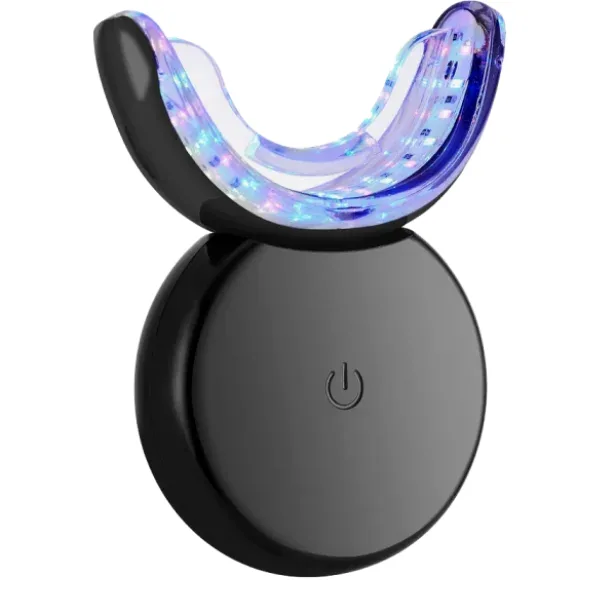
15 to 30 minutes a day, at home
WellaWhite At-Home LED System: whitening gel, LED light, moldable trays and a shade guide. From $59 per kit in bundles, PayPal accepted.
Check today's price →From $59 per kit · PayPal accepted
When will you see results?
Many people notice a difference after a few sessions, and most see their best results by the end of a one- to two-week course. Coffee and tea stains often respond quickly; tobacco stains and long-term staining may take the full course or a second one. See LED whitening results.
When should you stop?
- You've reached a shade you're happy with on the shade guide.
- You've completed the course length in the instructions.
- Sensitivity is strong or lasts more than a day or two.
- You notice gum irritation that doesn't fade.
It's fine to stop before the end of the course if you're happy with your shade.
How should you adjust for sensitive teeth?
- Use a sensitivity toothpaste for a week or two before starting.
- Start with the shortest recommended session.
- Whiten every other day instead of daily.
- Use less gel.
- Extend the course by a week if needed.
See whitening for sensitive teeth and sensitivity after whitening.
How often should you touch up?
Most people do a short touch-up every three to six months, depending on their coffee, tea, wine or tobacco habits. A touch-up is usually a few sessions rather than a full course. Heavy coffee drinkers may prefer shorter touch-ups more often. See how long whitening lasts.
How do you plan around an event?
| Time before event | What to do |
|---|---|
| 4 weeks | Dental cleaning if possible |
| 3 weeks | Start your LED course |
| 1 week | Finish the course; let sensitivity settle |
| The day | Purple foam for an instant boost |
See whitening before a wedding.
What time of day is best?
Evenings work well for many people: you've finished eating and drinking for the day, so stains won't settle on freshly whitened teeth. If you prefer mornings, whiten before coffee and wait about an hour before drinking it. Consistency matters more than the exact time.
What does a session routine look like?
- Brush gently and floss.
- Add a thin line of gel to the trays.
- Insert trays and attach the LED light.
- Set a timer for your session length.
- Remove trays, rinse your mouth and clean the trays.
- Avoid dark foods and drinks for about an hour.
Full guide: how to use an LED whitening kit.
How long does one kit last?
It depends on the amount of gel and how much you use per session. A thin line of gel per tray is enough, which helps the gel last for the full course and possibly touch-ups. Check the kit contents for the number of applications. Bundles of WellaWhite kits lower the price to $74, $69 or $59 per kit, which is useful for touch-ups or for sharing with a partner.
What are WellaWhite's session times?
The WellaWhite At-Home LED System uses 15 to 30 minute sessions and includes whitening gel, an LED light, moldable trays and a shade guide. It's $79 for one kit, $74 each for two, $69 each for three and $59 each for five, with PayPal accepted. Read our WellaWhite review.
What are common myths?
- "An hour a session is better." Stick to the recommended time.
- "You should whiten every day forever." Do a course, then occasional touch-ups.
- "Results stop if you skip a day." Skipping a day for comfort is fine.
- "One long session equals a week of short ones." Consistent sessions work better.
What if you miss a session?
Just pick up the next day. Missing a session or two doesn't undo your progress; it simply means your course might take a day or two longer. Don't double up the next day to "catch up," since that raises the chance of sensitivity. Setting a daily reminder at the same time each evening helps you stay consistent.
Does your stain level change the timing?
Yes. Light coffee or tea stains often respond within the first week. Heavier stains from years of coffee, red wine or tobacco may need the full two weeks and sometimes a second, shorter course after a few weeks' break. Aging-related yellowing usually responds well with a standard course. Gray stains may change little no matter how long you whiten; a dentist can advise on options. See whitening gray teeth.
How long should you rest between courses?
If you want to do a second full course, give your teeth a few weeks to rest first. Many people find that after the first course, short touch-ups every few months are enough, and they never need another full course. Listen to your teeth: if they feel sensitive, wait longer.
Which habits help during the course?
During your whitening weeks, cut back on coffee, tea, red wine and tobacco, or at least rinse with water after them and use a straw for iced drinks. Brush gently with a soft brush and clean between teeth daily. These habits help each session work better and let you finish the course with your best result.
Can you whiten together with a partner?
Yes, as long as each person has their own kit or at least their own molded trays. Many couples set a nightly whitening time while watching a show. A two-kit bundle of WellaWhite is $74 per kit, which makes it easy to whiten together before a wedding, anniversary or holiday trip.
What should the first three days look like?
On day one, mold your trays and do a short session at the low end of the recommended time. On days two and three, keep sessions short and notice how your teeth feel afterward. If there's no sensitivity, increase to the full recommended time from day four. If there is, keep sessions short or whiten every other day. This easy ramp-up helps most people finish the course comfortably.
How long do touch-up sessions last?
Touch-up sessions use the same session length as your main course, usually 15 to 30 minutes with WellaWhite, but you only need a few of them. Two to five sessions every three to six months keep most people's smiles bright. Heavy coffee or tea drinkers may prefer a couple of sessions every month or two instead.
How do you track your timing?
Use your phone's timer for each session and a simple calendar or notes app to track which days you whitened and how your teeth felt. Note your shade with the shade guide every few days. This helps you see progress, avoid overdoing it and plan your next touch-up.
The bottom line
For most LED kits, plan on about 15 to 30 minute sessions once a day for one to two weeks, then a few touch-up sessions every few months. Longer or more frequent sessions don't speed things up and mainly increase sensitivity. If your teeth are sensitive, shorten sessions, whiten every other day and give yourself a little extra time.
Our pick is the WellaWhite LED System. Check today's WellaWhite price.
Sources
- American Dental Association. Whitening.
- Journal of the American Dental Association. Light activation and tooth whitening.
- Official WellaWhite product page, checked October 2026.
Frequently asked questions
How long should an LED whitening session be?
Usually 15 to 30 minutes; follow your kit's instructions.
How many days should I whiten?
Typically once a day for one to two weeks.
Can I whiten twice a day?
Only if your kit says so; usually once a day is the standard.
Do longer sessions whiten faster?
No, they mostly increase sensitivity.
How often should I touch up?
A few sessions every three to six months.
What if I miss a session?
Just continue the next day; don't double up.

Michelle Hert
Michelle researches at-home oral care products, from whitening kits to water flossers, and reads the dental research and buyer feedback behind them so readers can make smarter choices. She is not a dentist, and her guides are not a substitute for professional dental care. Her guides are built on published research, manufacturer information and verified buyer feedback, and are updated when new information comes out. More about Michelle.