
- At-home LED kits and strips: follow a full course as the instructions say (often daily for 1 to 2 weeks), then do touch-ups every few months as needed.
- Whitening toothpaste and color-correcting foams: can be used daily, because they work on surface stains and color.
- Professional in-office whitening: usually once or twice a year at most, as your dentist advises.
General information about consumer products, not dental advice. If you have tooth pain, gum disease, cavities or very sensitive teeth, see a dentist before whitening.
Once you've seen your teeth get a few shades brighter, it's tempting to keep going: one more session before the party, another round after a week of coffee. But teeth aren't a surface you can bleach endlessly. Whitening too often can leave them sensitive, irritate your gums and, at some point, simply stop making a visible difference.
The good news is that a smart whitening routine keeps your smile bright with surprisingly little effort. This guide explains how often each type of whitening can be used, how to plan touch-ups, signs you're overdoing it and how to make results last longer so you whiten less.
How does teeth whitening work?
Most whitening products that change the actual color of your teeth use a peroxide ingredient, usually hydrogen peroxide or carbamide peroxide. It moves into the enamel and breaks apart the stain molecules that make teeth look yellow or dull. The American Dental Association explains that whitening products work on stains in and on the teeth, and that sensitivity and gum irritation are the most common side effects.
Other products, like whitening toothpastes and purple color-correcting foams, don't bleach. They polish away surface stains or use color theory to make teeth look whiter right away. Those can be used much more often.
How often can you use each whitening method?
| Method | How it works | Typical frequency |
|---|---|---|
| At-home LED kit | Peroxide gel plus LED light in trays | A full course as directed, then touch-ups every few months |
| Whitening strips | Peroxide on thin strips | A course as directed, then occasional touch-ups |
| Custom trays from a dentist | Peroxide gel in fitted trays | As the dentist prescribes |
| In-office whitening | High-strength gel, done by a dentist | Usually no more than once or twice a year |
| Whitening toothpaste | Mild polishing for surface stains | Daily, if it doesn't cause sensitivity |
| Purple color-correcting foam | Color correction, no peroxide | Daily or before events |
Always follow the specific instructions that come with your product. Session length and the number of days in a course vary from brand to brand.
What does a typical at-home whitening course look like?
Most at-home kits are designed as a short course: sessions on several days in a row or every other day, for one to two weeks, until you reach the shade you want. After that, you stop. Teeth don't need daily peroxide once they're bright; they need protection from new stains and an occasional touch-up.
- Check your starting shade with a shade guide in natural light.
- Do the full course as the instructions say, without skipping ahead to longer sessions.
- Check your shade again at the end.
- Stop once you're happy.
- Recheck every month or so and touch up only when you see the shade slipping.
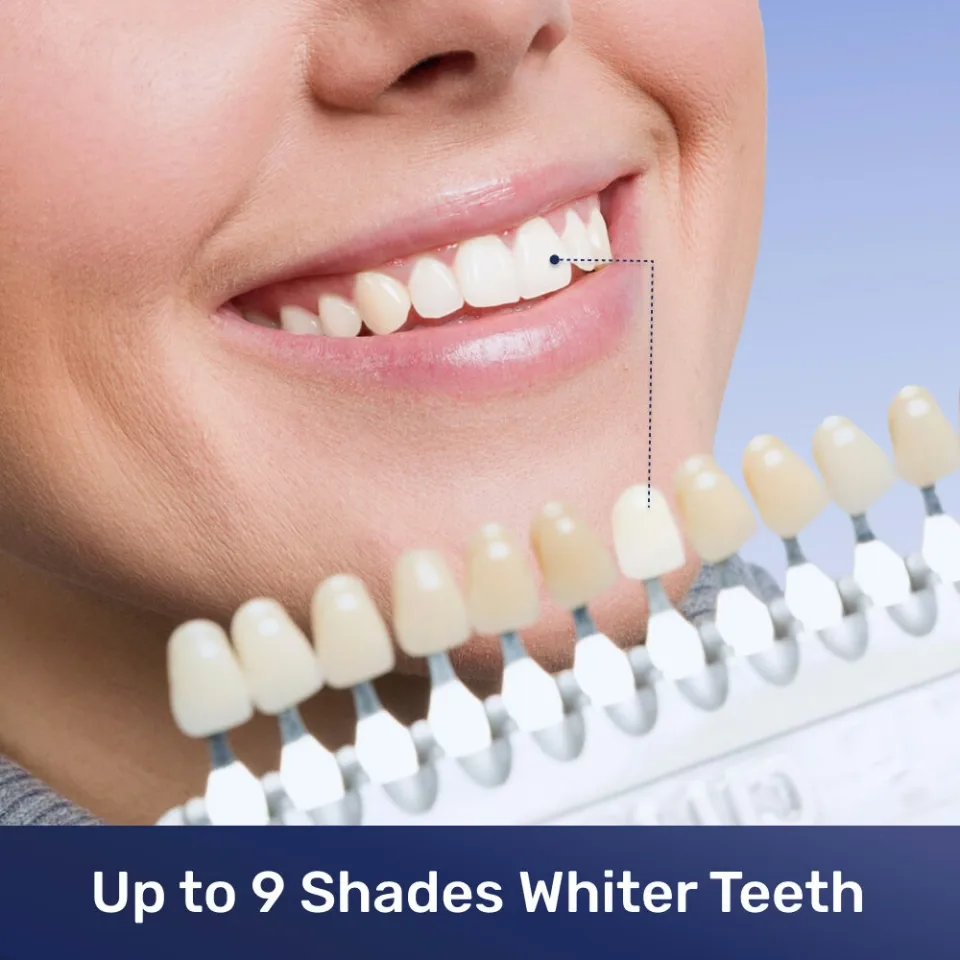
How often should you do touch-ups?
For most people, a few touch-up sessions every three to six months is enough to keep whitening results looking fresh. Coffee, tea, red wine and smoking bring stains back faster, so heavy coffee drinkers may want touch-ups a little more often, while people who avoid staining foods may go longer. The best guide is your own shade check, not the calendar. Our guide on how long teeth whitening lasts explains what affects results.
Which at-home kit makes it easy to whiten the right amount?
The WellaWhite At-Home LED System includes whitening gel, an LED light device, moldable trays you shape to your teeth and a shade guide, so you can track your progress and know when to stop. Sessions take about 15 to 30 minutes, and you can do them while watching TV or reading. Because the trays are molded to your bite, the gel stays where it should, which helps reduce contact with the gums.
It costs $79 for one kit, or as little as $59 per kit in bundles, with PayPal accepted. Unopened kits can be returned within 30 days. Read our WellaWhite LED review, where we rate it 4.5/5, and our guide on whether LED whitening kits work.
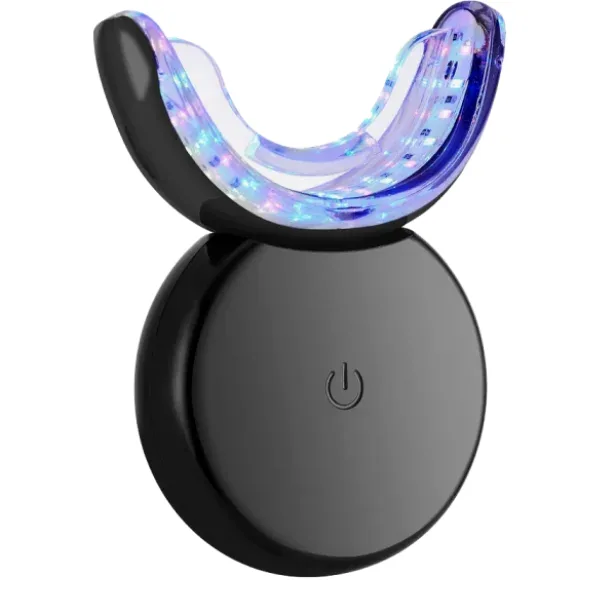
Whiten at home, then touch up only when you need to
WellaWhite At-Home LED System: whitening gel, LED light, moldable trays and a shade guide. 15 to 30 minutes per session. From $59 per kit in bundles, PayPal accepted.
Check today's price →From $59 per kit · PayPal accepted
What happens if you whiten too often?
- Tooth sensitivity: a sharp, short pain with cold or hot food and drinks.
- Gum irritation: redness or white patches where gel touched the gums.
- Diminishing returns: teeth reach their natural whitening limit and stop getting brighter.
- An unnatural look: very white teeth can look chalky or translucent at the edges.
Research published in the Journal of the American Dental Association is among the studies looking at whitening effectiveness and sensitivity. Sensitivity from whitening is usually temporary, but it's a clear signal to pause. See does teeth whitening damage enamel?
What if you have sensitive teeth?
If your teeth are sensitive, space sessions further apart, use shorter sessions, and brush with a toothpaste for sensitive teeth for a couple of weeks before and during whitening. Take a break if sensitivity builds up. For a daily brightening boost without peroxide, a color-correcting foam is a gentle option. See teeth whitening for sensitive teeth.
What can you use every day?
Products that don't bleach can be part of your daily routine:
- A sonic toothbrush with a whitening mode to remove surface stains.
- Whitening toothpaste, if it doesn't irritate your teeth.
- A purple color-correcting foam for an instant brighter look before events.
- Rinsing with water after coffee, tea and wine.
The WellaWhite Purple Foam is peroxide-free and gives a temporary brightening effect. It works well alongside an LED course for days when you want a little extra sparkle. See does purple toothpaste work?
How do you make whitening last longer, so you whiten less?
- Drink staining drinks through a straw when you can, and rinse with water afterwards.
- Avoid staining foods and drinks for 24 to 48 hours after a session, when teeth are more porous. See what to eat after teeth whitening.
- Brush twice a day for two minutes.
- Get regular dental cleanings to remove tartar, which stains easily.
- Don't smoke; tobacco is one of the strongest stainers.
Is there a limit to how white teeth can get?
Yes. Everyone's teeth have a natural maximum brightness, which depends on enamel thickness and the color of the dentin underneath. Once you reach it, more whitening won't help. Whitening also doesn't change the color of crowns, veneers, fillings or bonding. If some teeth stay darker, see a dentist; deep or gray discoloration may need a different treatment. The Cleveland Clinic explains the different types of tooth discoloration. Our guide on how white teeth can get goes deeper.
How should you plan whitening before a big event?
Start an at-home course two to three weeks before a wedding, holiday or photo shoot, so you have time to reach your shade and recover from any sensitivity. Avoid squeezing in extra sessions the night before. On the day itself, a quick purple foam brush gives a fresh, bright look. See whitening before a wedding and whitening before the holidays.
When should you talk to a dentist first?
Ask a dentist before whitening if you have cavities, gum disease, exposed roots, cracked teeth, a lot of dental work on your front teeth, or if you're pregnant or breastfeeding. A checkup and cleaning before whitening also helps, since gel works best on clean teeth.
Can teenagers whiten their teeth?
Many dentists recommend waiting until all the adult teeth are fully developed and, for teens with braces, until the braces come off. Young teeth can be more sensitive, so it's best to ask the dentist before any peroxide whitening. In the meantime, good brushing and a color-correcting foam are gentle ways for teens to brighten their smile.
What does a sensible yearly whitening plan look like?
Here's a simple example many people follow with an at-home LED kit. In the first month, do the full course as directed and stop when you reach your target shade. For the next two to three months, focus on keeping stains away: rinse after coffee, brush twice a day and use a color-correcting foam before events if you like. Around month three or four, check your shade in natural light; if it has slipped, do two or three touch-up sessions. Repeat that rhythm through the year, and add an extra touch-up before big events like weddings or the holidays. Most people end up whitening only a handful of times outside the first course, which keeps sensitivity low and results steady.
What are the most common whitening mistakes?
- Leaving gel on longer than directed, hoping for faster results.
- Using too much gel, which spills onto the gums.
- Whitening right after a dental cleaning or a scale-and-polish without asking the dentist, when teeth may be more sensitive.
- Mixing several peroxide products at the same time.
- Ignoring sensitivity instead of pausing.
- Drinking coffee or red wine right after a session.
The bottom line
You can whiten teeth safely by doing a full at-home course as directed, then touching up only every few months when your shade starts to slip. In-office whitening is usually once or twice a year at most, while whitening toothpaste and color-correcting foams can be used daily. If your teeth get sensitive, pause and space sessions out.
For an at-home kit with a shade guide that helps you whiten just enough, our pick is the WellaWhite LED System. Check today's WellaWhite price.
Sources
- American Dental Association. Whitening.
- Cleveland Clinic. Tooth Discoloration.
- Journal of the American Dental Association. Tooth whitening research.
- Official WellaWhite product page, checked October 2026.
Frequently asked questions
How often can you whiten your teeth at home?
Do a full course as the kit's instructions say, often daily for one to two weeks, then touch up every few months when your shade starts to slip.
Is it bad to whiten your teeth every day?
Daily peroxide whitening beyond the recommended course can cause sensitivity and gum irritation. Peroxide-free products like color-correcting foam can be used daily.
How often can you get professional teeth whitening?
Usually no more than once or twice a year, as your dentist advises.
How often should you do whitening touch-ups?
For most people a few touch-up sessions every three to six months, more often for heavy coffee, tea or wine drinkers. Check your shade first.
What happens if you whiten your teeth too much?
Teeth can become sensitive, gums can get irritated, results plateau and teeth may look chalky or translucent at the edges.
Does the WellaWhite LED kit include a shade guide?
Yes. It includes whitening gel, an LED light, moldable trays and a shade guide, from $59 per kit in bundles.

Michelle Hert
Michelle researches at-home oral care products, from whitening kits to water flossers, and reads the dental research and buyer feedback behind them so readers can make smarter choices. She is not a dentist, and her guides are not a substitute for professional dental care. Her guides are built on published research, manufacturer information and verified buyer feedback, and are updated when new information comes out. More about Michelle.