
- Coffee, tea, red wine, cola and dark sauces (surface stains).
- Tobacco, which leaves stubborn yellow-brown stains.
- Tartar along the gum line, which is porous and picks up color.
- Decay, when a brown spot is soft, rough or sensitive.
- Older fillings or internal changes in the tooth.
General information about consumer products, not dental advice. A brown spot that's rough, soft, sensitive or growing may be a cavity: see a dentist before trying to whiten it.
Brown stains can show up as a dull brownish film across the front teeth, dark lines between teeth, a ring along the gum line or a single dark spot on one tooth. They're one of the most common reasons people look into whitening, and also one of the most confusing, because brown can mean very different things: a coffee stain, tartar, tobacco or, sometimes, a cavity.
This guide explains how to tell the types of brown stains apart, what removes each one, what to avoid, how to prevent new stains and when a brown spot is a reason to see a dentist.
What causes brown stains on teeth?
| Cause | Typical look | What helps |
|---|---|---|
| Coffee, tea, wine, cola | Even brownish film, worse between teeth and near gums | Cleaning, brushing, whitening |
| Tobacco | Yellow-brown to dark brown, stubborn | Cleaning, whitening, quitting |
| Tartar | Hard, yellow-brown buildup at the gum line | Professional cleaning only |
| Decay | Brown or black spot, may be soft or sensitive | Dentist: filling |
| Old fillings or crowns | Brown edges around dental work | Dentist: polishing or replacement |
| Internal (intrinsic) | Brown or gray inside the tooth, from injury, medications or fluorosis | Dentist: whitening, bonding or veneers |
The Cleveland Clinic explains that extrinsic stains sit on the tooth's surface and often respond to cleaning and whitening, while intrinsic stains are inside the tooth and may need other treatments.
How do you tell a surface stain from a cavity?
- Surface stains are usually spread over several teeth, follow the gum line or the spaces between teeth, and feel smooth.
- Cavities are usually a single spot, may feel rough or sticky when you run a fingernail over it, can be sensitive to sweets, cold or heat, and may grow over time.
If you're not sure, have a dentist look. Whitening a cavity won't fix it.
Which foods and drinks cause brown stains?
- Coffee and espresso, especially black.
- Black tea, which contains tannins that stain strongly.
- Red wine and dark beer.
- Cola and dark sodas, which combine color with acid.
- Soy sauce, balsamic vinegar and curry.
- Dark chocolate and berries.
See coffee stains on teeth, tea stains on teeth and wine stains on teeth.
How do you remove brown stains from teeth?
- Get a professional cleaning: it removes tartar and polishes away a lot of surface staining, especially between teeth and at the gum line.
- Brush twice a day for two minutes, ideally with a sonic toothbrush with a whitening mode.
- Clean between your teeth daily; brown lines between teeth often mean plaque is building there.
- Use a whitening method to lift remaining stains: an at-home LED kit for a lasting shade change.
- Use a color-correcting foam for an instant brighter look between whitening sessions.
The American Dental Association explains how whitening products work on surface and deeper stains and recommends talking to a dentist before whitening.
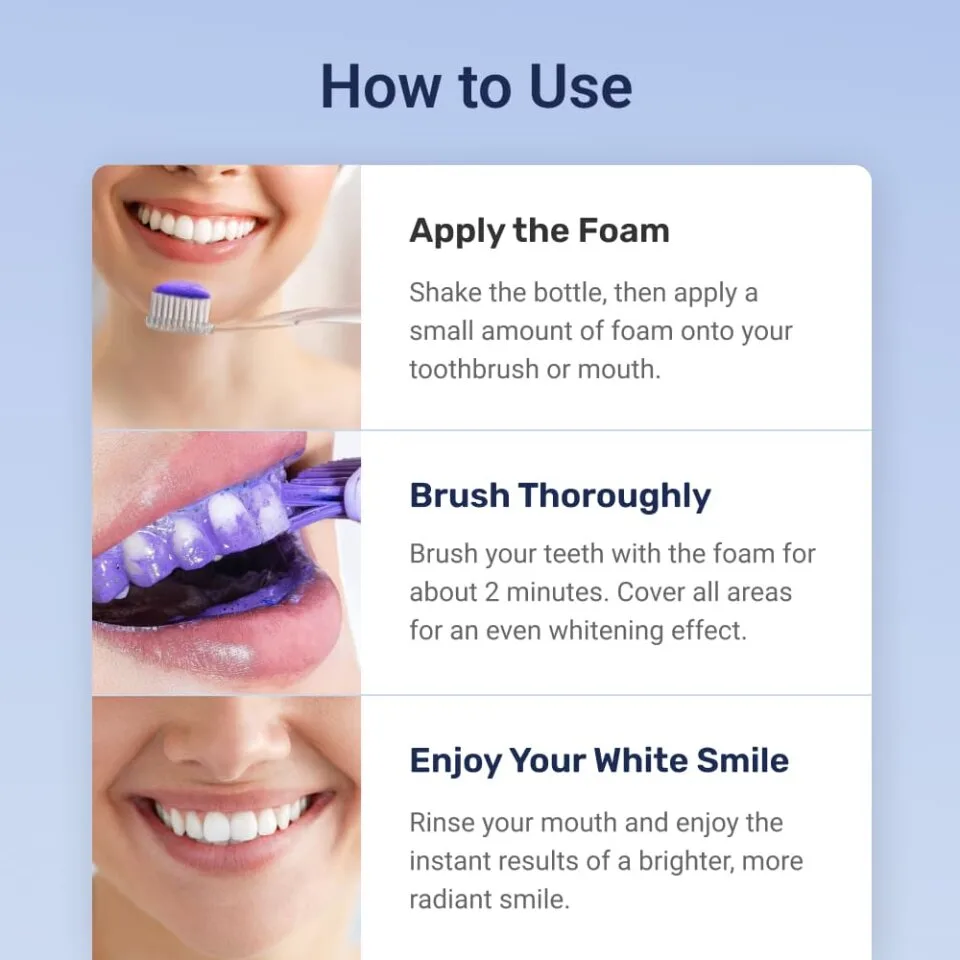
How does a purple foam help with brown and yellow tones?
Purple sits opposite yellow on the color wheel, so a purple foam visually cancels yellow-brown tones on the tooth surface, making teeth look whiter right away. It doesn't bleach and doesn't remove stains permanently, so the effect is temporary, but it's a gentle, quick boost before work, a date or photos.
The WellaWhite Purple Whitening Foam is peroxide-free and brushed on for about two minutes, which makes it a good option for sensitive teeth. For a longer-lasting change, combine it with the WellaWhite At-Home LED System, which lifts stains with whitening gel and an LED light. The foam is sold at up to 70% off on the official site. Read does purple toothpaste work? and our WellaWhite LED review.
An instant brighter look over brown and yellow tones
WellaWhite Purple Whitening Foam: peroxide-free, color-correcting, brush for 2 minutes. A gentle, temporary boost that pairs well with an LED kit. Up to 70% off on the official site.
Check today's price →Up to 70% off on the official site
Why can't you brush away tartar?
Tartar (calculus) is plaque that has hardened with minerals from saliva. It bonds to the teeth, usually along the gum line and behind the lower front teeth, and it's porous, so it soaks up color from coffee, tea and tobacco. No toothpaste or home tool can safely remove it; scraping at it yourself can damage enamel and gums. Only a dental hygienist or dentist can remove it during a cleaning. Daily brushing and flossing stop new plaque from hardening into tartar.
What should you avoid when removing brown stains?
- Scraping teeth with metal tools or your nails.
- Harsh abrasives like baking soda scrubs every day, charcoal powders or rough homemade pastes, which can wear enamel.
- Lemon juice or vinegar on teeth; acid softens enamel.
- Whitening over a cavity or sensitive area without a dentist's check.
- Overusing peroxide products beyond the instructions.
What about brown stains from smoking?
Tobacco stains are some of the most stubborn because tar and nicotine settle deep into the enamel surface. A professional cleaning and a whitening course can make a big difference, but stains return quickly if smoking continues. Quitting is the most effective step for both your smile and your health. See teeth whitening for smokers.
Why are the stains worse between teeth?
The spaces between teeth and along the gum line are hard to reach with a toothbrush, so plaque builds up there and picks up stains. Brown lines between the front teeth are a classic sign. Cleaning between teeth every day with floss or a water flosser prevents them, and a professional cleaning removes what's already there. See water flosser vs floss.
How do you prevent brown stains?
- Rinse with water right after coffee, tea, wine and cola.
- Drink cold staining drinks through a straw.
- Add a splash of milk to tea and coffee, which can reduce staining.
- Brush twice a day and clean between teeth daily.
- Get regular dental cleanings, usually every six months.
- Don't smoke or vape.
- Chew sugar-free gum after meals to boost saliva.
What do brown stains on a child's teeth mean?
In children, brown spots can be early tooth decay, stains from iron supplements or certain drinks, or changes in the enamel. Because baby teeth can decay quickly, it's best to have the dentist check any new brown spots. Don't use whitening products on children unless the dentist recommends it.
What if the brown is around a filling or crown?
Brown edges around old fillings or crowns can be surface staining at the margin, or a sign that the seal is breaking down and decay is starting underneath. Whitening won't change the color of fillings and crowns. Ask your dentist whether polishing, repair or replacement makes sense. See does whitening work on crowns?
How long does it take to remove brown stains?
A professional cleaning removes tartar and a lot of surface staining in one visit. An at-home whitening course typically shows visible improvement over one to two weeks. Tobacco and long-standing tea stains may take longer and may not disappear completely. Intrinsic brown discoloration may need dental treatments like bonding or veneers. See how to get rid of yellow teeth for a full overview.
What does a stain-fighting daily routine look like?
A routine that keeps brown stains away doesn't take long. In the morning, brush for two minutes with a sonic toothbrush on its whitening mode and rinse with water after your coffee. During the day, drink water between staining drinks and chew sugar-free gum after meals. In the evening, clean between your teeth with floss or a water flosser, then brush again. Before an event, use a purple foam for an instant brighter look, and every few months do a short whitening touch-up if your shade starts to slip. Add a professional cleaning every six months and most surface stains never get the chance to build up.
Which whitening option is best for brown stains?
For stains from coffee, tea, wine and cola, an at-home LED kit is a practical choice: it uses a peroxide gel to lift stains from the enamel, with a light and trays that keep the gel in place, and it costs much less than in-office whitening. Whitening strips work for mild stains but can be harder to keep in place over uneven teeth. In-office whitening is fastest but most expensive. Tobacco stains and long-standing tea stains may need a longer course or a combination with a professional cleaning. For brown discoloration inside the tooth, from an old injury or medication, talk to a dentist, because whitening alone often isn't enough. Whatever you choose, a purple foam on the side gives an instant boost while you wait for results.
The bottom line
Brown stains on teeth usually come from coffee, tea, wine, cola, tobacco or tartar, and they respond well to a professional cleaning, good daily brushing and whitening. A brown spot that's rough, soft or sensitive may be a cavity, so see a dentist first. A purple foam gives an instant brighter look, while an LED kit lifts stains for a lasting change.
For an instant brighter look over brown and yellow tones, our pick is the WellaWhite Purple Foam. Check today's WellaWhite Purple Foam price.
Sources
- Cleveland Clinic. Tooth Discoloration.
- American Dental Association. Whitening.
- Official WellaWhite product page, checked October 2026.
Frequently asked questions
What causes brown stains on teeth?
Coffee, tea, red wine, cola and dark sauces, tobacco, tartar along the gum line, decay, old fillings and sometimes changes inside the tooth.
How do I get rid of brown stains on my teeth?
Get a professional cleaning, brush twice a day, clean between teeth daily and use a whitening method like an LED kit. A purple foam gives an instant, temporary brighter look.
Is a brown spot on my tooth a cavity?
It might be if it's a single spot that feels rough or sticky, is sensitive or grows. Surface stains are usually smooth and spread across teeth. Ask a dentist.
Can you remove tartar at home?
No. Tartar is hardened plaque that only a dental professional can safely remove. Daily brushing and flossing stop new tartar from forming.
Does purple toothpaste remove brown stains?
It doesn't remove stains; it visually cancels yellow-brown tones for a temporary brighter look. Pair it with whitening for a lasting change.
Why are the brown stains between my teeth?
Plaque builds up between teeth where brushing doesn't reach and picks up color. Daily flossing or water flossing prevents it.

Michelle Hert
Michelle researches at-home oral care products, from whitening kits to water flossers, and reads the dental research and buyer feedback behind them so readers can make smarter choices. She is not a dentist, and her guides are not a substitute for professional dental care. Her guides are built on published research, manufacturer information and verified buyer feedback, and are updated when new information comes out. More about Michelle.