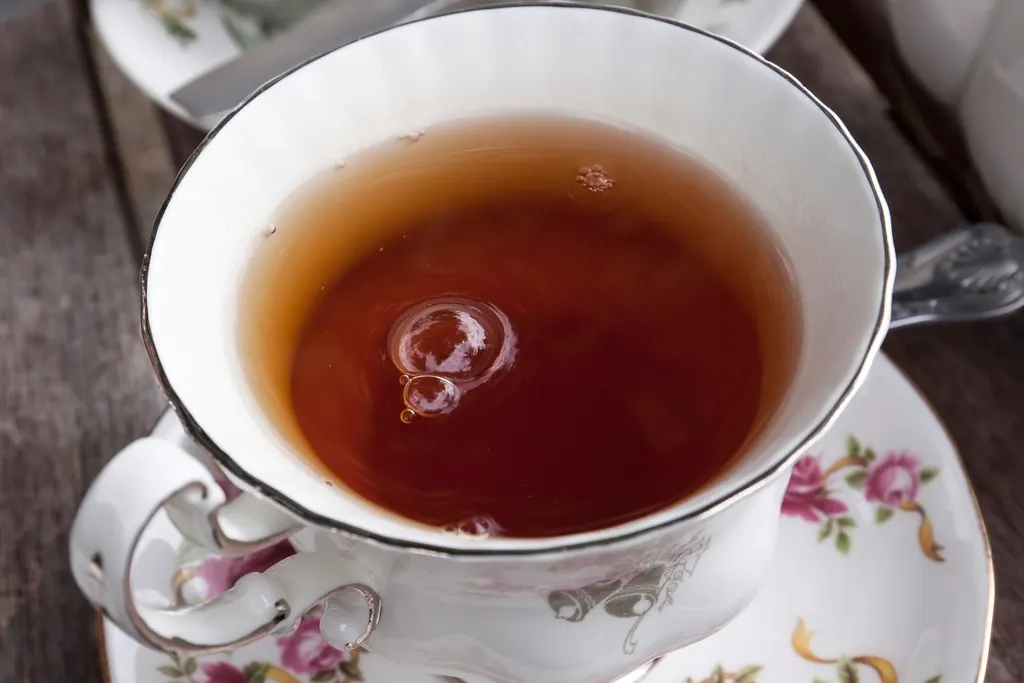
- Rinse with water after drinking tea, and drink it in one sitting instead of sipping all day.
- Brush twice a day and clean between your teeth, where stains collect.
- Add a splash of milk to black tea, which may reduce staining.
- Wait about 30 minutes to brush if your tea is acidic, like lemon or fruit tea.
General information, not dental advice. If a stain appears suddenly, is on one tooth only, or comes with pain or sensitivity, see a dentist.
For many people, tea is a daily ritual: a morning cup of black tea, green tea after lunch, a chamomile at night. It's also one of the most common reasons teeth gradually turn yellow or brownish. Tea drinkers often notice the stain first along the gumline and between the front teeth, places where a toothbrush has a harder time reaching.
The good news is that you don't need to give up tea to keep a bright smile. This guide explains why tea stains teeth, which teas stain most, how to prevent stains, how to remove existing ones, and which products help.
Why does tea stain teeth?
Tea contains tannins (a type of polyphenol). Tannins bind to the thin protein layer that naturally coats your enamel, called the pellicle, and they help colored pigments from tea and other foods attach to it. Over time, these pigments build up and create visible surface stains. This kind of surface discoloration is called extrinsic staining. Cleveland Clinic lists tea, coffee and red wine among common causes of extrinsic tooth discoloration.
Enamel isn't perfectly smooth; it has tiny pores and ridges that pigments can settle into. Rough spots, plaque and tartar give stains even more to grab onto, which is why stains often look worse near the gumline and between teeth.
Which teas stain teeth the most?
| Tea | Staining potential | Why |
|---|---|---|
| Black tea | High | Rich in tannins and dark pigments |
| Chai and strong breakfast blends | High | Strong black tea base |
| Oolong | Moderate | Partially oxidized, fewer dark pigments than black tea |
| Green tea | Moderate | Contains tannins; can cause grayish stains over time |
| Red herbal teas (hibiscus, berry) | Moderate | Colored pigments, often acidic |
| White tea and chamomile | Lower | Lighter color, fewer pigments |
Strength and habits matter as much as the type of tea. A strong cup steeped for a long time and sipped slowly over hours will stain more than a lighter cup finished quickly.
Does tea stain teeth more than coffee?
Many people are surprised to learn that tea, especially strong black tea, can stain teeth as much as or more than coffee. Both contain dark pigments, and tea's tannins help those pigments stick to enamel. The exact effect varies with how strong your drink is, how often you have it and your oral hygiene. If you drink both, the prevention habits below help with each. See our guide to coffee stains on teeth.
How can you prevent tea stains?
- Rinse with water right after tea. A quick swish washes away pigments before they settle.
- Drink tea in one sitting. Sipping slowly all day keeps teeth constantly bathed in pigments.
- Add a splash of milk. Some studies suggest milk proteins bind with tannins and may reduce staining from black tea.
- Use a straw for iced tea to reduce contact with front teeth.
- Brush twice a day with fluoride toothpaste, ideally with an electric brush.
- Clean between teeth daily, where stains build up first.
- Chew sugar-free gum after tea to boost saliva.
- Keep up with dental cleanings to remove tartar that stains cling to.
Should you brush right after drinking tea?
For plain black, green or white tea, brushing later is fine, but rinsing with water right away is the easiest habit. For acidic teas, like tea with lemon or fruit and hibiscus blends, wait about 30 minutes before brushing. Acids temporarily soften enamel, and brushing immediately can wear it down. Rinsing with water first and waiting a little protects your enamel. See how to brush your teeth properly and how to protect your enamel.
How do you remove tea stains from teeth?
How you remove tea stains depends on how deep they are and how fast you want results:
| Option | What it does | Speed | Best for |
|---|---|---|---|
| Whitening toothpaste | Removes surface stains gently | Gradual | Light stains, maintenance |
| Electric toothbrush | More consistent cleaning | Gradual | Daily stain control |
| Purple foam | Color correction for a brighter look | Instant, temporary | Events, photos, quick boost |
| Peroxide whitening kit (LED) | Whitens the tooth itself | Days to weeks | Yellowing from years of tea |
| Professional cleaning | Removes tartar and stubborn surface stain | One visit | Starting point before whitening |
The American Dental Association explains that whitening toothpastes work on surface stains, while peroxide-containing bleaching products can change the color of the tooth itself.
How does purple foam help with tea stains?
Purple foam uses color theory. Yellow and purple sit opposite each other on the color wheel, so a purple tint can visually cancel some of the yellow tone that tea leaves behind. The result is an instantly brighter look that lasts for a few hours, not a permanent change in tooth shade.
The WellaWhite Purple Whitening Foam is peroxide-free, so it's gentle for daily use and for people with sensitive teeth. Many tea drinkers use it in the morning or before meetings, dates and photos for a quick boost. It's often available with discounts of up to 70% on the official site. See our full guide to purple toothpaste and foam.
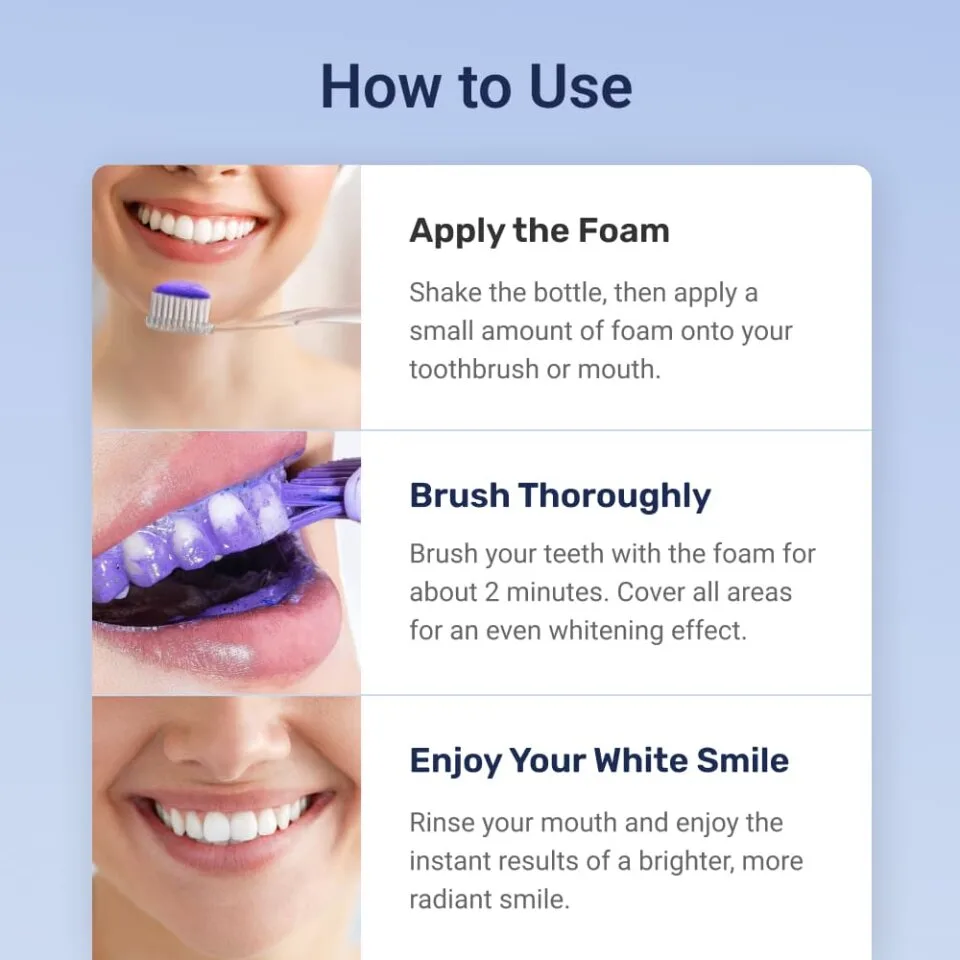
Instantly brighten tea-stained teeth
WellaWhite Purple Whitening Foam: peroxide-free color correction for an instantly brighter smile. Gentle for daily use. Up to 70% off on the official site.
Check today's price →Up to 70% off on the official site
What's the best way to whiten teeth stained by years of tea?
If tea has gradually yellowed your teeth over years, surface products alone may not be enough. A peroxide whitening gel can lighten the tooth's actual shade. A kit with trays and an LED light, like the WellaWhite At-Home LED System, includes gel, an LED light, moldable trays and a shade guide, with 15 to 30 minute sessions designed to be gentle on sensitive teeth. On the official site in October 2026, it cost $79 for one kit, or $59 per kit in a five-pack. See our WellaWhite LED review and how to whiten teeth at home.
A smart combination for tea lovers: a professional cleaning, a whitening course with an LED kit, purple foam for instant brightness before events, and the daily prevention habits above to keep stains from coming back.
Can you drink tea after whitening?
Right after a whitening session, teeth can be more prone to picking up stains for a short time. Many people avoid dark drinks like black tea for the first day or two of a whitening course, or at least drink them with a straw and rinse right after. Light-colored teas, like white tea or chamomile, are easier choices during this time. See what to eat after teeth whitening.
Is green tea better for your teeth?
Green tea is often praised for its antioxidants, and unsweetened green tea is a better choice for teeth than sugary drinks. It still contains tannins, though, and can cause grayish or yellowish stains over time, especially when it's strong or sipped frequently. The same habits apply: rinse after drinking, brush well and clean between teeth.
Does adding sugar or honey to tea matter?
Yes, but for a different reason. Sugar and honey don't add much stain, but they feed plaque bacteria, which produce acids that can damage enamel and lead to cavities. Plaque also gives stains a sticky surface to cling to. If you sweeten tea, try reducing the amount gradually, drink it in one sitting and rinse with water afterward. See how to remove plaque at home.
What doesn't work for tea stains?
- Lemon juice or vinegar on teeth: acids soften enamel and can make teeth look more yellow over time.
- Daily charcoal powders: abrasive and not well supported by evidence.
- Scrubbing hard: wears enamel and gums without removing more stain.
- Baking soda scrubs every day: can be too abrasive with frequent use.
- Strawberry "whitening" hacks: mostly acidic and sugary, with little effect.
What if you have sensitive teeth?
Tea drinkers with sensitive teeth should take extra care with very hot tea and acidic blends. Use a sensitivity toothpaste, avoid brushing right after acidic tea, and choose gentle whitening options. Purple foam is peroxide-free and a gentle way to brighten your smile, while an LED kit designed for sensitive teeth can be used with shorter or spaced-out sessions. See teeth whitening for sensitive teeth.
What's a simple daily routine for tea drinkers?
- Morning: brush for two minutes, then enjoy your tea.
- After tea: rinse with water or chew sugar-free gum.
- Before events: use purple foam for an instant brighter look.
- Evening: clean between your teeth, then brush for two minutes.
- Every few months: replace your brush head and do a whitening touch-up if your shade dulls.
- Regularly: get professional cleanings.
When should you see a dentist about tea stains?
Most tea stains are surface stains that respond well to good habits and whitening. See a dentist if a dark spot appears on a single tooth, a stain doesn't change with brushing, you notice a rough or crusty feel along the gumline (often tartar), or you have pain, sensitivity or bleeding gums. A dentist can tell the difference between a stain, tartar, a cavity or another issue, and recommend the right treatment.
The bottom line
Tea stains teeth because tannins help pigments stick to enamel. You don't need to give up your favorite cup: rinse with water after tea, drink it in one sitting, brush and clean between teeth daily, and keep up with cleanings. For an instant brighter look, use a peroxide-free purple foam; for a real change in shade, use a peroxide whitening kit.
For an instant boost, our pick is the WellaWhite Purple Whitening Foam: check today's WellaWhite foam offer. For deeper whitening, see the WellaWhite At-Home LED System.
Sources
- Cleveland Clinic. Tooth Discoloration.
- American Dental Association. Whitening.
Frequently asked questions
Why does tea stain teeth?
Tea contains tannins that help dark pigments stick to the protein layer on enamel, creating surface stains over time.
Does tea stain teeth more than coffee?
Strong black tea can stain as much as or more than coffee; strength, frequency and hygiene make a big difference.
Does adding milk to tea reduce staining?
Some studies suggest milk proteins bind with tannins and may reduce staining from black tea.
Does green tea stain teeth?
Yes, green tea contains tannins and can cause grayish or yellowish stains over time, though usually less than black tea.
Can purple foam remove tea stains?
Purple foam gives an instant, temporary brighter look by color correction; it doesn't change tooth shade. Peroxide whitening does.
Should I brush right after drinking tea?
Rinse with water right away. After acidic teas, like lemon or fruit tea, wait about 30 minutes before brushing.

Michelle Hert
Michelle researches at-home oral care products, from whitening kits to water flossers, and reads the dental research and buyer feedback behind them so readers can make smarter choices. She is not a dentist, and her guides are not a substitute for professional dental care. Her guides are built on published research, manufacturer information and verified buyer feedback, and are updated when new information comes out. More about Michelle.