
- Typical range: from about 2 weeks to 2 months per charge, depending on the model, mode and how often you brush.
- Sonic brushes with efficient motors often last longer; some, like the WellaWhite Sonic Toothbrush, offer up to 60 days.
- Battery lifespan: rechargeable batteries gradually lose capacity over years of use.
- To make it last: avoid leaving it on the charger 24/7 if the maker advises against it, keep it dry and use standard modes most days.
General information about consumer products, not dental advice.
Battery life is one of the most overlooked features when choosing an electric toothbrush, until you're packing for a trip or the brush dies mid-morning. Some brushes need charging every week or two; others last a month or more. Battery life also affects convenience at home, travel and how long the brush keeps performing well. This guide explains what affects battery life, how long a charge lasts, how to keep the battery healthy and when to replace the brush.
How long does a charge last?
| Type | Typical per charge |
|---|---|
| Basic rotating brushes | About 1 to 3 weeks |
| Mid-range sonic brushes | About 2 to 4 weeks |
| Long-life sonic brushes | Up to about 1 to 2 months |
| Battery-powered (AA/AAA) | Varies; batteries replaced |
These are general ranges based on brushing twice a day for two minutes. Real use varies.
What affects battery life?
- Mode: high-intensity or whitening modes use more power.
- Brushing time: longer or more frequent sessions drain faster.
- Motor type: efficient sonic motors often last longer.
- Battery age: capacity drops over time.
- Temperature: very hot or cold environments affect batteries.
- Extra features: lights, smart connectivity and pressure sensors use power.
How long does the WellaWhite Sonic last?
The WellaWhite Sonic Toothbrush offers up to 60 days of battery life, along with six modes including Sensitive and Whitening, a smart timer and four brush heads. Long battery life means you can travel for weeks without packing a charger. Read our WellaWhite Sonic Toothbrush review.
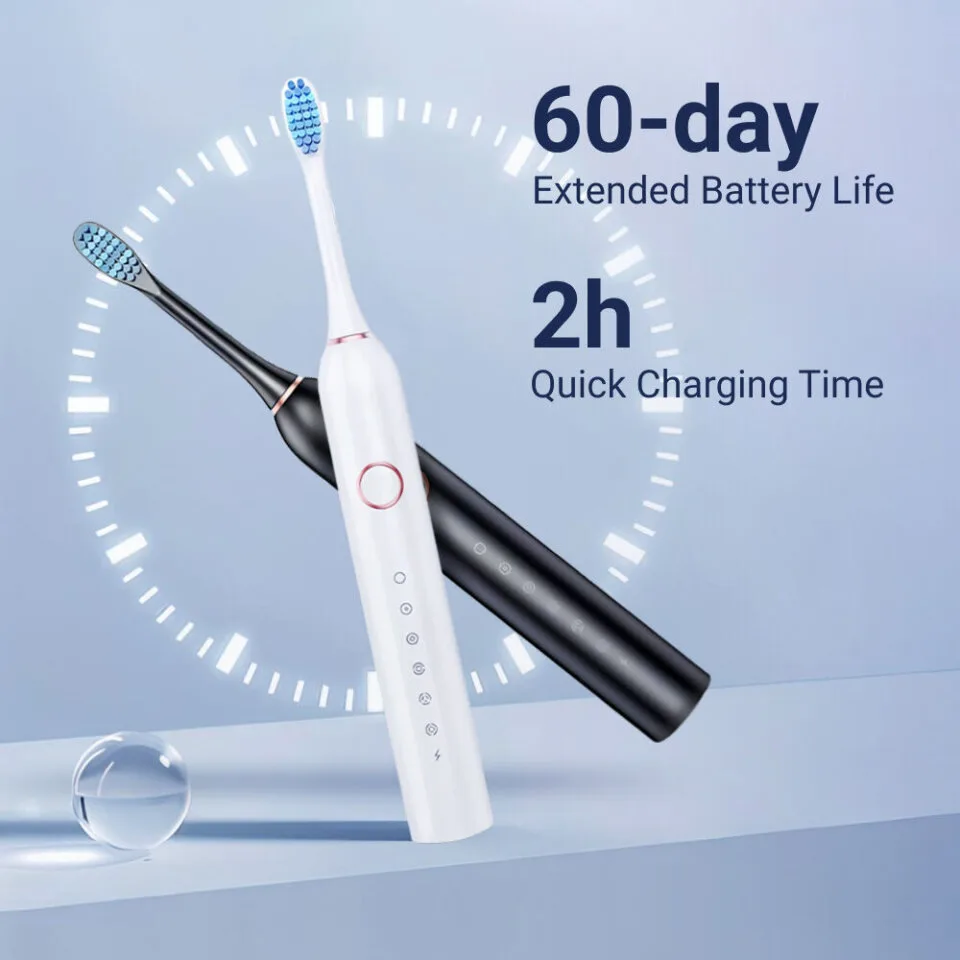
Weeks of brushing on one charge
WellaWhite Sonic Toothbrush: smart timer, six modes including Sensitive and Whitening, four brush heads and up to 60 days of battery. Up to 75% off on the official site.
Check today's price →Up to 75% off on the official site
How do you keep the battery healthy?
- Follow the manufacturer's charging instructions.
- If advised, let the battery run down occasionally rather than leaving it on the charger constantly.
- Keep the brush dry between uses; wipe the handle.
- Store it at room temperature, away from heaters and direct sun.
- Use standard modes for daily brushing and intense modes when needed.
How long does the battery last overall?
Rechargeable toothbrush batteries often perform well for a few years before capacity noticeably drops. Signs of an aging battery include needing to charge much more often or the brush feeling weaker before the indicator shows low. When that happens, it may be time for a new handle.
What do battery indicators mean?
Many brushes flash or change color when the battery is low. Charge soon after you see the low-battery warning; brushing at very low charge may feel weaker. Some brushes show remaining charge with a bar or light pattern. Check your manual.
Why does battery life matter for travel?
A brush that lasts a month or more can go on most trips without a charger, saving space and avoiding adapter hassles abroad. Pack it in a ventilated case and lock the power button if your brush has a travel lock. See water flosser for travel.
Is USB charging better?
USB charging is convenient because you can charge from a laptop, phone charger or car adapter. Traditional charging bases work well at home. Either way, keep the charger dry and away from water.
Should you replace heads more often than the handle?
Yes. Replace brush heads about every three months or when bristles splay; the handle and battery can last years. See how often to replace a toothbrush and how to clean an electric toothbrush.
Is an electric toothbrush worth it?
Many people find electric brushes more effective and easier to use. A Cochrane review found powered toothbrushes reduced plaque and gingivitis more than manual brushes. The American Dental Association says both types can be effective with good technique. See electric toothbrush vs manual.
Should you leave your toothbrush on the charger?
It depends on the brush. Many modern brushes with lithium-ion batteries have charging protection and can be left on the base, while some makers recommend charging only when low. Check your manual. If you're unsure, charging when the indicator shows low and unplugging once full is a safe approach.
What's the difference between battery types?
Most modern rechargeable brushes use lithium-ion batteries, which hold charge well and last longer between charges. Older or budget models may use nickel-metal hydride (NiMH) batteries, which may need charging more often. Disposable AA or AAA brushes need battery replacements.
What if the brush won't charge?
- Check the outlet and cable or base.
- Clean the charging contacts.
- Make sure the brush sits correctly on the base.
- Let it charge for the full recommended time.
- If it still won't hold a charge, contact the manufacturer or replace the handle.
How do you dispose of an old toothbrush battery?
Don't throw rechargeable batteries in regular trash. Many communities and stores have battery recycling drop-offs. Check your local guidelines for small electronics.
Which modes use the most battery?
High-intensity, deep-clean and whitening modes usually use more power than standard or sensitive modes. If you use them occasionally, battery life stays close to the maximum. See sonic vs oscillating toothbrush.
Can a family share a charger?
If everyone has the same model, yes, which saves counter space. Each person should have their own brush handle or at least their own head, labeled or color-coded.
Does cold affect toothbrush batteries?
Very cold temperatures can temporarily reduce battery performance, and very hot places can shorten battery lifespan. Store your brush in the bathroom or a room-temperature bag, not in a freezing car or a hot window.
Do smart features drain the battery?
Bluetooth, app tracking and lights use extra power. If long battery life matters more to you than app features, a brush with a smart timer but no app connectivity often lasts longer per charge.
What are quick tips for more days per charge?
- Use standard or sensitive modes for daily brushing.
- Brush for the recommended two minutes, not longer.
- Keep the handle dry.
- Charge fully when you do charge.
What about warranties?
Check the warranty when you buy, since battery problems in the first months may be covered. Keep your receipt.
What is a travel lock?
Some brushes have a travel lock that prevents the brush from turning on in your bag and draining the battery. If yours doesn't, remove the head or pack it so the button can't be pressed.
What should you do with a new brush?
Charge it fully before first use, as the manual recommends. Some batteries reach their best performance after a few charge cycles.
How do you choose a brush with good battery life?
Check the manufacturer's stated battery life, look for lithium-ion batteries and consider whether you need app features. For most people, a brush that lasts several weeks per charge with a timer and gentle modes covers everything. See electric toothbrush for sensitive teeth.
What's the takeaway?
Pick a brush with long battery life, charge it as recommended and keep it dry; replace heads every three months and the handle when the battery fades.
Why does my brush feel weaker?
A low charge, an aging battery or a worn brush head can make a brush feel weaker. Charge it fully and replace the head. If it still feels weak, the battery may be near the end of its life.
How long do kids' electric brushes last?
Many kids' brushes use smaller batteries and need charging more often. Check the manual, and help kids put the brush back on the charger as part of the bedtime routine.
How long does a full charge take?
It varies by model, from a few hours to overnight. A full charge on a long-life brush can last weeks, so most people only charge occasionally.
Is a manual brush better for travel?
A manual brush is the lightest option, but a long-life electric brush can go weeks without charging, so many people keep their usual electric brush on trips. Pack a manual brush as a backup for very long or remote trips.
How do you clean the charging contacts?
Unplug the charger, wipe contacts and the base with a slightly damp cloth, and let everything dry. Toothpaste residue can build up and interfere with charging.
When is it time for a new brush?
When the battery no longer lasts a week, or the motor feels weak even when fully charged.
Is a long-life brush better for the environment?
A durable handle used for years with replaceable heads creates less waste than frequently replaced brushes.
The bottom line
Electric toothbrush batteries last from a couple of weeks to about two months per charge, depending on model and use. Follow charging instructions, keep the brush dry and replace heads regularly. A long-lasting battery makes daily brushing and travel easier.
For long battery life and guided brushing, our pick is the WellaWhite Sonic Toothbrush. Check today's WellaWhite Sonic Toothbrush price.
Sources
- Cochrane. Powered versus manual toothbrushing for oral health.
- American Dental Association. Toothbrushes.
- Official WellaWhite product page, checked October 2026.
Frequently asked questions
How long does an electric toothbrush battery last?
From about 2 weeks to 2 months per charge, depending on the model and use.
Can I leave my electric toothbrush on the charger?
Many can, but follow your manufacturer's instructions.
How long does the WellaWhite Sonic battery last?
Up to 60 days per charge.
Which modes drain the battery fastest?
High-intensity and whitening modes.
How many years does a toothbrush battery last?
Often a few years before capacity noticeably drops.
Why won't my electric toothbrush hold a charge?
The battery may be aging; check the charger and contacts first.

Michelle Hert
Michelle researches at-home oral care products, from whitening kits to water flossers, and reads the dental research and buyer feedback behind them so readers can make smarter choices. She is not a dentist, and her guides are not a substitute for professional dental care. Her guides are built on published research, manufacturer information and verified buyer feedback, and are updated when new information comes out. More about Michelle.