- Hydrogen peroxide works faster and is used in shorter sessions.
- Carbamide peroxide releases its peroxide more slowly, so it's often used in longer sessions and can feel gentler.
- As a rough rule, carbamide peroxide delivers about one-third of its percentage as hydrogen peroxide (10% carbamide is about 3.5% hydrogen peroxide).
- Both can cause temporary sensitivity; the right choice depends on your teeth and how much time you have.
General information about consumer products, not dental advice. If you have sensitive teeth, gum disease, cavities or dental work on your front teeth, talk to a dentist before whitening.
Look at the ingredients of almost any whitening gel, strip or pen and you'll find one of two names: hydrogen peroxide or carbamide peroxide. Product pages often highlight one or the other, sometimes with percentages that are hard to compare. Is one safer? Is one stronger? And which one is better for sensitive teeth?
This guide explains what each ingredient is, how they whiten, how their strengths compare, how fast they work, how they affect sensitivity, which products typically use each one, and how to choose the right whitening product for you.
What are hydrogen peroxide and carbamide peroxide?
Hydrogen peroxide is a simple compound of hydrogen and oxygen. In whitening products, it releases oxygen-rich molecules that break down stain compounds in the enamel and dentin.
Carbamide peroxide is hydrogen peroxide combined with urea. When it touches moisture in your mouth, it breaks down into hydrogen peroxide and urea. The hydrogen peroxide does the whitening. The American Dental Association describes both as the main peroxide whitening agents in at-home and professional products.
How do they compare?
| Hydrogen peroxide | Carbamide peroxide | |
|---|---|---|
| How it works | Acts directly | Breaks down into hydrogen peroxide |
| Speed | Faster release | Slower, longer release |
| Typical session | Shorter sessions | Longer sessions or overnight trays |
| Equivalent strength | Stated percentage | About one-third of its percentage as hydrogen peroxide |
| Shelf life | Can be less stable | Often more stable |
| Sensitivity | Can be higher at higher strengths | Often feels gentler at common strengths |
How do you compare percentages?
Because carbamide peroxide only releases part of its weight as hydrogen peroxide, the percentages aren't directly comparable. A common rule of thumb is to divide the carbamide percentage by about three:
| Carbamide peroxide | Approximate hydrogen peroxide |
|---|---|
| 10% | About 3.5% |
| 16% | About 5.5% |
| 22% | About 7.5% |
Higher strength isn't always better. Higher concentrations can whiten faster but are more likely to cause sensitivity. Rules about the maximum strength allowed in over-the-counter products differ between countries.
Which one works faster?
Hydrogen peroxide releases its whitening power quickly, which is why products using it often have shorter sessions. Carbamide peroxide releases more slowly over time, which suits longer wear, such as custom trays worn for an hour or overnight. In the end, results depend more on the total time the gel spends on your teeth, the strength, and the type of stains than on which name is on the label.
An easy at-home whitening routine
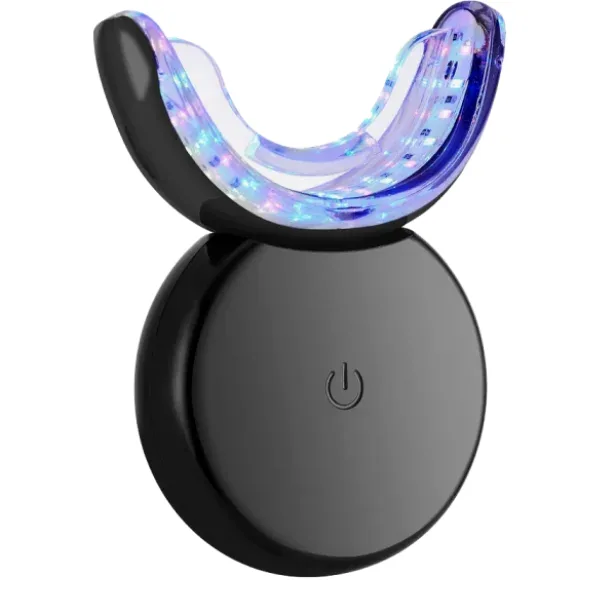
WellaWhite At-Home LED System: whitening gel, LED light, moldable trays and a shade guide. 15 to 30 minutes per session. From $59 per kit in bundles, PayPal accepted.
Check today's price →From $59 per kit · PayPal accepted
Which one is better for sensitive teeth?
Sensitivity is the most common side effect of peroxide whitening, as research in the Journal of the American Dental Association notes. Many people find lower-strength carbamide gels gentler, because the peroxide is released more slowly. But any peroxide product can cause sensitivity, and the biggest factors are strength, session length and how often you whiten. If your teeth are sensitive:
- Choose shorter sessions and skip days when needed.
- Use a sensitivity toothpaste for a week or two before and during whitening.
- Use a thin layer of gel in well-fitted trays.
- Consider a peroxide-free purple foam for instant brightening.
See whitening for sensitive teeth and sensitivity after whitening.
Which products use each one?
| Product type | Common ingredient |
|---|---|
| Whitening strips | Usually hydrogen peroxide |
| Whitening pens | Either |
| LED kits with trays | Either, depending on the brand |
| Custom trays from a dentist | Often carbamide peroxide |
| In-office whitening | High-strength hydrogen peroxide |
| Purple foams and toothpastes | Usually no peroxide (color correction) |
Compare formats in whitening strips vs LED and whitening pen vs LED.
Do either of them damage enamel?
When used as directed, at-home peroxide whitening is generally considered safe for enamel. Problems are more likely with overuse, very high concentrations or leaving gel on far longer than recommended. Read does whitening damage enamel?
Do they give different results?
At equivalent strengths and contact times, both whiten to a similar degree, because the active agent is the same: hydrogen peroxide. Yellow and brown stains from coffee, tea and wine respond best. Gray stains and dental work change less. See how white can teeth get?
Does the LED light change anything?
Many at-home kits pair their gel with a blue LED light. The light is low-heat and is designed to support the gel during the session. Research on how much lights add is mixed, so the gel and consistent use remain the most important factors. Read do LED kits work?
How do you choose?
- Check your teeth first. See a dentist if you have cavities, gum disease or very sensitive teeth.
- Decide on time. Short daily sessions suit busy schedules; longer wear suits overnight trays.
- Start gentle. If you're new or sensitive, choose lower strengths and shorter sessions.
- Look at the full kit. Good trays, clear instructions and a shade guide matter as much as the ingredient.
- Follow the label. More isn't faster.
Does storage matter?
Yes. Peroxide breaks down over time, faster with heat and light. Store whitening gel as the instructions say, usually in a cool, dark place, and don't use gel past its expiry date. Carbamide peroxide gels are often a bit more stable than hydrogen peroxide gels.
Where does WellaWhite fit in?
The WellaWhite At-Home LED System includes whitening gel, an LED light, moldable trays and a shade guide, with 15 to 30 minutes per session. It's $79 for one kit, $74 each for two, $69 each for three and $59 each for five, with PayPal accepted. Check the ingredient list on the official site and read our WellaWhite review.
What are common myths?
- "Carbamide peroxide isn't real whitening." It releases hydrogen peroxide, the same active agent.
- "Higher percentage is always better." It mostly increases sensitivity risk.
- "Hydrogen peroxide from the pharmacy works the same." Household peroxide isn't designed for teeth; use products made for whitening.
- "Peroxide-free foams bleach teeth." They color-correct; the effect is temporary.
How do you read a whitening product label?
Look for the active ingredient and its percentage, the recommended session time, how many days the course lasts and any warnings about sensitivity or dental work. If a product lists carbamide peroxide, remember that its whitening strength is roughly a third of the stated number. If it lists "peroxide-free," it likely works by polishing or color correction instead of bleaching. Avoid products with vague ingredient lists or no instructions at all.
What about PAP and other peroxide-free whiteners?
Some newer products use phthalimidoperoxycaproic acid (PAP) or other peroxide-free ingredients. These are often marketed as gentler options. They can help with surface stains, but research comparing them with traditional peroxide is still developing. If you want reliable, deeper whitening, peroxide products remain the most studied choice; if you want an instant look without peroxide, a purple color-correcting foam is the simplest option.
When should you ask a dentist which ingredient to use?
Ask a dentist if you have gum recession, exposed roots, a history of strong sensitivity, large fillings, crowns or veneers on front teeth, or stains that might come from medication or trauma. They can recommend a strength and format that fits your teeth, or suggest professional options if at-home whitening isn't a good fit.
Which is better for beginners?
If you've never whitened before, start with a kit that has clear instructions, moderate session times and good trays, regardless of which peroxide it uses. Begin with the shortest recommended sessions for the first few days to see how your teeth react, then continue the course if everything feels comfortable. Take a before photo and track your shade with a shade guide so you can see real progress and avoid overdoing it.
Which works best for touch-ups?
For touch-ups every few months, many people simply repeat a few sessions with the same kit they used for their main course. Short, gentle sessions keep results fresh without much sensitivity. Between touch-ups, rinse after coffee and wine and use a straw for iced drinks. See how long whitening lasts.
Either way, a consistent, gentle routine with a well-designed kit is what delivers a brighter smile.
How should sensitive teeth start whitening?
Begin with shorter sessions, whiten every other day for the first week and use a sensitivity toothpaste for two weeks before and during treatment. If teeth or gums hurt, pause for a few days before continuing.
The bottom line
Carbamide peroxide and hydrogen peroxide whiten teeth the same way, because carbamide peroxide breaks down into hydrogen peroxide. Hydrogen peroxide works faster in shorter sessions; carbamide peroxide releases more slowly and can feel gentler at common strengths. For most people, the best results come from a well-designed kit, a sensible strength, good trays and following the instructions consistently.
Our pick for an easy at-home routine is the WellaWhite LED System. Check today's WellaWhite price.
Sources
- American Dental Association. Whitening.
- Journal of the American Dental Association. Light activation and tooth whitening.
- Official WellaWhite product page, checked October 2026.
Frequently asked questions
Is carbamide or hydrogen peroxide better?
Both whiten the same way; hydrogen peroxide acts faster, carbamide releases more slowly.
How strong is 10% carbamide peroxide?
About 3.5% hydrogen peroxide, roughly one-third of its percentage.
Which is better for sensitive teeth?
Lower-strength carbamide often feels gentler, but any peroxide can cause sensitivity.
Does carbamide peroxide really whiten?
Yes, it breaks down into hydrogen peroxide, the active whitening agent.
Can I use household hydrogen peroxide?
It isn't designed for teeth; use products made for whitening.
Do either damage enamel?
Used as directed, at-home whitening is generally considered safe for enamel.

Michelle Hert
Michelle researches at-home oral care products, from whitening kits to water flossers, and reads the dental research and buyer feedback behind them so readers can make smarter choices. She is not a dentist, and her guides are not a substitute for professional dental care. Her guides are built on published research, manufacturer information and verified buyer feedback, and are updated when new information comes out. More about Michelle.