
- Strips are simple and cheap, but they can slip, miss curved teeth and the edges near the gums, and they're single-use.
- LED kits use trays that hold gel against all the visible teeth more evenly, are reusable for touch-ups, and add a light that some studies suggest may help speed up whitening.
General information, not dental advice. Talk with your dentist before whitening, especially if you have sensitive teeth, gum problems, or crowns and fillings on your front teeth.
Whitening strips and LED whitening kits are the two most popular ways to whiten teeth at home. Both promise a brighter smile without a dentist's chair, both are sold everywhere, and both use similar whitening chemistry. So which should you choose?
This guide compares strips and LED kits on how they work, results, evenness, comfort, sensitivity, cost over time and convenience, so you can decide which fits your teeth and your routine.
How do whitening strips and LED kits work?
Most at-home whitening products work with peroxide (hydrogen peroxide or carbamide peroxide), which breaks down stain molecules in the tooth. The American Dental Association explains that peroxide-containing bleaching products can whiten the tooth itself, while whitening toothpastes mainly remove surface stains.
- Whitening strips are thin plastic strips coated with a peroxide gel. You press them onto your teeth and leave them on for the recommended time.
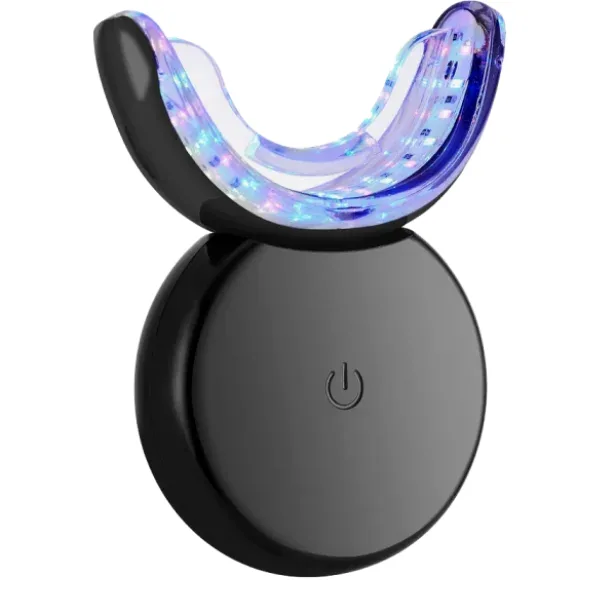
- LED whitening kits combine a peroxide-based gel, a mouth tray that holds the gel against your teeth, and a blue LED light that you use during the session.
How do strips and LED kits compare?
| Whitening strips | LED kit with trays | |
|---|---|---|
| Coverage | Flat strips; can miss curves, edges and the gumline | Trays wrap around teeth for more even contact |
| Staying in place | Can slip, especially when talking | Tray holds gel in position |
| Evenness | Risk of patchy results or a line where the strip ends | More consistent shade across visible teeth |
| Reusability | Single-use strips | Reusable tray and light; refill gel for touch-ups |
| Light | None | LED light during sessions |
| Session time | Varies by product | Often 15 to 30 minutes |
| Upfront cost | Lower | Higher, but reusable |
| Best for | Occasional, quick whitening | Even results and regular touch-ups |
Does the LED light actually do anything?
The LED light is used alongside the peroxide gel; the gel does the whitening. Research on light-activated whitening has had mixed results, and some studies suggest a light may help speed up or enhance the effect in certain conditions. A study published in the Journal of the American Dental Association examined light-activated whitening and tooth sensitivity. In practice, many users like the structure an LED kit gives: a set session time, a comfortable tray and a routine that's easy to repeat. See do LED teeth whitening kits work?
Why does evenness matter?
Teeth aren't flat. Strips sit on the surface but can leave gaps around curves, between teeth and near the gumline, especially on crowded or uneven teeth. That can lead to a smile that's lighter in the middle of each tooth and darker at the edges, or a visible line where the strip ended. Trays mold around the teeth and hold gel in contact with more of the visible surface, which tends to give a more uniform result.
Which is better for sensitive teeth?
Both can cause temporary sensitivity, mostly depending on peroxide strength, contact time and how often you whiten. Gentler formulas, shorter sessions, spacing sessions out and using a toothpaste for sensitive teeth all help. Some people find strips irritate their gums when gel spreads beyond the teeth; well-fitted trays with the right amount of gel can reduce that. See our guide to teeth whitening for sensitive teeth.
Which costs less over time?
Strips cost less upfront, but you buy a new box for every round. An LED kit costs more at first, but the light and trays are reusable, so touch-ups mainly need gel. If you plan to whiten more than once, which most people do to maintain results, an LED kit often becomes the better value over a year or two.
Which LED kit do we recommend?
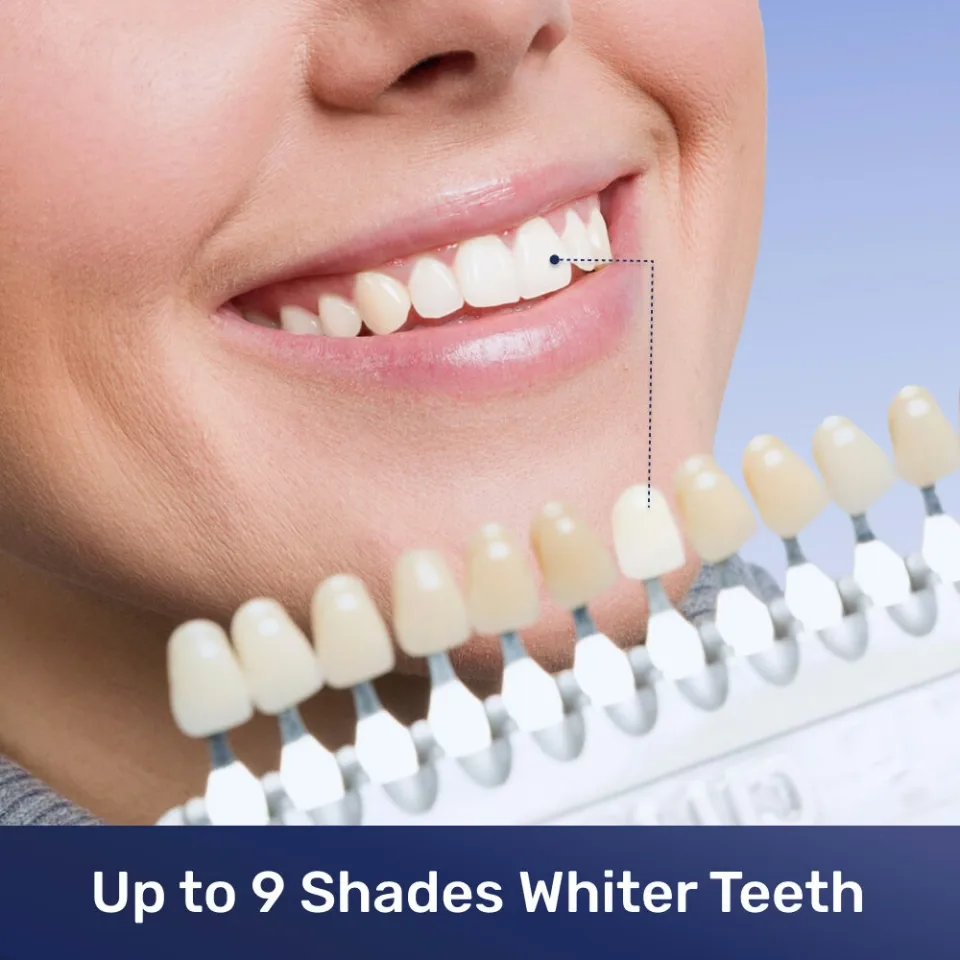
The WellaWhite At-Home LED System includes whitening gel, an LED light, moldable trays for a better fit and a shade guide to track your progress. Sessions take 15 to 30 minutes, and the system is designed to be gentle on sensitive teeth. On the official checkout in October 2026, one kit was $79, $74 each for two, $69 each for three and $59 each for five, with PayPal accepted. Returns are accepted within 30 days for unopened products. Read our full WellaWhite LED review, where we rate it 4.5/5.
Even, repeatable whitening at home
WellaWhite At-Home LED System: gel, LED light, moldable trays and shade guide, 15 to 30 minutes per session. $79, or from $59 per kit in bundles.
Check today's price →From $59 per kit · PayPal accepted
Who are whitening strips best for?
- People trying whitening for the first time on a small budget.
- Those with fairly straight, even teeth where strips sit flat.
- Occasional users who whiten once in a while, before an event.
- Travelers who want something tiny to pack for a quick round.
Who are LED kits best for?
- People who want even results across all visible teeth.
- Coffee and tea drinkers who need regular touch-ups all year.
- Those with slightly crowded or curved teeth where strips don't sit well.
- Anyone who likes a structured, hands-free routine with a timer.
- People who want the best value over a year or more of touch-ups.
How do you get the best results from either?
- Get a dental checkup first to rule out cavities or gum problems, and ask about a professional cleaning.
- Brush and floss gently before whitening so the gel contacts clean enamel.
- Follow the instructions for time and frequency; more isn't better.
- Avoid staining foods for 48 hours after sessions. See what to eat after whitening.
- Track your shade in the same light to see progress and plan touch-ups.
- Maintain results with good habits. See how long whitening lasts.
How long do results last with each?
The whitening chemistry is similar, so how long results last depends mostly on your habits rather than the delivery method: coffee, tea, red wine and smoking bring stains back faster, while rinsing after dark drinks, brushing twice a day, cleaning between teeth and regular dental cleanings slow it down. Where LED kits have an advantage is maintenance. Because the trays and light are reusable, it's easy to do a couple of short touch-up sessions every few months as soon as you notice your shade dulling. With strips, many people wait until their smile looks clearly stained before buying another box, so results swing back and forth more. A shade guide makes the difference obvious: you can see exactly when a touch-up is due.
Which fits more easily into a busy routine?
Strips are easy to put on while you get ready in the morning, but you have to be careful talking, eating and drinking while they're on, and they can feel slippery. An LED session is a set block of time, often 15 to 30 minutes, which many people fit into the evening while reading, watching TV or answering emails. Since the tray holds the gel in place, you don't have to keep pressing anything back. Both can fit a busy schedule; it comes down to whether you prefer quick, fiddly sessions or a short, hands-free routine a few times a week during your whitening course.
Can you combine whitening methods?
You can combine some methods safely, but don't stack peroxide products on the same day, which can increase sensitivity. A practical combination is an LED kit for the main whitening and touch-ups, a whitening or sensitive toothpaste for daily use, and a purple color-correcting foam for an instant boost before photos or events, since it has no peroxide. See does purple toothpaste work? If sensitivity appears, pause and let your teeth settle before continuing.
How do you whiten safely with either method?
Use products as directed and don't extend sessions or use them more often than recommended. Keep gel off your gums as much as possible; with trays, a small amount of gel is enough. Stop and talk to your dentist if you have pain, persistent sensitivity or gum irritation. Avoid whitening if you have untreated cavities, gum disease or exposed roots until a dentist has checked them. Pregnant or breastfeeding people often choose to wait. A little caution keeps whitening comfortable and safe.
When won't either work well?
Neither strips nor LED kits change the color of crowns, veneers, bonding or fillings. Some types of intrinsic discoloration, for example from certain medications or trauma, respond slowly or not at all to at-home products. Cleveland Clinic describes the different causes of discoloration. A dentist can recommend options such as in-office whitening, bonding or veneers in those cases.
What's the real-world difference?
People who switch from strips to an LED kit tend to mention the same things. With strips, they were constantly pressing them back into place, the bottom strip slid off the lower teeth when they talked, and they sometimes noticed the canines and the edges near the gums stayed darker. With a tray kit, the gel stays put, they can relax for the session, and the shade looks more even across the whole smile. The flip side is that strips are quicker to grab for a one-time whitening before an event. Many people end up using an LED kit for their main whitening and touch-ups, and a purple foam for an instant boost before photos.
The bottom line
Whitening strips are cheap and simple, good for occasional use on even teeth. LED kits with trays give more even, repeatable results and become better value with regular touch-ups. For most people who want a reliably brighter smile at home, an LED kit is the better long-term choice.
Our pick is the WellaWhite At-Home LED System. Check today's WellaWhite price, and see how to get rid of yellow teeth.
Sources
- American Dental Association. Whitening.
- Journal of the American Dental Association. Light-activated tooth whitening study.
- Cleveland Clinic. Tooth Discoloration.
Frequently asked questions
Are LED whitening kits better than strips?
For even, repeatable results, many people prefer LED kits with trays, which hold gel against more of each tooth. Strips are cheaper and simpler for occasional use.
Does the LED light help whiten teeth?
The peroxide gel does the whitening. Research on lights is mixed; some studies suggest a light may help speed up the effect in some conditions.
Why do whitening strips give uneven results?
Flat strips can miss curves, edges and the gumline, and they can slip, which may leave some areas lighter than others.
Which is better for sensitive teeth?
Both can cause temporary sensitivity. Gentler formulas, shorter sessions, spacing sessions and sensitivity toothpaste help.
Do whitening strips or LED kits work on crowns?
No. Neither changes the color of crowns, veneers, bonding or fillings.
How much does the WellaWhite LED kit cost?
In October 2026 one kit was $79, $74 each for two, $69 each for three and $59 each for five on the official checkout.

Michelle Hert
Michelle researches at-home oral care products, from whitening kits to water flossers, and reads the dental research and buyer feedback behind them so readers can make smarter choices. She is not a dentist, and her guides are not a substitute for professional dental care. Her guides are built on published research, manufacturer information and verified buyer feedback, and are updated when new information comes out. More about Michelle.