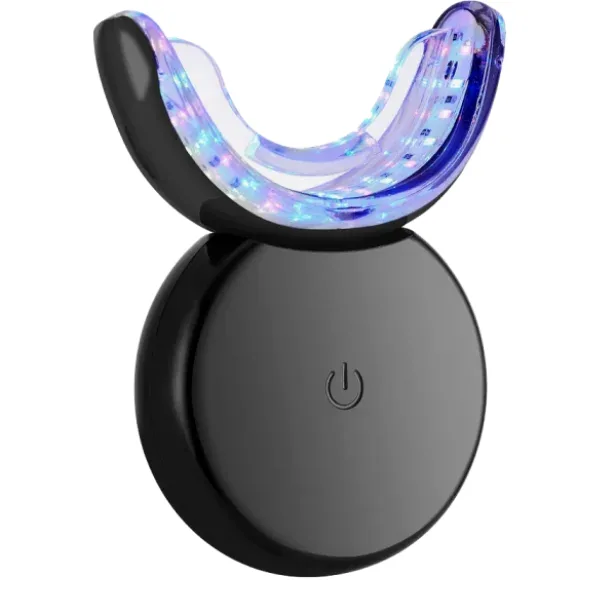
- Detach the LED light from the mouthpiece. Never put the electronic part under water.
- Rinse the trays under cool or lukewarm water right after each session to remove leftover gel.
- Brush gently with a soft toothbrush and a drop of mild, unscented soap.
- Rinse well and shake off the water.
- Air-dry completely on a clean towel before storing.
- Wipe the LED light with a slightly damp cloth, then dry it.
General information about consumer products, not dental advice. If you notice irritation, soreness or swelling, stop using the kit and talk to your dentist.
After a whitening session, it's tempting to toss the mouthpiece back in its box and forget about it. But leftover gel, saliva and bacteria build up quickly in a warm, closed case. Within days you can end up with a cloudy, smelly tray that's unpleasant to put in your mouth. Cleaning it takes about two minutes, and it keeps your sessions hygienic, comfortable and effective. This guide explains how to clean each part of an LED whitening kit, what to avoid, how to deep-clean a cloudy tray and when to replace it.
In this guide:
- why cleaning the mouthpiece matters
- daily cleaning step by step
- how to clean the LED light safely
- deep cleaning once a week
- storage, replacement and common mistakes
Our pick: the WellaWhite At-Home LED System
Whitening gel, LED light, moldable trays and a shade guide in one kit. 15 to 30 minutes per session, from $59 per kit in bundles.
Check today's price →From $59 per kit · PayPal accepted
Why should you clean your whitening mouthpiece?
- Hygiene: saliva and leftover gel give bacteria a place to grow, especially in a closed case.
- Comfort: a clean tray feels and smells fresh.
- Better results: old gel residue can make a tray fit less evenly and leave less room for fresh gel.
- Longer life: gentle cleaning keeps the trays clear and flexible for longer.
The American Dental Association recommends following the manufacturer's instructions for at-home whitening products, and clean trays are part of using them correctly.
Which parts of an LED kit need cleaning?
| Part | How to clean | How often |
|---|---|---|
| Moldable trays | Rinse, brush gently with mild soap, air-dry | After every session |
| LED mouthpiece (the part that sits in your mouth) | Wipe with a damp cloth, then dry; don't submerge unless it's labeled waterproof | After every session |
| LED light body and cable | Wipe with a dry or slightly damp cloth | Weekly |
| Storage case | Wash with soap and water, dry fully | Weekly |
| Gel syringe tip | Wipe clean and recap | After every session |
How do you clean the trays after each session?
- Remove the trays and detach them from the LED light.
- Rinse them under cool or lukewarm running water. Most gel washes away easily if you rinse right away.
- Brush gently inside and out with a soft toothbrush kept only for this. Add a drop of mild, unscented dish soap if needed.
- Rinse again thoroughly so no soap remains.
- Shake off the water and let the trays air-dry on a clean towel, open side down.
- Store them in the case only once they're completely dry.
Then brush your own teeth gently and rinse your mouth. See how to use an LED whitening kit for the full session routine.
How do you clean the LED light safely?
The LED unit contains electronics and a battery or a cable connection, so it needs a gentler approach:
- Turn it off and unplug it first.
- Never submerge it or hold it under running water unless the instructions say it's waterproof.
- Wipe the mouthpiece area with a soft cloth dampened with water, or with a drop of mild soap, then wipe again with a clean damp cloth.
- Dry it with a soft towel before storing.
- Keep the charging port dry.
How do you deep-clean a cloudy or smelly tray?
Once a week, or whenever the trays look cloudy, give them a deeper clean:
- Soak the trays (not the LED light) for 10 to 15 minutes in lukewarm water with a little baking soda, about 1 teaspoon per cup.
- Brush gently to loosen any film.
- Rinse thoroughly.
- Air-dry completely.
A non-abrasive denture or retainer cleaning tablet is another option for plastic trays; follow the tablet's instructions and rinse well afterward. If the trays still smell or look stained after a deep clean, it's time to replace them.
What should you avoid when cleaning?
- Hot or boiling water: it can warp moldable trays and ruin the custom fit.
- Bleach, alcohol or harsh disinfectants: they can damage plastic and leave a taste.
- Whitening toothpaste: it's abrasive and can scratch the trays, making them cloudy.
- The dishwasher: heat and harsh detergent damage trays.
- Mouthwash soaks: many contain alcohol and colorants that can stain plastic.
- Storing trays wet: a damp, closed case is perfect for bacteria.
How should you store your whitening kit?
- Keep the trays and LED light in their case, completely dry.
- Store the case in a cool, dry place, not on a sunny windowsill or in a steamy bathroom cabinet.
- Keep the gel tightly capped and follow the storage instructions on the package.
- Keep everything away from pets, who love to chew plastic trays.
- Don't share trays or mouthpieces with anyone else.
When should you replace the trays?
Replace the trays if they:
- are cracked, torn or warped
- no longer fit snugly
- stay cloudy, stained or smelly after a deep clean
- cause irritation
If you ordered a multi-kit bundle, you'll have fresh trays ready for your next whitening course.
What's in the WellaWhite LED kit?
The WellaWhite At-Home LED System includes everything you need: whitening gel, an LED light, moldable trays and a shade guide. Sessions take 15 to 30 minutes, and the kit is designed to be gentle on sensitive teeth. It costs $79 for one kit, $74 each for two, $69 each for three and $59 each for five, with US shipping of $6.90 and PayPal accepted. Unopened kits can be returned within 30 days. Read our full WellaWhite LED review.
Whiten at home with everything in one box
WellaWhite At-Home LED System: gel, LED light, moldable trays and a shade guide, with 15 to 30 minute sessions. $79 for one kit, as low as $59 per kit in bundles.
Check today's price →From $59 per kit · PayPal accepted
Why does mouthpiece hygiene matter for your gums?
Your mouth naturally contains bacteria. A dirty tray adds more of them right against your gums for 15 to 30 minutes per session. Keeping the trays clean, brushing and flossing before whitening and wiping excess gel off your gums all help keep your gums comfortable. If your gums bleed easily or feel swollen, take a break from whitening and see your dentist. The National Institute of Dental and Craniofacial Research explains the early signs of gum disease. See also swollen gums.
What should you do before each session?
- Brush and floss, or use a water flosser, to remove plaque.
- Check that the trays are clean and dry.
- Add a thin line of gel to the front of each tray.
- Insert, attach the LED light and wipe off any gel that touches your gums.
See how long to use LED whitening and teeth sensitivity after whitening.
What should you do after each session?
- Rinse your mouth with water.
- Clean the trays and LED mouthpiece as described above.
- Avoid coffee, tea, red wine and other dark foods for about an hour. See what to eat after teeth whitening.
- Charge the LED light if needed.
How do you clean the kit when traveling?
Bring a small toothbrush for the trays, a travel bottle of mild soap and a microfiber cloth. Rinse the trays with bottled or tap water, let them dry on a clean towel overnight and pack them only when dry. If you're short on time, pause whitening for a few days rather than storing wet trays.
Why does my whitening tray smell?
A smell usually means bacteria have grown in leftover gel and saliva, often because the tray was stored wet or not rinsed right after a session. Deep-clean it with a baking soda soak, let it dry fully and from then on rinse it immediately after each use. If the smell comes back quickly, replace the tray. Bad breath can also play a part; see bad breath causes.
Why are my whitening trays turning yellow?
Clear plastic trays can slowly turn yellow or cloudy from gel residue, coffee and tea stains on your teeth, or scratches from abrasive cleaning. Gentle daily rinsing and a weekly soak keep them clearer for longer. A slight tint doesn't affect how the tray works, but a tray that's cracked or no longer fits should be replaced.
Can family members share a whitening kit?
They can share the box, but not the trays. Each person should have their own moldable trays shaped to their teeth, and the LED mouthpiece should be cleaned between users. A multi-kit bundle is the easiest way to give everyone their own set.
Which brush should you use for the trays?
Use a soft toothbrush kept only for the trays. Mark it with tape so nobody uses it on their teeth, and replace it every few months.
The bottom line
Cleaning your LED whitening mouthpiece takes two minutes:
- detach the LED light and keep it dry
- rinse the trays in cool water right after each session
- brush gently with mild soap, rinse and air-dry
- deep-clean weekly and store everything dry in the case
Avoid hot water, bleach and abrasive toothpaste. Clean trays keep your sessions comfortable and help your WellaWhite LED kit deliver its best results.
Our pick: the WellaWhite At-Home LED System
Whitening gel, LED light, moldable trays and a shade guide in one kit. 15 to 30 minutes per session, from $59 per kit in bundles.
Check today's price →From $59 per kit · PayPal accepted
Frequently asked questions
How do you clean LED whitening trays?
Rinse them in cool water after each session, brush gently with mild soap, rinse again and air-dry.
Can you put the LED light in water?
No, unless the instructions say it's waterproof. Wipe it with a slightly damp cloth instead.
Can I use hot water to clean whitening trays?
No. Hot water can warp moldable trays and ruin the fit.
How do I clean a cloudy whitening tray?
Soak it for 10 to 15 minutes in water with a little baking soda, brush gently and rinse.
Can I use toothpaste to clean the trays?
Avoid it. Toothpaste, especially whitening toothpaste, is abrasive and can scratch them.
When should I replace whitening trays?
When they're cracked, warped, don't fit or stay cloudy or smelly after a deep clean.

Michelle Hert
Michelle researches at-home oral care products, from whitening kits to water flossers, and reads the dental research and buyer feedback behind them so readers can make smarter choices. She is not a dentist, and her guides are not a substitute for professional dental care. Her guides are built on published research, manufacturer information and verified buyer feedback, and are updated when new information comes out. More about Michelle.