- A tank that isn't seated or closed properly. Fix: remove and reattach it firmly; check the lid seal.
- A loose or damaged tip. Fix: push the tip in until it clicks; replace worn tips.
- A worn or missing rubber seal (O-ring/gasket). Fix: clean or replace it.
- Mineral buildup. Fix: descale with a vinegar solution per the manual.
- A crack in the tank or body. Fix: contact the manufacturer or replace the part.
General information about consumer products, not dental advice. Always follow your flosser's manual for cleaning and repairs.
A leaking water flosser is messy and frustrating: water dribbling down your hand, puddles on the counter or a tank that empties before you finish. The good news is that most leaks have simple causes you can fix in a few minutes, like a tank that isn't clicked in, a tip that isn't fully seated or a dirty seal. This guide walks through where leaks come from, how to troubleshoot each one, how to prevent them and when to contact the manufacturer.
Where is the water coming from?
| Leak location | Likely cause |
|---|---|
| Where the tank meets the body | Tank not seated, dirty or worn seal |
| Around the tip | Tip not fully inserted, worn tip |
| Tank lid or fill door | Lid not closed, damaged seal |
| Bottom of the tank | Crack in the tank |
| From the handle or buttons | Internal seal issue; contact manufacturer |
How do you fix a leaking tank?
- Empty the tank and remove it.
- Check the rubber seal where the tank connects for dirt, hair or damage.
- Rinse the seal and connection area and dry them.
- Reattach the tank firmly until it locks in place.
- Make sure the fill door or lid is fully closed.
- Test over the sink.
What if it leaks around the tip?
Remove the tip and reinsert it, pushing until it clicks or seats fully. Check the tip's base for cracks or a worn ring. Tips wear over time; replace them every few months or when they look damaged. Make sure you're using tips designed for your flosser model.
How do you clean and replace seals?
Seals (O-rings or gaskets) keep water where it belongs. Mineral deposits, toothpaste residue and wear can stop them sealing. Gently clean them with warm water and a soft brush. If a seal is cracked, flattened or missing, contact the manufacturer for a replacement. Don't stretch or use sharp tools on seals.
Can hard water cause leaks?
Yes. Mineral buildup can prevent parts from sealing and clog internal passages, causing water to escape elsewhere. Descale regularly following your manual, often by running a diluted white vinegar solution, then several rounds of plain water. See how to clean a water flosser.
Is some dripping normal?
A few drops from the tip after use or when you remove the tip are normal. Water running down the handle during use or puddles under the flosser aren't. Also note that water dripping from your mouth is normal: lean over the sink and let water flow out while you floss.
Could it be your technique?
- Lean over the sink and keep lips gently closed so water drains into the sink.
- Turn the flosser on only once the tip is in your mouth.
- Turn it off before removing the tip.
- Use a lower setting to reduce splashing.
See how to use a water flosser and water flosser pressure settings.
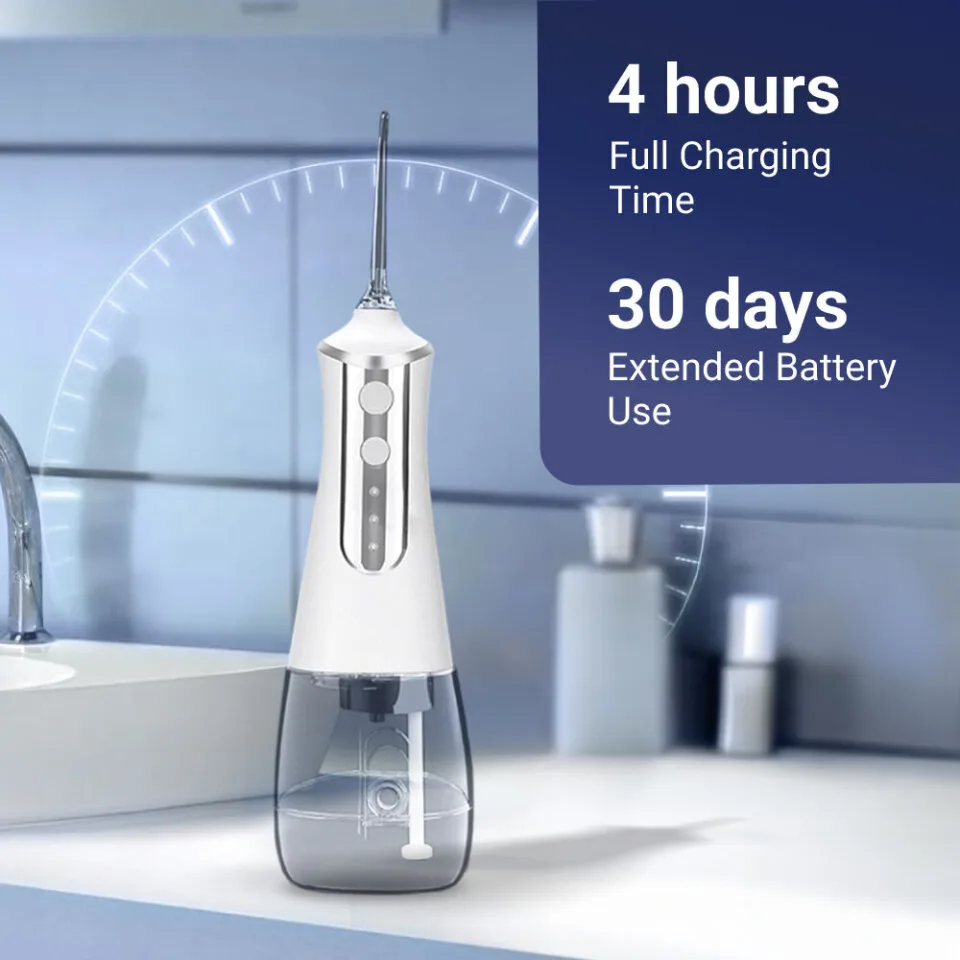
A cordless flosser that's easy to keep clean
WellaWhite Water Flosser: cordless and rechargeable, 3 modes, interchangeable nozzles, braces-friendly and compact for travel. Up to 75% off on the official site.
Check today's price →Up to 75% off on the official site
How do you prevent leaks?
- Empty the tank after each use and let it dry with the lid open.
- Clean seals and connections weekly.
- Descale monthly in hard water areas.
- Replace tips regularly.
- Don't drop the flosser; cracks often start from falls.
- Use lukewarm, not hot, water.
What about the WellaWhite Water Flosser?
The WellaWhite Water Flosser is cordless and rechargeable, with three modes and interchangeable nozzles. Like any flosser, it stays leak-free longest when the tank and tip are seated properly and the seals are kept clean. If you have issues, check the manual and contact customer support. Read our WellaWhite Water Flosser review.
When should you replace the flosser?
- The tank or body is cracked.
- Water leaks from the handle or buttons.
- Leaks continue after cleaning and replacing tips and seals.
Check the warranty first; internal leaks may be covered.
Why keep water flossing?
Cleaning between teeth daily supports healthy gums. The ADA's MouthHealthy notes water flossers can help people who have trouble flossing, and the American Dental Association recommends cleaning between teeth once a day.
Do cordless flossers leak more than countertop ones?
Not necessarily. Cordless flossers have the tank attached to the handle, so a tank seal problem shows up as water on your hand. Countertop models have a hose that can leak at the connections. Either way, seals and connections are the usual culprits.
What if a countertop flosser leaks at the hose?
Check the hose connections at the base and handle, make sure they're fully pushed in and look for cracks in the hose. Replacement hoses or handles are often available from the manufacturer.
Is a leak near the charging port dangerous?
Water near electrical parts is a concern. If water seems to come from inside the handle near the charging port or buttons, stop using the flosser, let it dry fully and contact the manufacturer. Don't charge a device with water inside.
Can mouthwash cause leaks?
Some mouthwash ingredients can affect seals or leave sticky residue. If you add mouthwash, check the manual first and rinse the tank with plain water after use. When in doubt, use plain water.
How should you store the flosser?
Store it upright, empty and with the lid open to dry, away from the edge of the counter where it might fall. A fall is one of the most common causes of hidden cracks.
What's a quick troubleshooting checklist?
- Empty and reseat the tank.
- Reinsert the tip until it clicks.
- Clean all visible seals.
- Descale if you have hard water.
- Try a new tip.
- Contact support if water comes from inside the handle.
What if a brand-new flosser leaks?
Check that all parts are assembled correctly according to the manual, the tank is fully seated and the tip clicks in. Some flossers have a protective seal or cap to remove before first use. If it still leaks, contact customer support; new products with defects are often covered.
Can hot water damage the seals?
Yes. Very hot water can warp seals and plastic parts over time. Use lukewarm water for comfort and to protect the flosser.
How do you know a tip is worn?
Look for cracks, a loose fit, discoloration or mineral deposits. Most makers suggest replacing tips every three to six months.
What's the takeaway?
Seat the tank and tip firmly, keep seals clean and descale regularly. Most leaks disappear with those three steps.
What does the warranty usually cover?
Many flossers have a warranty covering manufacturing defects for a set period. Damage from drops or misuse usually isn't covered. Keep your receipt and register the product if the manufacturer offers registration.
Where can you get replacement parts?
Check the manufacturer's site or contact customer support for tips, seals, tanks and hoses. Using genuine parts helps ensure a proper seal.
Does a shared flosser leak more?
Frequent tip swapping can wear connection points faster. Push tips in gently and straight, and replace them when they start to fit loosely.
What's a weekly cleaning routine?
Once a week, remove the tank, wash it with warm soapy water, rinse the seals, wipe the connection area and let everything air-dry before reassembling.
Why does it leak after traveling?
Pressure changes and bumps during travel can loosen the tank or tip. Reseat both after unpacking, and always travel with the tank empty. See water flosser for travel.
Can cold storage cause leaks?
Water left in the tank and exposed to freezing temperatures can expand and crack parts. Keep the flosser indoors and empty it after use.
Does a high setting cause leaks?
Higher pressure can make a loose tip or tank leak more noticeably. If leaks appear only on high, check seals and connections, then try a medium setting.
How do you spot mineral buildup?
White or chalky deposits around the tip connection, inside the tank or on seals are signs of hard water minerals. Weaker pressure is another clue. Descaling usually restores both pressure and a good seal.
How often should you descale?
About monthly in hard water areas, less often with soft water, following your manual.
Is splashing the same as leaking?
No. Splashing comes from technique, like opening your mouth too wide or turning the flosser on before the tip is in. Leaking comes from the device itself. Lean over the sink, close your lips gently and turn it on once the tip is in place to cut down on splashing.
How do you clean a tip?
Rinse it after each use and soak it occasionally in diluted vinegar to remove deposits.
The bottom line
Most water flosser leaks come from a tank or tip that isn't seated properly, dirty or worn seals or mineral buildup. Reseat parts, clean seals, descale and replace tips; contact the manufacturer for cracks or internal leaks.
For easy daily flossing, our pick is the WellaWhite Water Flosser. Check today's WellaWhite Water Flosser price.
Sources
- ADA MouthHealthy. Water Flossers.
- American Dental Association. Floss / Interdental Cleaners.
Frequently asked questions
Why is my water flosser leaking?
Usually a loose tank or tip, a dirty or worn seal, mineral buildup or a crack.
How do I stop my water flosser from leaking?
Reseat the tank and tip, clean the seals and descale.
Is some dripping normal?
A few drops from the tip are normal; puddles or water on the handle aren't.
How often should I replace flosser tips?
About every three to six months.
Can hard water make a flosser leak?
Yes, mineral buildup can stop parts from sealing.
What if water comes from inside the handle?
Stop using it, let it dry and contact the manufacturer.

Michelle Hert
Michelle researches at-home oral care products, from whitening kits to water flossers, and reads the dental research and buyer feedback behind them so readers can make smarter choices. She is not a dentist, and her guides are not a substitute for professional dental care. Her guides are built on published research, manufacturer information and verified buyer feedback, and are updated when new information comes out. More about Michelle.